MIAMI – Twenty years ago, I walked into a Marshall’s on Delaware Avenue in Buffalo, New York. It was late spring, Major League Baseball’s season had begun, and the first World Baseball Classic was already in the books.
On a clearance rack in the back, I found WBC jerseys for Canada, the U.S., and Venezuela. I hadn’t watched much, if any, of that first WBC because I was working for the Buffalo Sabres of the National Hockey League at the time, and we were in the midst of a playoff run that captivated the sports-mad city.
Holding a Team USA and a Canada jersey, each in size large, I thought, “Heck, they’re $20. If they never do another World Baseball Classic again, I’ll have a neat jersey.”
Back then, the World Baseball Classic was a neat idea, though certainly not one embraced by American fans, who are primarily focused on Major League Baseball. The World Series was, and still mostly is the first, the last, and the greatest thing to most American fans, with anything else – the Olympics, the WBC, the WBSC Premier12 – being at best a sideshow and at worst a distraction.
It seemed that way three years ago, too, when Edwin Diaz tore his patellar tendon celebrating Puerto Rico’s 5-2 win over the Dominican Republic at loanDepot Park, sidelining him for the season. Sitting in a hotel bar after the game, I heard a New York Mets fan get angrier and angrier about the event with each passing minute, his histrionics finally culminating with the words, “I just lost my f***in’ closer.” Coincidentally, the individual in question was not Mets owner Steve Cohen, so whether Diaz was really “his closer” isn’t in question.
Prior to arriving in Miami for the 2023 World Baseball Classic, I’d never experienced Latin baseball. Suddenly, on the first day of pool play, we pulled into the parking lot at 9 a.m., where we met up with Nicaragua fan Mike Soza and his friends at their tailgate as they got pumped up for their home country’s game against Puerto Rico. If David Sedaris wrote about the experience, he might have titled it “Let’s Drink Beer In the Morning and Watch Baseball With Nicaraguans.”
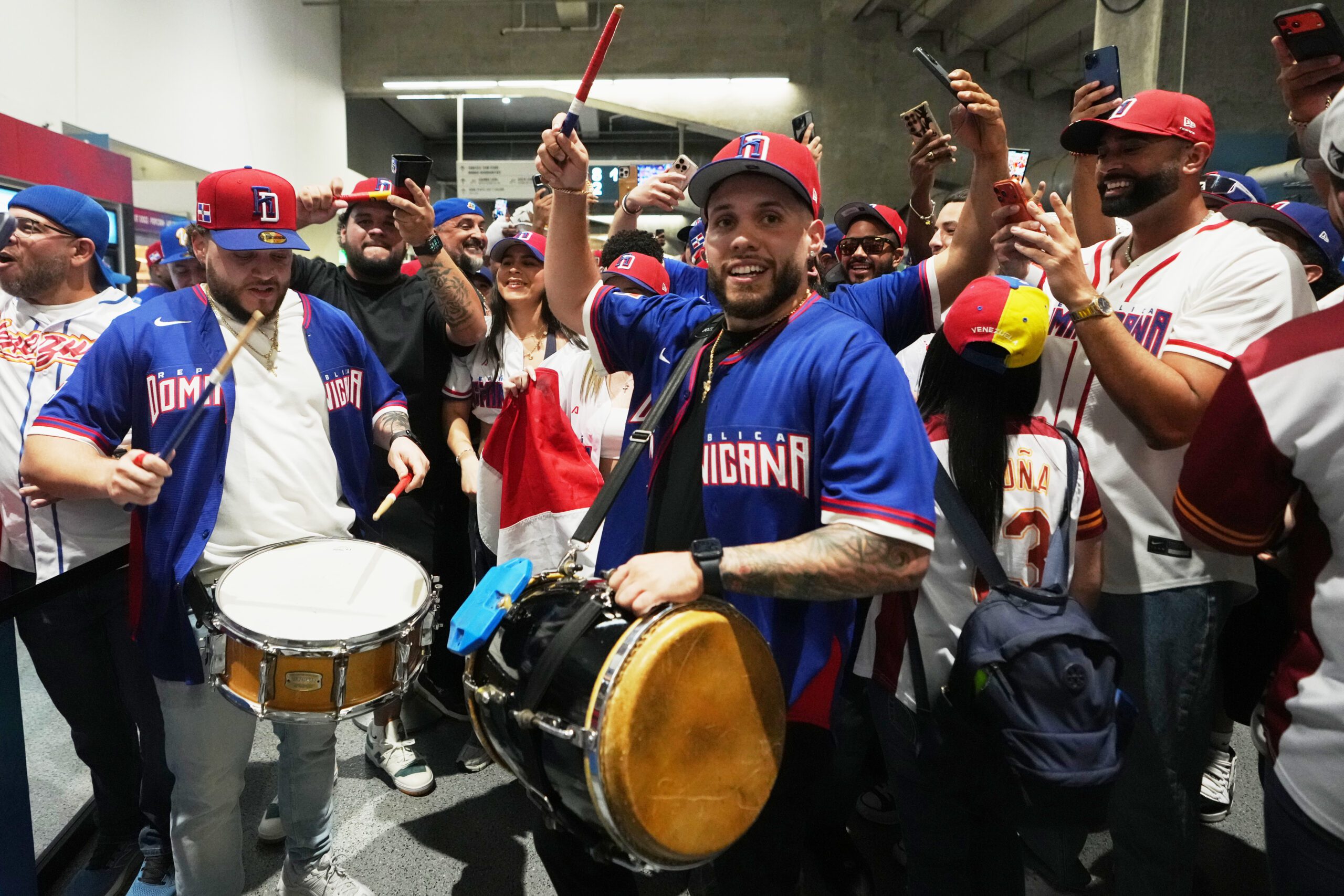
While I had previously been in the “sideshow/distraction” camp, I wasn’t any longer following the 2023 tournament. Seeing how seriously fans from the Dominican Republic, Puerto Rico, and Venezuela viewed the WBC, as well as how joyously their fans cheered, chanted, danced, the party-like atmosphere, the national pride, I was hooked.
It’s long past time the United States took this tournament as seriously as other nations do. The storybook ending to the 2023 WBC, where Shohei Ohtani struck out Mike Trout to close out Japan’s championship game victory helped turn the tide in convincing American fans that the WBC is more than just a sideshow.
Another trip to the final game in 2026 undoubtedly helped, too. The next WBC is only three or four years away, and it’ll be the biggest international baseball party yet. See you there.
It Would Be No Small Honor – The rise of the WBC began with the vision of Jim Small and his team at Major League Baseball. Small, MLB’s Senior Vice President of International, has been part of the group behind the WBC since its inception, and is retiring this May.
Over the years, Small and his team grew this event from a novelty event split between big league parks, the Tokyo Dome, and a few spring training venues, to a worldwide phenomenon. The attendance and the attention has grown each year, and 2023’s movie script ending, which saw Shohei Ohtani come out of the bullpen for Japan and strike out his former teammate Mike Trout to end the championship game finally catapulted the WBC into the mainstream for American fans.
This year, American fans finally seem to have fully bought into the WBC as an important, world-wide competition. It took two decades, but Small and his team’s original vision had grown into what they believed it could – and possibly more.
Over the years, 40 individuals have been enshrined in the Baseball Hall of Fame as executives, usually commissioners, general managers, or owners. Having built the WBC into what might be the second-best worldwide, single-sport competition behind the FIFA World Cup, Jim Small should merit serious consideration for induction as an executive when he’s eligible in five years.
No Protests – Unlike 2023, there were no noticeable protests either inside or outside loanDepot Park. In 2023, there were protests outside the ballpark calling attention to Nicaraguan president Daniel Ortega’s repressive actions against the Catholic church in the Central American country, protests against former Venezuelan president Nicolas Maduro, who was captured by the U.S. military in a midnight raid on Caracas in February, and most visibly, protests both inside and outside the ballpark during the semifinal game between the U.S. and Cuba. During that game, protesters held signs that were visible on the telecast of the game, and multiple protestors ran onto the field holding signs decrying the Communist regime on the island.
Italy’s Run Inspires a Nation – Fueled by a dugout espresso machine and led by captain Vinnie Pasquantino and manager Francisco Cervelli, Italy’s run to the semifinals gave baseball heightened prominence in the European country, which has had a professional league since 1948. While multiple Italian-Americans have starred in Major League Baseball, this WBC saw the debut of Samuel Aldegheri, the first Italian-born and trained MLB player. With 29 Italian-Americans and Aldegheri, Italy upset the U.S. 8-6 and went undefeated in Pool B before falling 4-2 to Venezuela in the semifinals, with the semifinal game televised in Italy.
The win against the United States was a moment for Italian baseball akin to the U.S. win over the Soviet Union in ice hockey at the 1980 Winter Olympics. That hockey game became a seminal moment for that sport in the U.S., inspiring kids across the country to pick up sticks and put on skates, changing hockey from a regional sport largely concentrated in the midwest and northeast to a nationwide game in the decades that followed.
Similarly, Italian baseball is largely centered around a few cities, most notably Nettuno, which has won 17 scudetti and has a 10,000-seat baseball stadium, as well as Bologna, Milan, Parma, and Grosseto. If baseball can take hold in Italy after the WBC the way hockey took hold in the United States following the Miracle on Ice, it may not be long before Italy is holding up the WBC trophy at loanDepot Park.
Hirokazu Ibata’s Run As Japan Manager Ends – The bus taking Japan to the airport hadn’t even left the team hotel in Key Biscayne before manager Hirokazu Ibata announced his resignation as manager, which wasn’t surprising given the results during his tenure. The former Chunichi Dragons and Yomiuri Giants infielder couldn’t defend Japan’s title in the WBSC Premier12 nor the World Baseball Classic, and his roster choices and in-game management decisions contributed to those failures. Had Ibata not resigned, he surely would have been fired shortly after the team’s plane landed in Tokyo. World Baseball Network’s Yuri Karasawa wrote a detailed breakdown of the Ibata Japan era and what comes next.
The Real Game Is In the Stands – The 40 pool play games spread across four venues were a hot ticket, with Tokyo’s 10 games drawing the highest average attendance, with 36,527 showing up to each game. Houston’s Daikin Park drew the second-highest average crowd, with 35,037 attending games in the pool that included the U.S. playing on home soil, Mexico playing in a city with a huge Mexican-American population, and Italy drawing Italian-Americans to the ballpark. Miami pulled in 25,080 per game, with fans packing loanDepot Park, especially for games involving the Dominican Republic and Venezuela. Limited by the capacity of Hiram Bithorn Stadium, the pool play games in San Juan drew 14,322 per opening.
Japan’s four pool play games at the Tokyo Dome drew the largest crowds of the tournament, bringing an average 42,326 fans to the park, while the largest single-game crowd was Japan’s pool play finale against Czechia.
The pool play game between Colombia and Panama in San Juan drew the smallest crowd of the tournament, with 9,790 coming through the gates.
An average of 34,652 came out for the elimination games in Miami, with the final drawing 36,190.
Ticket Prices For Select Games In Miami Soar – Once Venezuela had clinched a berth in the championship game, resale prices for the final soared. A single ticket to get into the ballpark in section 27 in foul territory down the left field line was selling for $446 on StubHub at 8 p.m. Tuesday night, and the lowest price World Baseball Network saw in the hours leading up to the game was $226 for a standing room only ticket.
Meet the All-WBC Team – The 2026 All-WBC Team was announced on Wednesday. Here’s the list:
C – Austin Wells, Dominican Republic
1B – Luis Arraez, Venezuela
2B – Brice Turang, United States
3B – Maikel Garcia, Venezuela (2026 WBC MVP)
SS – Ezequiel Tovar, Venezuela
OF – Roman Anthony, United States
OF – Fernando Tatis Jr., Dominican Republic
OF – Dante Nori, Italy
DH – Shohei Ohtani, Japan
P – Paul Skenes, United States
P – Logan Webb, United States
P – Aaron Nola, Italy
Where To Next – Speculation has already begun on potential venues for the next World Baseball Classic, the year for which has yet to be decided.
Venezuela’s baseball federation has openly stated their desire to host pool play at Estadio Monumental Simon Bolivar in Caracas. In Mexico, 2017 pool play host venue Estadio Panamericano in Guadalajara is undergoing an extensive renovation and Yucatan’s Parque Kukulkan Alamo has seen its renovation completed.
There will likely be a pool somewhere in Asia, with the Tokyo Dome always a likely candidate, as it seats nearly 45,000 and Tokyo is easily accessible by air. Taichung, Taiwan’s Taichung International Baseball Stadium hosted pool play in 2023, but since then, the Taipei Dome has opened, giving the country a modern, indoor venue that takes the potential of bad weather off the table.
In the U.S., Phoenix’s Chase Field, Houston’s Daikin Park, Globe Life Park in Arlington, Texas, and loanDepot Park are all likely candidates, as they feature retractable roofs that guarantee ideal playing conditions, with Miami being tossed around as something of a permanent home for the semifinals and finals.
As Did Prices For Parking and Concessions – Professional baseball is a for-profit business, and boy, was that ever on display in Miami. During pool play, a parking space for the duration of both games in the lots outside loanDepot Part went for $75, though you could always park on the lawn of a neighboring house for less.
Concessions were also pricey, with a simple foil-wrapped, normal-size hot dog going for $7.75. A 16 oz. beer was around $15, a draft beer in a souvenir cup was $24, and even a bottle of water cost $8 – proving that affordability isn’t just a problem at grocery stores and gas stations in recent months.
Photo: Fans play drums as they walk through the concourse before a World Baseball Classic game between Venezuela and the Dominican Republic, Wednesday, March 11, 2026, in Miami. (AP Photo/Lynne Sladky)