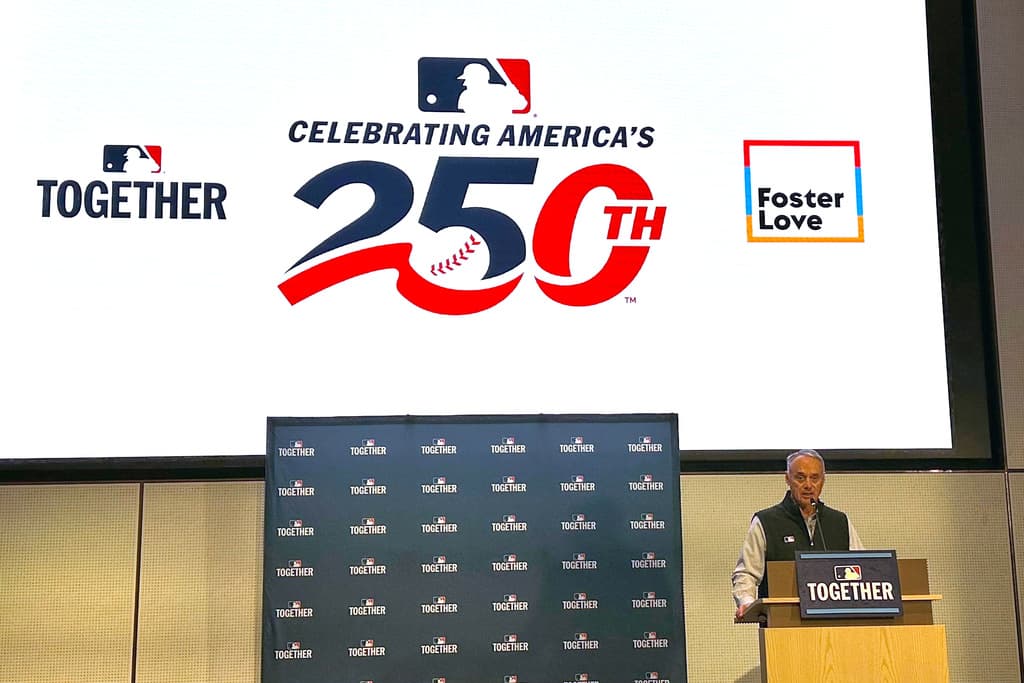
In the quarter millennium year of the American experiment, the country finds itself in a strange equilibrium — a stasis that feels both engineered and accidental, comforting and corrosive. The stadium and the statehouse, the capital markets and the culture, the ballclub and the body politic all move to the same rhythm now: spectacle on the surface, structural inertia beneath.
Six years removed from the shutdown era, the aftershocks still shape our daily lives. Not because of the event itself, but because of what followed — the bailouts, the liquidity waves, the consolidation of wealth, the quiet deals that kept every major institution upright. Billionaires multiplied. Asset prices soared. The middle hollowed. And the country learned, perhaps without realizing it, that stasis is the most profitable policy of all.
Baseball learned it too. The modern game is faster, louder, sleeker — a content calendar disguised as a season. Rule changes create the illusion of dynamism, but the architecture remains unchanged. The Guggenheim Dodgers operate with institutional liquidity no other club can match. The Yankees maintain their brand the way the Dow maintains its index — reshuffling, rebranding, preserving the illusion of continuity. Meanwhile, the mid‑tier clubs patch holes and pray for variance. Clubs like the Angels — identity‑rich but liquidity‑limited — cannot operate in the same universe as the Guggenheim Dodgers, no matter how stable their ownership or how deep their cultural roots.
This is not a criticism of the Dodgers; it is an acknowledgment of the system they inhabit — a system where scale is destiny and liquidity is competitive advantage.
It is the same story everywhere: in markets, in politics, in culture. A handful of entities with scale and insulation thrive, while the rest navigate a landscape that rewards compliance and punishes deviation. The Haves consolidate. The Have Nots wait. And the nation, like the league, drifts toward a future where spectacle substitutes for reform.
2026 will test this equilibrium. A quarter millennium anniversary. A midterm cycle in a culture‑war era. A looming CBA that will reveal more about the sport’s governance than any rule change ever could. A country celebrating its founding while wrestling with its fractures. The best of times and the worst of times, braided together in a single year.
Baseball is not separate from this moment. It is a mirror of it. And if we look closely enough, the architecture of the sport may tell us more about the architecture of the nation than any speech, index, or poll ever will.
The Competitive Architecture
None of this is to romanticize the NFL. I have my own issues with that league — its governance, its culture, its ownership class, its treatment of players. The owners are still obscenely wealthy. The television revenue is still the lifeblood. The entire enterprise is still driven by the same forces that animate the capital markets: liquidity, spectacle, and the unspoken agreement that as long as the money flows, no one will upset the applecart.
But in one narrow respect — competitive balance — the NFL’s architecture is slightly more functional than baseball’s. Not because the league is noble, but because its revenue model forces a kind of structural parity. The cap, the revenue sharing, the centralized control: these mechanisms prevent liquidity from becoming destiny. They allow markets like Green Bay, Kansas City, and Buffalo to contend year after year, not because they are richer, but because the system gives them room to breathe.
MLB does not offer that grace. The Braves, Rays, Brewers, and Reds can compete — brilliantly, at times — but they cannot sustain success across decades under the current rules. The moment their young core matures, the moment arbitration hits, the moment free agency arrives, the moment liquidity becomes the deciding factor, the system tilts back toward the Haves.
These clubs are not poorly run; they are structurally outmatched — the American middle class in baseball form.
And this is the point: even the NFL’s relative parity is not a triumph of fairness. It is simply another form of stasis — a wealth machine that keeps ticking because no one with power has an incentive to disrupt it. The owners are enriched. The networks are enriched. The shareholders are enriched. The players and media ecosystem are compensated just enough to keep the spectacle bright. The structure remains untouched.
Stasis is the policy. In football. In baseball. In the capital markets. In American life.
The Solutions Movement
If baseball is a mirror of the nation, then the question becomes: what would reform actually look like? Not cosmetic tweaks. Not rule‑change theatrics. Not the illusion of parity. Real reform — the kind that reshapes incentives rather than repackaging them.
The real fix is a three‑part architecture:
-
A cap that limits runaway spending at the top not to punish success, but to prevent liquidity from becoming destiny.
-
Revenue sharing that lifts the mid‑tier not as charity, but as recognition that a league is only as strong as its competitive floor.
-
Competitive balance mechanisms that reward operator excellence so that the Braves of the world — the disciplined, the developmental, the structurally sound — can compete with the Guggenheim Dodgers on something other than unlimited payroll capacity.
This is not socialism. It is stewardship. It is the recognition that a league is a civic institution, not a private fiefdom. And it is the acknowledgment that without structural balance, the spectacle becomes hollow, the competition becomes predictable, and the sport becomes a content calendar rather than a contest.
The Haves remain insulated by scale; the Have Nots remain sedated by spectacle.
The nation faces a similar dilemma. The answer is not a single policy, a single tax, a single program. It is a rebalancing of incentives — a recognition that stasis is profitable for the few but corrosive for the many. A society that rewards scale without accountability, liquidity without responsibility, and spectacle without substance drifts toward a future where the scoreboard shines while the foundation cracks.
Real reform — the kind that matters — comes from ethical, brilliant minds who understand systems, not slogans. People who can see the whole board. People who can design incentives that reward contribution, not extraction. People who understand that a nation, like a league, must be governed with an eye toward the long arc, not the next quarter’s numbers or the next election cycle.
I do not claim to be one of those minds. But I know what their work would look like. It would look like balance. It would look like stewardship. It would look like a society that invests in its mid‑tier — its operators, its builders, its families, its civic institutions — rather than treating them as spectators in a game they once played.
Because the truth is simple: a league cannot thrive when only a handful can win. A nation cannot thrive when only a handful can advance. And a culture cannot endure when spectacle replaces stewardship as the governing principle.
The Quarter Millennium Collision
By the time summer arrives, the quarter millennium celebrations will collide with a midterm cycle already primed for cultural combustion. Passions will flare, narratives will harden, and the spectacle will drown out the substance. The culture war — already simmering — will reach a boil as the nation attempts to commemorate its founding while arguing over its future. And that is precisely why this reflection belongs here, now — before the noise, before the distortions, before the country mistakes the celebration for the condition.
The Closing Movement
The truth is that stasis has become the most profitable policy in American life. Not because it serves the public, but because it serves the structures that define the public’s reality. The capital markets thrive on predictability. The leagues thrive on spectacle. The networks thrive on narrative. The political class thrives on division. And the wealthiest among us — the institutions, the conglomerates, the sovereign‑scale entities — thrive on a system where nothing fundamental ever changes.
This is why the shutdown era accelerated the divide. It wasn’t the event itself. It was the response — the bailouts, the liquidity, the guarantees, the quiet deals that ensured the largest structures would not fall. Billionaires were not merely protected; they were multiplied. Asset prices were not merely stabilized; they were inflated. And the public was not merely reassured; it was sedated.
Baseball followed the same script. The rule changes created the illusion of dynamism, but the architecture remained untouched. The valuations soared. The super club(s) consolidated. The mid‑tier clubs fought for relevance. The players were compensated just enough to keep the spectacle bright. And the league office, like every major institution in American life, learned that the safest path was the one that preserved the existing hierarchy.
This is the environment into which 2026 arrives — a quarter millennium year, a midterm year, a CBA year, a cultural inflection point. A year when the country will celebrate its founding while wrestling with its fractures. A year when baseball will negotiate its future while pretending its present is sustainable. A year when the spectacle will be louder than ever, even as the foundation beneath it strains under the weight of its contradictions.
And yet, there is a path forward — not through slogans, not through cosmetic reforms, not through the illusion of change, but through the kind of stewardship that understands systems rather than headlines. The kind of leadership that sees the whole board. The kind of reform that balances incentives rather than distorting them. The kind of architecture that rewards contribution, not scale alone.
In baseball, that means a structure where the Braves and Rays of the world can sustain excellence, not merely flash it. A structure where liquidity does not masquerade as competitive genius. A structure where the mid‑tier is not punished for operating well. A structure where the league’s health is measured not by valuations, but by competition.
In the nation, it means a society where the middle is not hollowed out to preserve the top. A society where institutions serve the public rather than the other way around. A society where the scoreboard is not mistaken for the game. A society where the quarter millennium is not a celebration of stasis, but a reminder that the American experiment was built on reinvention, not inertia.
I do not claim to have the blueprint. But I know what the blueprint must reject: the belief that stasis is stability, that spectacle is substance, that valuations are vitality, that liquidity is leadership. The quarter millennium year invites us to look beyond the scoreboard — in baseball, in politics, in markets, in culture — and ask whether the architecture we have inherited is worthy of the future we claim to want.
The year ahead will test whether we are content to drift — or whether we are ready to confront the architecture that has shaped the last six years, the last several decades, and now, the quarter millennium moment. Baseball will feel it. The markets will feel it. The culture will feel it. The nation will feel it.
The question is whether we will see it.