A Four-Part Editorial Series
Baseball stands at a rare moment in its history — a moment where the beauty of the game and the architecture beneath it are pulling in opposite directions. On the field, the sport has never been more global, more athletic, more dramatic. Off the field, the structures that govern competitive balance have never been more uneven, more capital-driven, or more consequential.
This four-part series examines that divide.
It traces the state of the sport as we enter 2026 — from the global renaissance on the field, to the institutional forces shaping outcomes, to the drift of legacy franchises, to the looming CBA that will determine baseball’s future for a generation. It is written with clarity, without sentimentality, and with the belief that baseball deserves honesty equal to its beauty.
Each part stands on its own.
Together, they form a single argument:
Baseball is too important to drift. Its future must be built with intention.
PART 1 OF 4
THE STATE OF THE GAME — AND THE TRUTH WE OWE IT
THE PIVOT
Part 1 Preamble
The opening installment sets the stage. Before we confront the structures shaping baseball’s future, we must honor the state of the game itself — its global rise, its athletic renaissance, its cultural heartbeat. Only then can we pivot to the truths beneath the spectacle. Part 1 is the overture: the beauty, the scale, and the honesty the rest of the series demands.
THE STATE OF THE GAME — AND THE TRUTH WE OWE IT
As we mark Hannukah, approach Christmas, and prepare to turn the calendar, it feels fitting to take stock of where baseball stands — and where it’s drifting.
Baseball remains one of the great American dramas — a sport that, even in its moments of drift, still finds ways to remind us why it once held the nation’s heartbeat. I relish this game. I miss when it was our national pastime, yes, but I also see the signs of its recovery. This year’s World Series was incontestably one of the all time epics — a seven act masterpiece of tension, heartbreak, and brilliance. The Blue Jays left with the short straw, and the hearts of the Great White North broke with them. No participation trophies. But if ever a runner up deserved accolades, it was the one who walked off that stage.
I’ve seen many of the legends in my lifetime — from Aaron and Frank Robinson to the fearsome hitters like Reggie Jackson and the gap-to-gap artists like Tony Gwynn, to the pitchers who defined the sport from the 1970s onward, the Seavers and Carltons, the Madduxes and Pedros, and yes, the Saberhagens — and the champions whose eras still carry their names, like Derek Jeter. Yet I truly believe today’s baseballers are the most athletic generation the game has ever seen. Bigger. Faster. More dynamic. The Elly De La Cruz types. The Bobby Witt Jr. types. The Julio Rodríguez and Ronald Acuña Jr. types. The Aaron Judge types. The new wave of American born stars returning to the forefront. And the pitchers — Skubal, Skenes, Strider, Wheeler, and a dozen others — throwing with a combination of power and precision that would have stunned earlier eras.
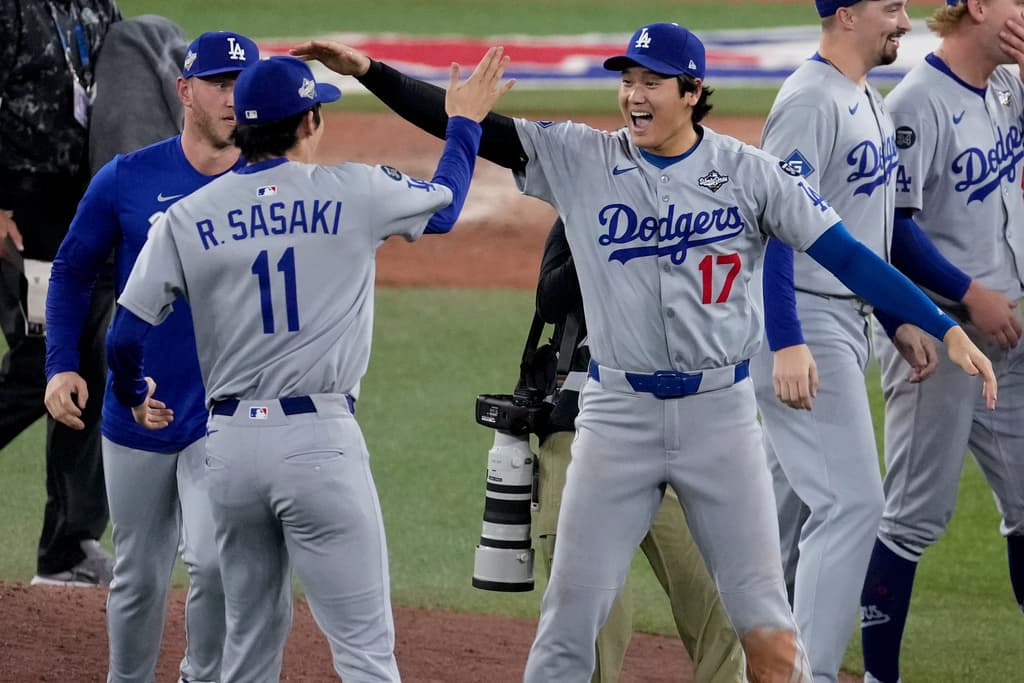
Los Angeles Dodgers’ Shohei Ohtani (17) and Roki Sasaki (11) celebrate their teams’ win in Game 7 of baseball’s World Series agaisnt the Toronto Blue Jays, Sunday, Nov. 2, 2025, in Toronto. (AP Photo/Ashley Landis)
But baseball is not merely American. It is global. It is Dominican, Venezuelan, and Puerto Rican. It is Japanese — profoundly so. The echo from Chavez Ravine this year was unmistakable: Hail to Japan. And in this new era, no pitcher has embodied Japan’s precision and dominance more completely than Yoshinobu Yamamoto, whose MVP brilliance and technical mastery have already reshaped expectations on both sides of the Pacific. And towering above even that, Shohei Ohtani stands as perhaps the greatest baseball man of all time — a two way force whose excellence defies every historical comparison and whose global impact has redefined what a single player can mean to a sport. Not only their stars, but their manager — Dave Roberts, a Black man whose mother is Japanese — standing as a bridge between cultures. And beyond Japan, the sport is expanding into new markets like Dubai — and revitalizing renascent ones like Italy.
Just days ago in New York, we celebrated Italy’s baseball renaissance at the Italian American Baseball Foundation Gala. And this coming March, during America’s 250th birthday year, we will witness what may be the most anticipated World Baseball Classic in the event’s history.
Baseball is bigger.
Baseball is better.
Baseball is global.
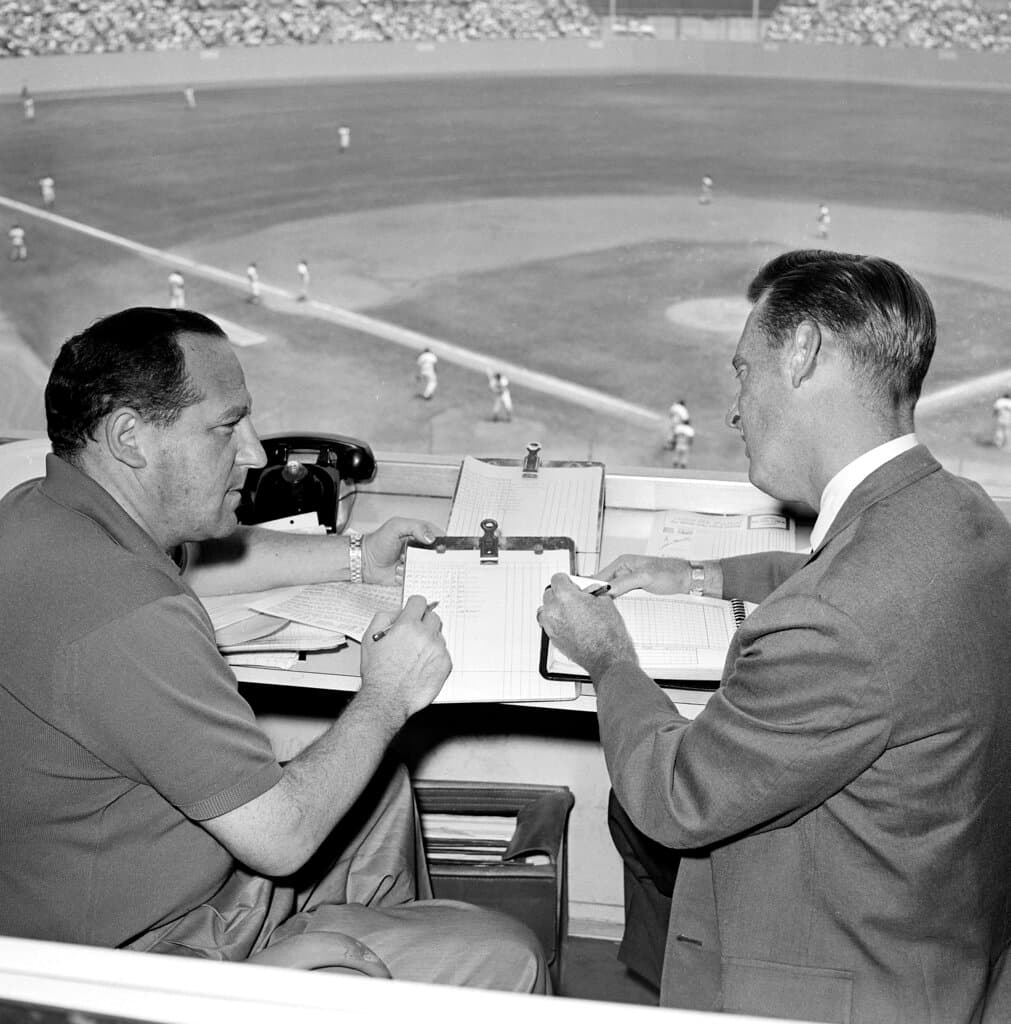
Allan Roth, left, statistician of the Los Angeles Dodgers, sits in the booth with broadcaster Vin Scully in August 1963 in Los Angeles. Scully, whose dulcet tones provided the soundtrack of summer while entertaining and informing Dodgers fans in Brooklyn and Los Angeles for 67 years, died Tuesday night, Aug. 2, 2022, the team said. He was 94. (AP Photo/Harold Filan, File)
And baseball endures. From Scully and Prince to Harwell, Gowdy, Mel Allen, Jack Buck, and now Joe Buck — the voices have changed, but the heartbeat remains.
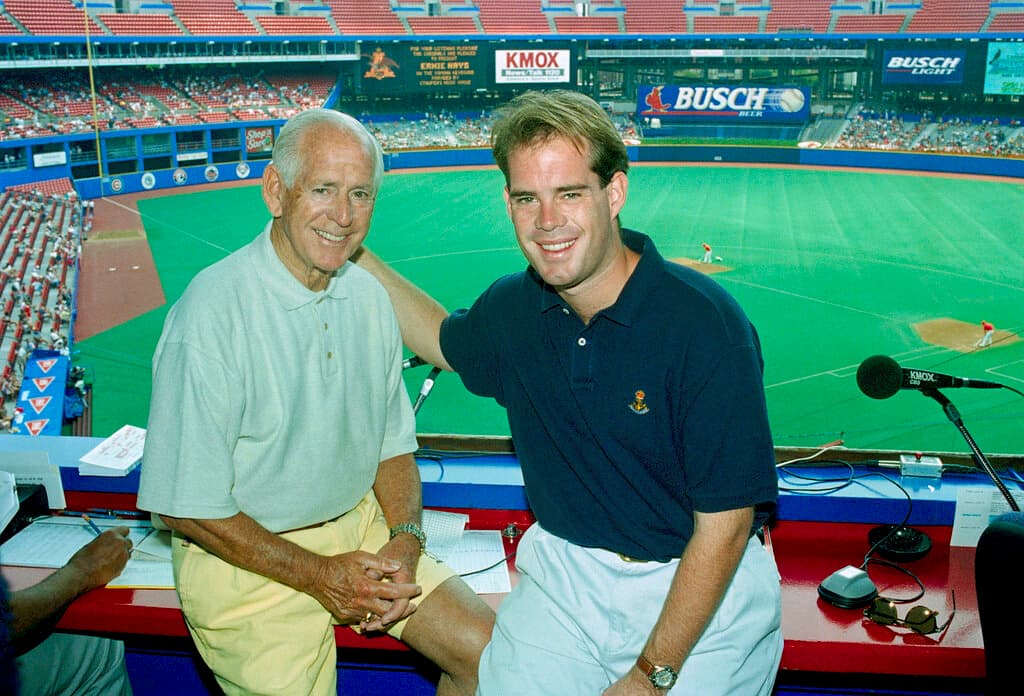
St. Louis Cardinals Hall of Fame Broadcaster Jack Buck, left, and his son Joe Buck celebrate Father’s Day as they go into their fifth season of broadcasting St. Louis Cardinals Baseball together in St. Louis, June 18, 1995. (AP Photo/Leon Algee)
This is why we love it. This is why we care. And this is why the rest of this editorial must be honest.
THE PIVOT
And because the game is so alive — because it is bigger, faster, more global, more athletic, and more dramatic than at any point in its history — we owe it honesty. We owe it clarity. We owe it the courage to look beneath the spectacle and examine the structures shaping its future.
Baseball is thriving on the field. But off the field, the architecture is shifting in ways the public conversation rarely acknowledges.
The rumor mill spins.
The Hot Stove roars.
Names fly across the screen like confetti — Peralta, Skubal, Tucker, the Japanese sensations, the next phenom waiting to be posted.
But beneath the noise lies a quieter truth: the competitive balance of Major League Baseball is no longer determined by scouting alone, or development alone, or even payroll alone. It is determined by ownership psychology and capital structure.
This is the part of the sport we rarely talk about — not because it’s unimportant, but because it’s uncomfortable. It forces us to confront the gap between what fans believe drives winning and what actually does.
It forces us to confront why certain clubs can outbid entire divisions.
Why others operate like incubators.
Why the same handful of teams circle every elite player.
Why dynasties today are engineered, not stumbled into.
And it forces us to confront the truth about the Yankees — my team — whose issues run deeper than roster construction, deeper than injuries, deeper than analytics, deeper than any single offseason decision.
This is where the December editorial must go next.
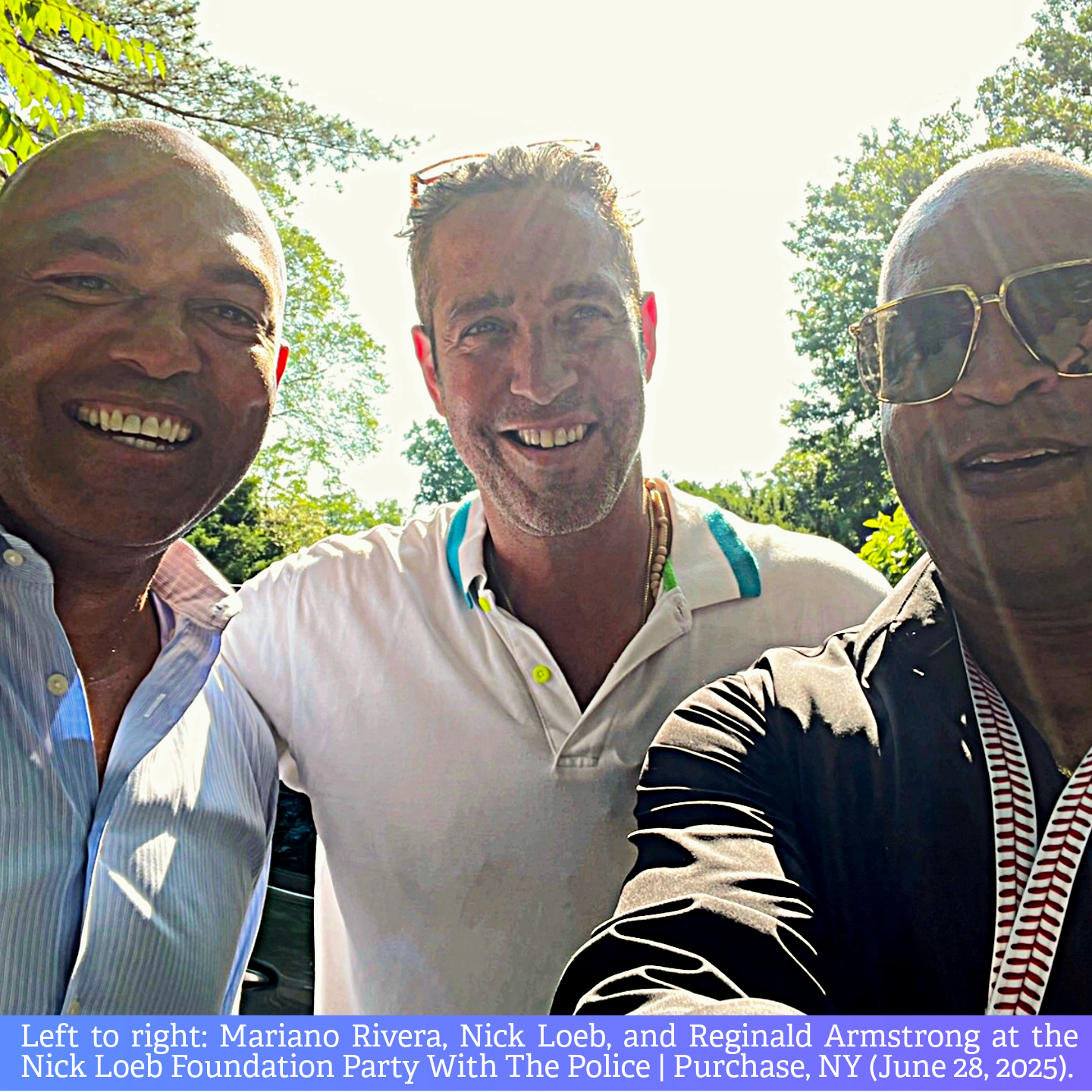
Photo: Left to right: Mariano Rivera, Nick Loeb, and Reginald Armstrong at the Nick Loeb Event, Purchase, NY (June 2025).