
PART 3 OF 4
THE UNIVERSAL LAW OF LEADERSHIP
ADDENDUM (THE LAW OF EXECUTION)
THE SYNTHESIS
Part 3 Preamble
If Part 2 exposed the architecture — the capital structures, ownership psychologies, and institutional forces shaping the sport — Part 3 turns to the forces that animate that architecture. Leadership. Execution. Clarity. These are the elements that separate drift from dominance, noise from inevitability. This installment examines the universal laws that govern eras, not games, and why certain franchises rise while others circle themselves into stasis. The sport’s future will be shaped by these truths.
THE UNIVERSAL LAW OF LEADERSHIP
(The Quenneville Parallel)
If you want to understand why certain franchises rise and others drift, you must look beyond payrolls, beyond analytics, beyond the rumor mill, and into the one force that has shaped every dynasty in every sport: leadership.
Leadership is not a slogan.
Leadership is not a press conference.
Leadership is not a spreadsheet.
Leadership is the architecture of winning.
And nowhere is this more evident than in the career of Joel Quenneville — a man whose name, for reasons both fair and unfair, has been whispered more than spoken in recent years. But the truth remains: he is one of the greatest leaders in modern sports. Three Stanley Cups in Chicago. A culture of accountability. A system of clarity. A room that responded to him because he understood the pulse of competition.
When Anaheim hired him, the Ducks didn’t just gain a coach. They gained structure. Swagger. Legacy. A young core — Gauthier, Carlsson, McTavish — suddenly had a compass. Veterans like Trouba, Gudas, Killorn, Kreider, Strome brought the GPS. And almost overnight, a franchise that had been drifting began to look like a contender.
This is not coincidence.
This is not magic.
This is leadership.
I said it long before the Panthers hired him. I said it again when the culture war forced Florida to let him go despite a blistering start. And I say it now: the formula for winning has not changed. Not in hockey. Not in baseball. Not in war. Not in the C-suite. Not in households. Not in clubhouses or locker rooms.
Winning requires:
- clarity
- courage
- accountability
- emotional intelligence
- strategic foresight
- the ability to read a room
- the willingness to make hard decisions
- the instinct to know when the moment demands boldness
This is why the Dodgers thrive.
This is why the Yankees drift.
This is why Anaheim is rising.
This is why certain clubs in MLB operate like incubators while others operate like empires.
Leadership is destiny.
And leadership is architecture.
The Dodgers have it.
The Yankees do not.
The Mets are searching for it.
The Phillies and Blue Jays flirt with that level — ambitious, aggressive, willing to spend — but they are not institutions. They are wealthy clubs, not capital organisms.
The smaller clubs often never get the chance to build it before their talent is harvested.
This is the universal truth the December editorial must articulate:
Talent wins games. Leadership wins eras.
ADDENDUM (THE LAW OF EXECUTION)
Talent wins games.
Leadership wins eras.
But even that is not enough.
Because baseball, in its cruelest and most beautiful form, is a sport decided by moments — by the five-out window, the two-out window, the pitch that cannot miss, the swing that cannot fail, the heartbeat that cannot tremble.
The Dodgers nearly proved this truth in the World Series.
Five outs from elimination.
Then two.
A dynasty built on institutional clarity, private capital scale, and the deepest roster in the sport — nearly undone by the oldest law in baseball:
If you do not execute in the moment, the moment will execute you.
This is the paradox of the modern game:
• You can have the greatest payroll.
• You can have the greatest infrastructure.
• You can have the greatest leadership.
• You can have the greatest talent.
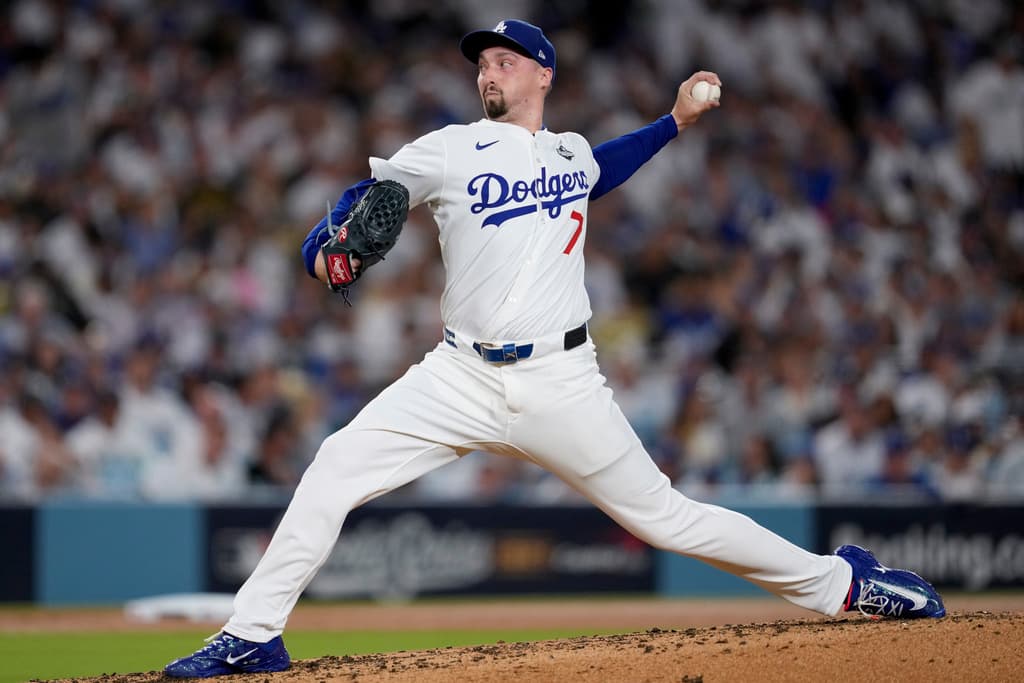
Blake Snell in the postseason — the razor-thin margin where execution decides everything. Photo: AP / Matt Rourke
And still —
one pitch, one swing, one misread, one heartbeat — and it all collapses.
This is why baseball remains the most democratic of the major sports.
Money can build the stage.
Leadership can set the scene.
Execution writes the ending.
The Dodgers nearly proved the fragility of that formula in Game 7 — five outs from elimination, then two outs, both times trailing, both times one swing from collapse. But they executed. They survived. They endured. And in doing so, they revealed the sport’s deepest law:
Even the strongest architecture must still face the moment.
And this is why the Dodgers’ survival — five outs, then two outs from disaster — was not just a triumph of talent or leadership. It was a triumph of timely execution, the one element no owner, no GM, no analytics department can manufacture.
Execution is the hinge between architecture and outcome.
It is the difference between heartbreak and immortality.
It is the force that keeps baseball honest.
THE SYNTHESIS
Baseball today is a paradox: the most global, athletic, dramatic version of itself on the field — and the most stratified, capital-driven version of itself off the field. The sport has never been healthier in spectacle, never more thrilling in talent, never more international in reach. And yet, beneath the surface, the architecture that governs competitive balance has never been more uneven.
The Dodgers are the model of the new era — not because they spend, but because they are structured. They are a storied baseball franchise with the scale, liquidity, and durability of an institution. Guggenheim’s liquidity, compensation engineering, and operational clarity have created a franchise that can absorb mistakes, outbid rivals, and sustain excellence across cycles. They are the modern Yankees — not in brand mythology, but in functional reality.
The Yankees, meanwhile, are the inverse: a brand masquerading as a dynasty. A franchise that still commands global attention but no longer commands championship inevitability. A team that once defined the sport’s standard but now lives on the fumes of a dynasty built by men who are no longer in the building. A team that has forgotten that championships are not a marketing slogan — they are a burden.
The Mets are the paradox of capital without architecture. The Phillies and Blue Jays are corporate landlords capable of brilliance but not built for inevitability. The smaller clubs are incubators — developing talent for others to harvest. And the rumor mill, the Hot Stove, the endless speculation, all of it is noise layered atop a simple truth:
Baseball’s competitive destiny is now determined by the intersection of capital, leadership, and execution.
Capital builds the stage.
Leadership sets the scene.
Execution writes the ending.
The Dodgers nearly proved the fragility of that formula in Game 7 — five outs from elimination, then two outs, both times trailing, both times one swing from collapse. But they executed. They survived. They endured. And in doing so, they revealed the sport’s deepest law:
Even the strongest architecture must still face the moment.
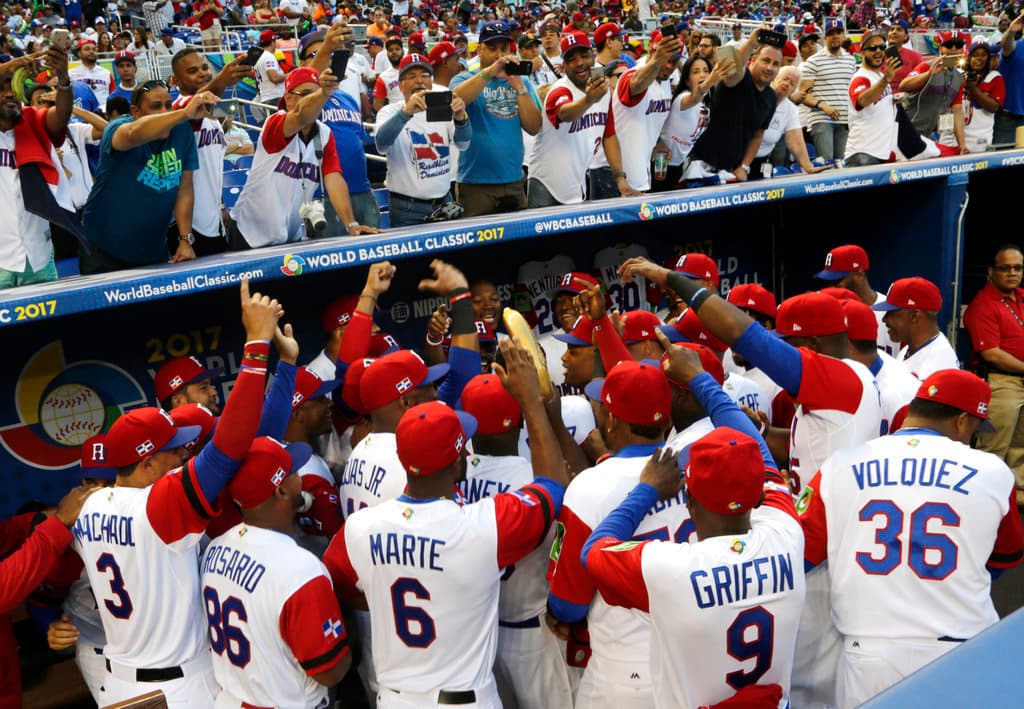
The World Baseball Classic in Miami — the global stage where the sport’s future is already unfolding. Photo: AP / Lynne Sladky
This is the state of baseball as we enter 2026 — a sport of breathtaking talent, global expansion, institutional dominance, and razor-thin margins. A sport where dynasties are engineered, not stumbled into. A sport where the Yankees’ drift is not an accident but a structural consequence. A sport where the Dodgers’ reign is not luck but design. A sport where the Jays can break a nation’s heart twice in one night and still walk away empty-handed.
This is the landscape the December editorial must confront — honestly, clearly, without sentimentality, and without apology.