The 2026 World Baseball Classic has been pushed to the brink before it even begins, not because of politics in the traditional sense, but because of something quieter and more revealing: insurance.
There’s a standoff between Major League Baseball, its 30 clubs, national federations, and insurers over who will bear the financial risk of injury has placed the entire tournament under strain. It’s the kind of crisis that unfolds in plain sight, yet most fans never see it. Inside the sport, everyone understands what it means.
The WBC is the rare baseball event where MLB’s power is not absolute. And that’s why the insurance crisis matters. It exposes the fault line the entire tournament rests on. The MLB clubs want protection for their player contracts, which are assets, albeit unconventional. National federations want their stars on the field, but the lone company that underwrites this type of insurance are unwilling to underwrite the risk, especially for older players or those with nagging injuries, leaving players are caught between the flag on their chest and the contract with their MLB club.
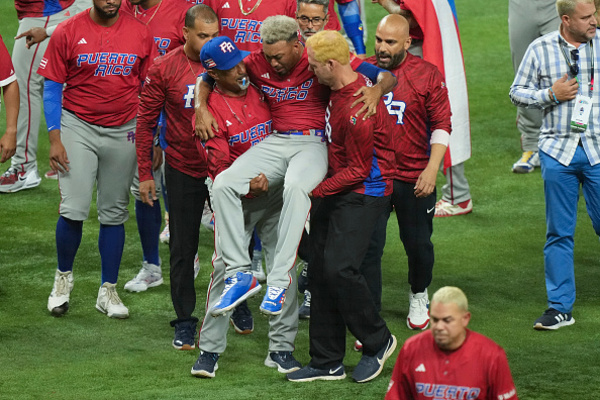
This year, the consequences are already visible. Players like Venezuela’s José Altuve and Puerto Rico’s Francisco Lindor have been ruled out as the insurance issue drags on. Puerto Rico has discussed whether they can field a viable roster at all, given the number of players awaiting clearance.
MLB wants the WBC to feel like the World Cup, but it refuses to build the infrastructure that makes the World Cup possible. FIFA solved this decades ago with two pillars: mandatory player release and a centralized insurance and compensation system that protects clubs when players are injured. The structures aren’t identical — MLB’s guaranteed contracts create different pressures — but the principle is the same. Global tournaments require centralized protection, and MLB doesn’t have it.
Instead, it has near-billion dollar contracts, owners resisting steep actuarial premiums, insurers wary of underwriting the risk of multi-million dollar athletes risking their health, a tournament staged during MLB’s own exhibition season, and a CBA cycle where the WBC is never a priority. This is why the WBC keeps stumbling into the same crisis every cycle — it’s not an accident, it’s architecture.
The WBC is staged in March, during MLB’s preseason — the one window MLB considers expendable. But March is the worst possible moment for a high‑intensity global tournament. Pitchers are building up their arms for the season, rosters are fragile, injuries are likely to occur, and because of that, MLB clubs are very protective of their assets. Players may arrive in excellent physical condition, but they are not yet in game shape — the competitive sharpness and execution required for tournament intensity only come with reps.
The obvious alternative — November — is no alternative at all. Cold weather across most of the country makes outdoor play nearly impossible. Only a handful of domes could host games, pitchers have already thrown an entire season, and players are physically and mentally spent.
There is no perfect window. There is only the window MLB is willing to sacrifice, and MLB sacrifices nothing from the regular season because the regular season has become a content calendar – a 162‑game inventory of product for regional sports networks and streaming partners that is the engine that drives MLB’s multi-billion dollar revenue stream.
When the next CBA arrives, the real battles will be salary cap structures, revenue sharing, competitive balance, the super‑club economy, the television‑driven caste system, and the widening gap between liquidity haves and have‑nots. Compared to that, the WBC insurance crisis is a pimple on an elephant. This is why the WBC never gets the structural attention it needs. The sides fight over the architecture of the American game, and the global game gets whatever scraps remain.
MLB owners already resent the economic system they’re trapped in. They’re not eager to subsidize a global tournament on top of it.
The WBC’s structural problems cannot be separated from MLB’s broader economic architecture. Television money has created super‑clubs operating in a different economic universe, small‑market teams that dependent on revenue sharing, a shrinking middle class of clubs, and payroll asymmetry that is now a feature, not a flaw. This is the world the WBC is trying to exist inside, and it’s why owners balk at paying steep insurance premiums. The domestic system is already strained and the global system is an afterthought.
Every WBC, it seems as though there are emergency negotiations, last‑minute insurance patches, federations scrambling, players awaiting clearance, and MLB insists everything is fine. But it’s not fine. It’s predictable.
And if past is prologue, a late patch will be found, the tournament will proceed, and this will all repeat again when the WBC comes around the next time.
The WBC is marketed as a carnival — flags, drums, horns, joy. But beneath the noise, it is a soft‑power battleground. Countries use the tournament to project identity and cultural presence. Diaspora communities treat it as recognition. Governments see it as branding. Players feel it as belonging. Major League Baseball, meanwhile, sees it as a global product — but one it cannot fully control.
This is why the WBC is more than a tournament. It is a mirror of the world’s fractures and alliances. Players speak about the WBC differently than they speak about MLB. They talk about childhood, ancestry, language, family, flags, memory. The WBC activates something MLB cannot replicate — something older, deeper, and more personal. This is why the insurance crisis hits so hard. It isn’t just about money. It’s about meaning.
Baseball was born in the United States, but it was reinterpreted by the world: Japan, the Caribbean, Korea, Latin America, and Europe — especially Team Italy’s diaspora‑driven rosters. The WBC is the American game reflected back through global eyes, reshaped, reclaimed, and re‑expressed by nations whose players carry both their passports and their grandparents’ memories. It is the rare moment when baseball feels like a global language instead of a domestic product.
For all its structural flaws, the WBC remains a beautiful tournament — one that summons a level of passion and competitive fire matched only by baseball’s fiercest rivalries, its great pitching duels, and the crucible of October.
And in 2026, it shares the global stage with the Winter Olympics, the World Cup, and America’s approach to 250. Three global gatherings in one year. Three moments when the world looks at itself. The WBC belongs in that conversation — if MLB allows it to.
As America approaches its 250th birthday, the WBC reveals the country’s complexity — a nation‑state with one constitutional identity, carried by players whose roots stretch across the world.
The WBC is not just a tournament. It is a map of the modern world — and a reminder that baseball’s future will be shaped as much by nations as by leagues.
Photo: Edwin Diaz of Puerto Rico is helped off the field after being injured during the on-field celebration after defeating the Dominican Republic during the World Baseball Classic Pool D at loanDepot park on March 15, 2023 in Miami, Florida. (Photo by Eric Espada/Getty Images)