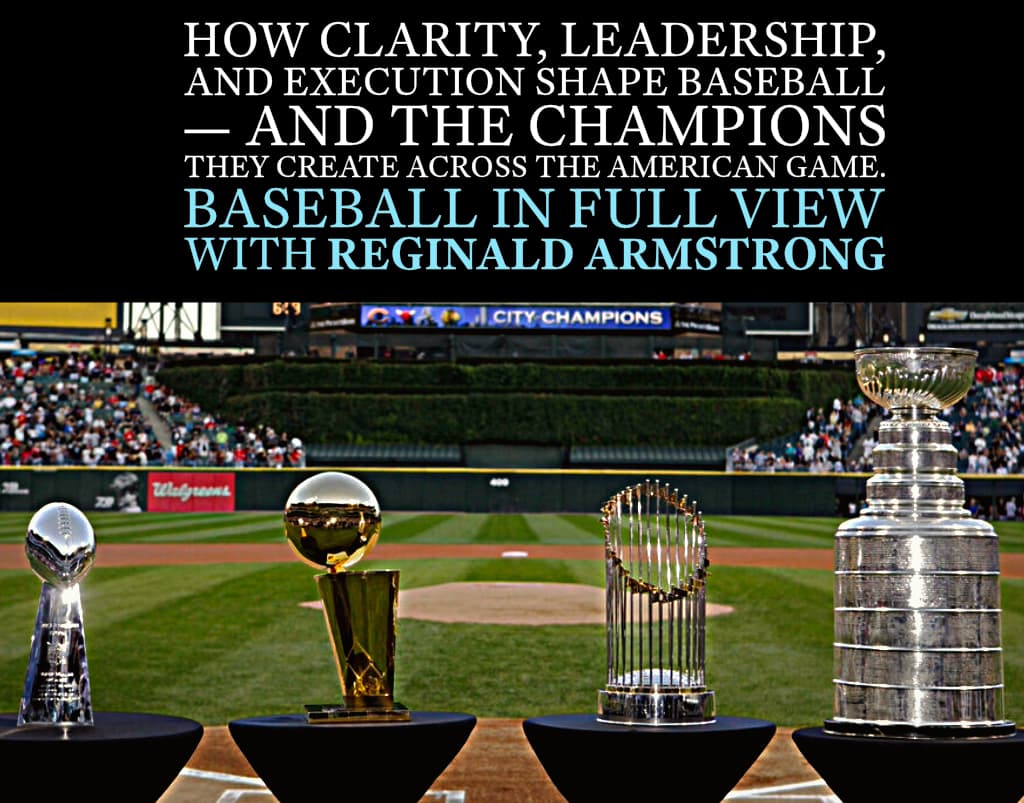
Originally published as a four‑part series, Baseball in Full View is presented here in a unified edition for readers who want to experience the full arc of Reginald Armstrong’s thesis in one continuous narrative.
A Four-Part Editorial Series
Baseball stands at a rare moment in its history — a moment where the beauty of the game and the architecture beneath it are pulling in opposite directions. On the field, the sport has never been more global, more athletic, more dramatic. Off the field, the structures that govern competitive balance have never been more uneven, more capital-driven, or more consequential.
This four-part series examines that divide.
It traces the state of the sport as we enter 2026 — from the global renaissance on the field, to the institutional forces shaping outcomes, to the drift of legacy franchises, to the looming CBA that will determine baseball’s future for a generation. It is written with clarity, without sentimentality, and with the belief that baseball deserves honesty equal to its beauty.
Each part stands on its own.
Together, they form a single argument:
Baseball is too important to drift. Its future must be built with intention.
PART 1 OF 4
THE STATE OF THE GAME — AND THE TRUTH WE OWE IT
THE PIVOT
Part 1 Preamble
The opening installment sets the stage. Before we confront the structures shaping baseball’s future, we must honor the state of the game itself — its global rise, its athletic renaissance, its cultural heartbeat. Only then can we pivot to the truths beneath the spectacle. Part 1 is the overture: the beauty, the scale, and the honesty the rest of the series demands.
THE STATE OF THE GAME — AND THE TRUTH WE OWE IT
As we mark Hannukah, approach Christmas, and prepare to turn the calendar, it feels fitting to take stock of where baseball stands — and where it’s drifting.
Baseball remains one of the great American dramas — a sport that, even in its moments of drift, still finds ways to remind us why it once held the nation’s heartbeat. I relish this game. I miss when it was our national pastime, yes, but I also see the signs of its recovery. This year’s World Series was incontestably one of the all time epics — a seven act masterpiece of tension, heartbreak, and brilliance. The Blue Jays left with the short straw, and the hearts of the Great White North broke with them. No participation trophies. But if ever a runner up deserved accolades, it was the one who walked off that stage.
I’ve seen many of the legends in my lifetime — from Aaron and Frank Robinson to the fearsome hitters like Reggie Jackson and the gap-to-gap artists like Tony Gwynn, to the pitchers who defined the sport from the 1970s onward, the Seavers and Carltons, the Madduxes and Pedros, and yes, the Saberhagens — and the champions whose eras still carry their names, like Derek Jeter. Yet I truly believe today’s baseballers are the most athletic generation the game has ever seen. Bigger. Faster. More dynamic. The Elly De La Cruz types. The Bobby Witt Jr. types. The Julio Rodríguez and Ronald Acuña Jr. types. The Aaron Judge types. The new wave of American born stars returning to the forefront. And the pitchers — Skubal, Skenes, Strider, Wheeler, and a dozen others — throwing with a combination of power and precision that would have stunned earlier eras.
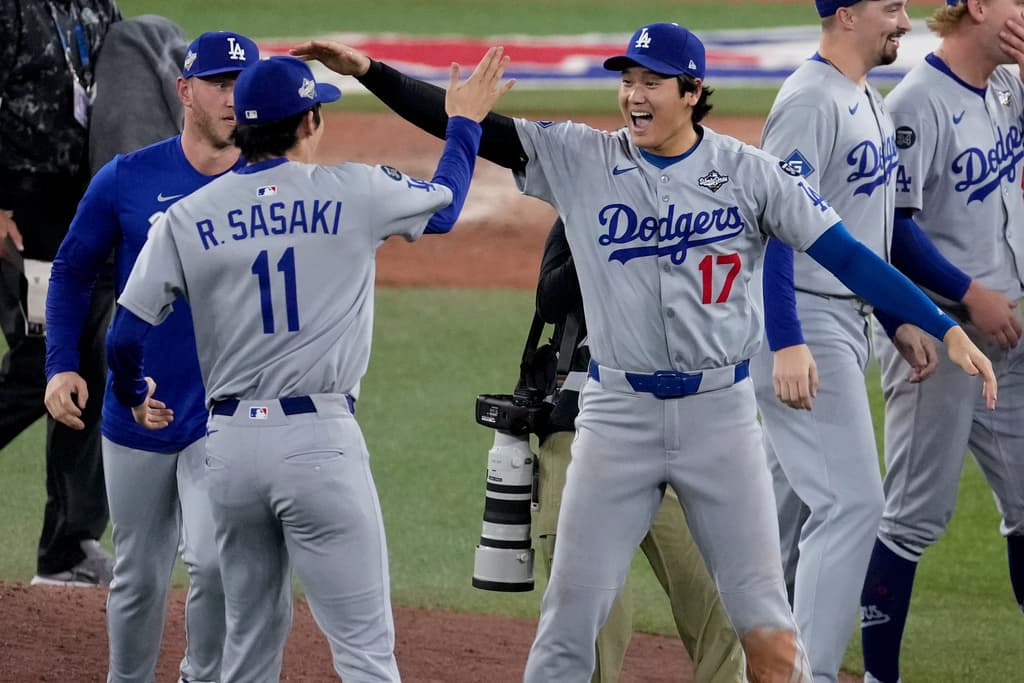
Los Angeles Dodgers’ Shohei Ohtani (17) and Roki Sasaki (11) celebrate their teams’ win in Game 7 of baseball’s World Series agaisnt the Toronto Blue Jays, Sunday, Nov. 2, 2025, in Toronto. (AP Photo/Ashley Landis)
But baseball is not merely American. It is global. It is Dominican, Venezuelan, and Puerto Rican. It is Japanese — profoundly so. The echo from Chavez Ravine this year was unmistakable: Hail to Japan. And in this new era, no pitcher has embodied Japan’s precision and dominance more completely than Yoshinobu Yamamoto, whose MVP brilliance and technical mastery have already reshaped expectations on both sides of the Pacific. And towering above even that, Shohei Ohtani stands as perhaps the greatest baseball man of all time — a two way force whose excellence defies every historical comparison and whose global impact has redefined what a single player can mean to a sport. Not only their stars, but their manager — Dave Roberts, a Black man whose mother is Japanese — standing as a bridge between cultures. And beyond Japan, the sport is expanding into new markets like Dubai — and revitalizing renascent ones like Italy.
Just days ago in New York, we celebrated Italy’s baseball renaissance at the Italian American Baseball Foundation Gala. And this coming March, during America’s 250th birthday year, we will witness what may be the most anticipated World Baseball Classic in the event’s history.
Baseball is bigger.
Baseball is better.
Baseball is global.
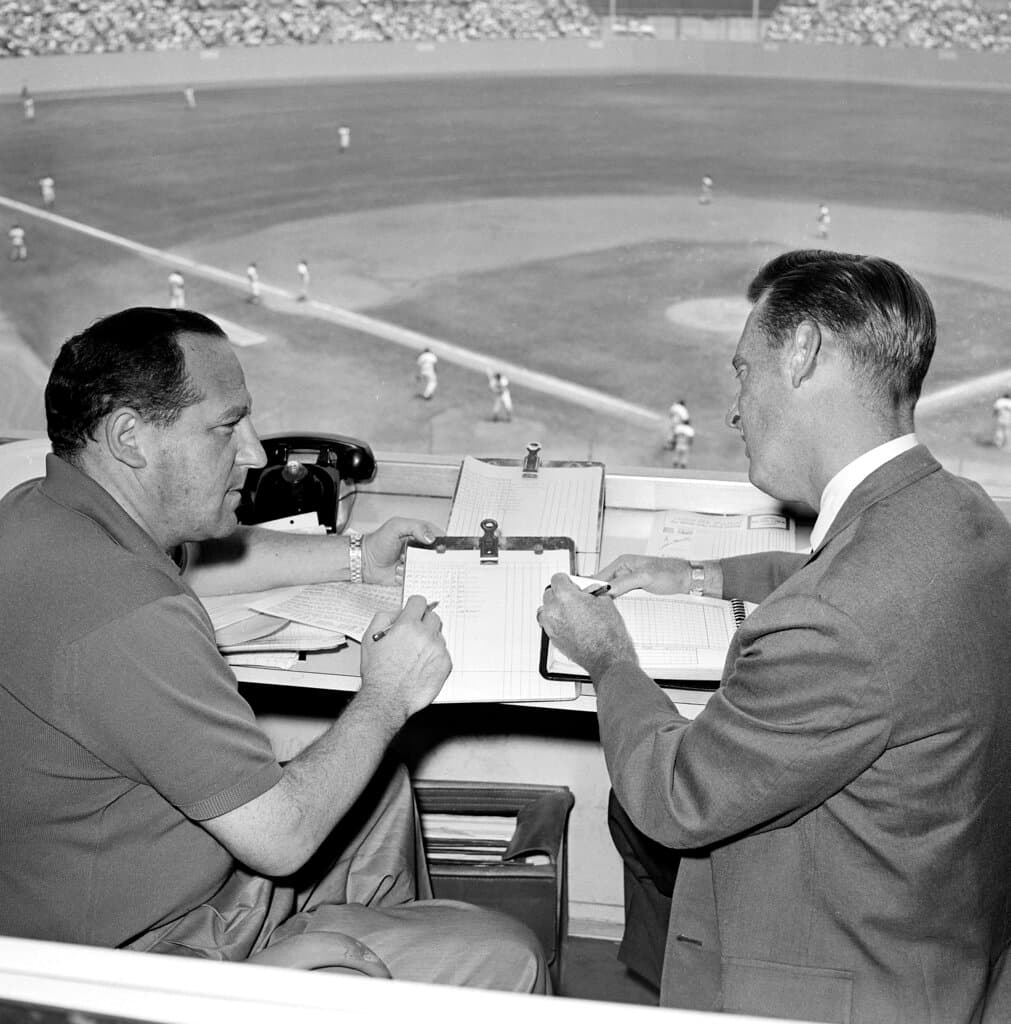
Allan Roth, left, statistician of the Los Angeles Dodgers, sits in the booth with broadcaster Vin Scully in August 1963 in Los Angeles. Scully, whose dulcet tones provided the soundtrack of summer while entertaining and informing Dodgers fans in Brooklyn and Los Angeles for 67 years, died Tuesday night, Aug. 2, 2022, the team said. He was 94. (AP Photo/Harold Filan, File)
And baseball endures. From Scully and Prince to Harwell, Gowdy, Mel Allen, Jack Buck, and now Joe Buck — the voices have changed, but the heartbeat remains.
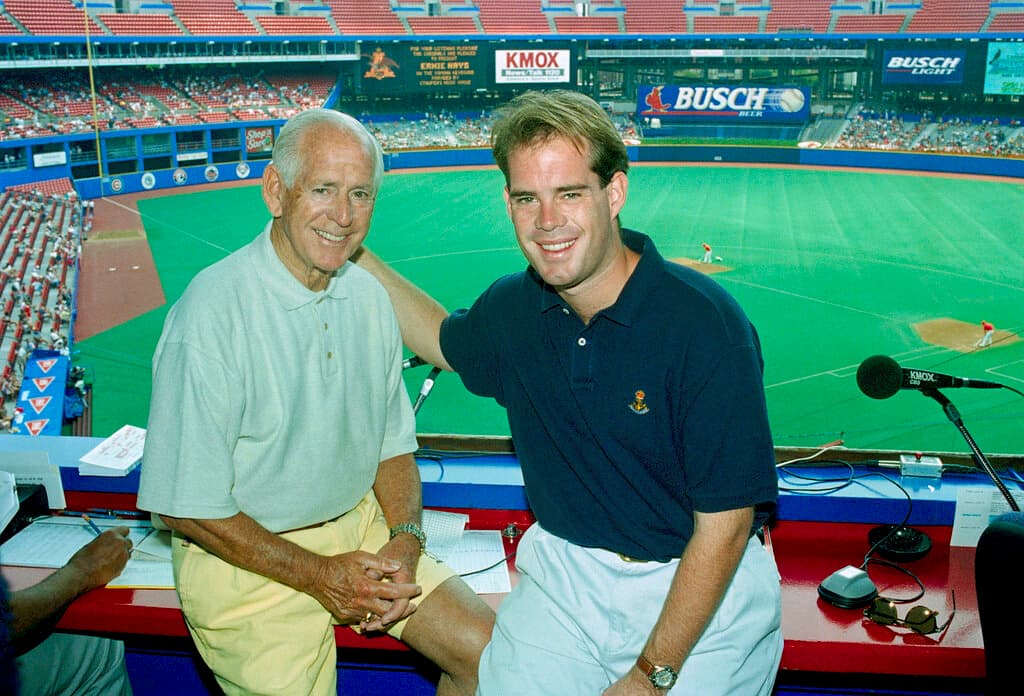
St. Louis Cardinals Hall of Fame Broadcaster Jack Buck, left, and his son Joe Buck celebrate Father’s Day as they go into their fifth season of broadcasting St. Louis Cardinals Baseball together in St. Louis, June 18, 1995. (AP Photo/Leon Algee)
This is why we love it. This is why we care. And this is why the rest of this editorial must be honest.
THE PIVOT
And because the game is so alive — because it is bigger, faster, more global, more athletic, and more dramatic than at any point in its history — we owe it honesty. We owe it clarity. We owe it the courage to look beneath the spectacle and examine the structures shaping its future.
Baseball is thriving on the field. But off the field, the architecture is shifting in ways the public conversation rarely acknowledges.
The rumor mill spins.
The Hot Stove roars.
Names fly across the screen like confetti — Peralta, Skubal, Tucker, the Japanese sensations, the next phenom waiting to be posted.
But beneath the noise lies a quieter truth: the competitive balance of Major League Baseball is no longer determined by scouting alone, or development alone, or even payroll alone. It is determined by ownership psychology and capital structure.
This is the part of the sport we rarely talk about — not because it’s unimportant, but because it’s uncomfortable. It forces us to confront the gap between what fans believe drives winning and what actually does.
It forces us to confront why certain clubs can outbid entire divisions.
Why others operate like incubators.
Why the same handful of teams circle every elite player.
Why dynasties today are engineered, not stumbled into.
And it forces us to confront the truth about the Yankees — my team — whose issues run deeper than roster construction, deeper than injuries, deeper than analytics, deeper than any single offseason decision.
This is where the December editorial must go next.
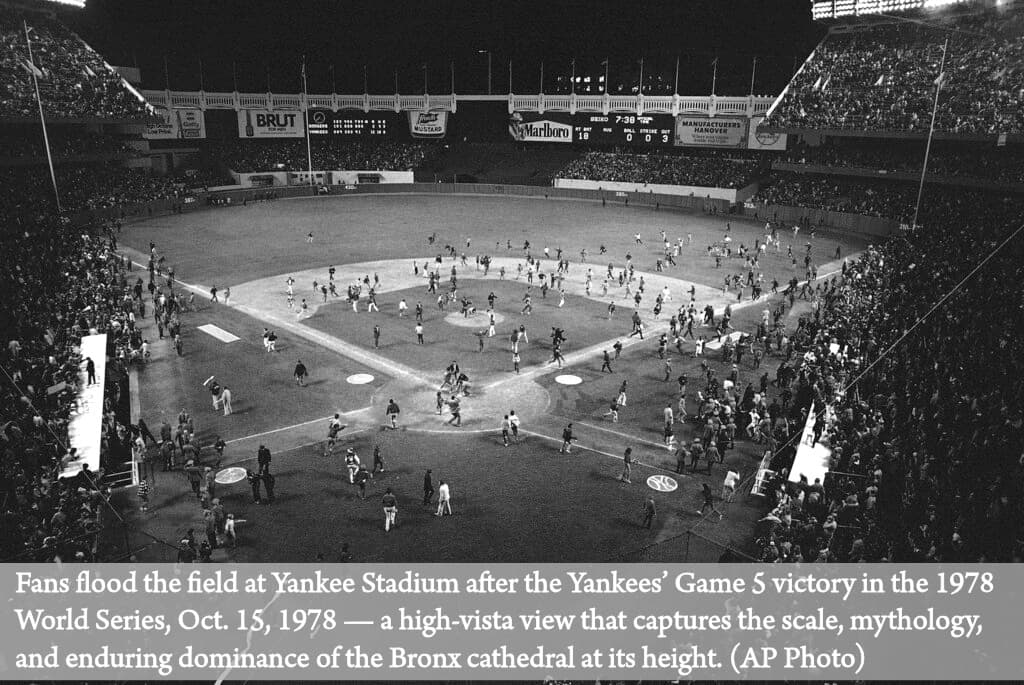
PART 2 OF 4
THE STRUCTURAL ARGUMENT BEGINS
THE LEDGER OF IMBALANCE (1995 → 2025)
THE YANKEES’ DRIFT
ADDENDUM — THE STANDARD: CHAMPIONSHIPS
Part 2 Preamble
If Part 1 honored the beauty and global rise of the sport, Part 2 turns to the machinery beneath it. This is where the architecture reveals itself — ownership psychology, institutional capital, and the widening gulf between ambition and capability. It is the section where sentiment ends and structure begins. To understand where baseball is going, we must first understand what is driving it.
THE STRUCTURAL ARGUMENT BEGINS
(Steinbrenner vs. the heirs, Guggenheim vs. the field, the monarchy quintet)
If you want to understand the modern game — not the rumor mill, not the noise, not the daily churn of speculation — you must begin with ownership psychology. Because in today’s MLB, the competitive destiny of a franchise is determined less by scouting departments or analytics teams than by the worldview of the people who sign the checks.
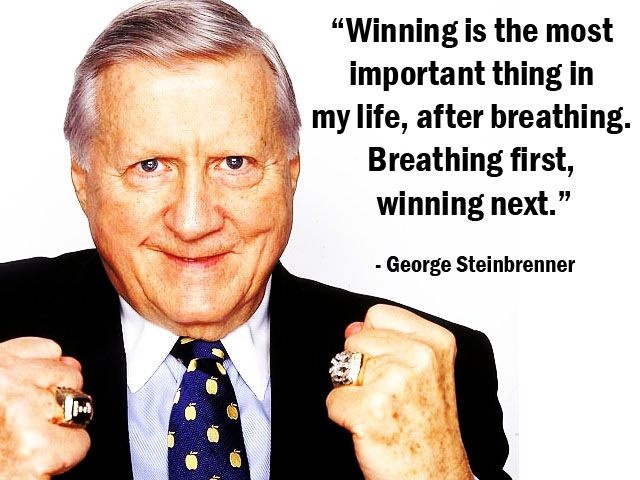
George Steinbrenner spent to dominate.
His heirs spend to maintain.
That is the difference between a dynasty and a brand.
The Boss operated with a conqueror’s mentality — impatient, volatile, often maddening, but always driven by the singular demand to win. His heirs operate with the caution of stewards managing a global asset. They spend enough to sustain the illusion of the Yankees, but not enough — nor with the clarity — to restore the burden of the Yankees.
And this distinction matters, because the modern game is no longer shaped just by wealthy owners. It is shaped by institutions.
The Dodgers are not simply rich.
They are Guggenheim — a financial organism with multi billion dollar liquidity, diversified risk tolerance, compensation engineering, and a worldview shaped by private capital logic. Mark Walter is the face. Guggenheim is the spine. And the Dodgers are the result: a dynasty engineered with institutional clarity.
The Mets are Point72 — private capital machinery with the will to dominate but still searching for their Stick Michael, the architect who can translate resources into reign.
The Phillies, Giants, Rangers, and Blue Jays are corporate landlords — wealthy, yes, but not structurally comparable to Guggenheim. They can sign stars. They can make splashes. But they cannot out engineer a financial institution.
This is the monarchy quintet of modern baseball — the clubs whose capital structures allow them to outbid entire divisions, absorb mistakes, and operate with a margin of error the rest of the league cannot fathom.
And this is why the rumor mill feels so predictable.
Why the same handful of teams circle every elite player.
Why the Peraltas and Skubals of the world are hunted by the same predators.
Why smaller clubs operate like incubators — developing talent for others to harvest.
Why dynasties today are not accidents but outcomes.
This is the architecture beneath the sport.
This is the underbelly the December editorial must expose.
THE LEDGER OF IMBALANCE (1995 → 2025)
To understand how we arrived at this moment — where five or six clubs can tilt the entire competitive landscape — you must look at the economic ledger of the last thirty years. Baseball’s imbalance is not cultural. It is structural. It is financial. It is the predictable outcome of a system that evolved faster than its rules.
In 1995, the average MLB salary hovered around $1.1 million. The Yankees led the league with a payroll of roughly $45 million. The spread between top and bottom existed, but it was not yet destiny. A well-run club could still compete with a well-funded one. A brilliant GM could still outmaneuver a billionaire. A developmental pipeline could still overcome a checkbook.
That world is gone.
By 2025, the average salary exceeds $4.5 million. The Dodgers’ payroll alone dwarfs entire divisions. The top five clubs account for nearly half of all player compensation. And the contracts themselves tell the story: 1995’s apex was Albert Belle’s $55 million deal. Shohei Ohtani’s $700 million contract briefly appeared to be the new summit — until Point72 and Steve Cohen shattered it with Juan Soto’s record-breaking $765 million pact, the largest contract in the history of professional sports. These numbers don’t merely reflect inflation; they reflect the institutionalization of private capital in baseball.
What was once ego driven spending has become capital driven inevitability.
This is why the Peraltas of the world — earning $8 million, a fortune to any normal person — are considered “pittance” by baseball’s new aristocracy. This is why Detroit may as well trade Skubal. Even if they win with him, they cannot outbid the Guggenheim Dodgers, the Point72 Mets, the corporate landlords in Philadelphia or Toronto, or the Yankees’ brand maintenance machine.
This is why the rumor mill feels like déjà vu.
This is why the same predators circle the same prey.
This is why the incubator economy has taken hold — smaller clubs develop talent for larger clubs to harvest.
And this is why the sport’s competitive soul feels increasingly predetermined.
The imbalance is not a glitch. It is the system.
THE YANKEES’ DRIFT
(Leadership, Stewardship, and the Burden of the Standard)
And nowhere is the architecture of modern baseball more revealing — or more painful — than in the case of the New York Yankees. My team. My inheritance as a fan. The franchise that once defined excellence so completely that the rest of the sport measured itself against its shadow.
The Yankees’ issues are not just roster issues.
They are not injury issues.
They are not analytics issues.
They are not “one move away.”
They are structural.
They are psychological.
They are cultural.
They are leadership based.
For six years, Aaron Boone has been entrusted with a role that demands a rare combination of strategist, psychologist, tactician, room reader, forecaster, and field general. A modern manager must use analytics as a tool, not a crutch. He must sense the pulse of a clubhouse. He must anticipate the moment before it arrives. He must command respect without theatrics. He must be part strategist, part Tony Robbins, part Reverend, part historian of the game.
Boone is not that figure.
And it is not cruelty to say so.
It is clarity.
Brian Cashman, once the boy wonder, has become the embodiment of institutional inertia — a man who should have been replaced long before Boone ever arrived. The Yankees’ front office has drifted into a culture of maintenance, not mastery. They have become a brand management operation, not a championship engine.
And this is where the line lands with its full weight:
The Boss spent to dominate.
His heirs spend to maintain.
They maintain the business.
They maintain the brand.
They maintain the revenue streams.
They maintain the talking points.
They maintain the illusion of the Yankees.
But they do not maintain the burden.
The burden of expectation.
The burden of excellence.
The burden of consequence.
The burden of being the New York Yankees.
This is not an attack on individuals.
This is not resentment toward wealth.
This is not bitterness toward people who have succeeded in life.
It is a critique of stewardship — the moral obligation that comes with inheriting a public trust disguised as a private asset. Millions of ordinary people work tirelessly to support their families. If you are entrusted with the New York Yankees, earning millions to lead or oversee the most storied franchise in American sports, the standard must be higher.
The Yankees are not failing because they lack money.
They are failing because they lack clarity.
They are failing because they lack an architect.
They are failing because they lack a field general.
They are failing because they have forgotten the difference between a dynasty and a brand.
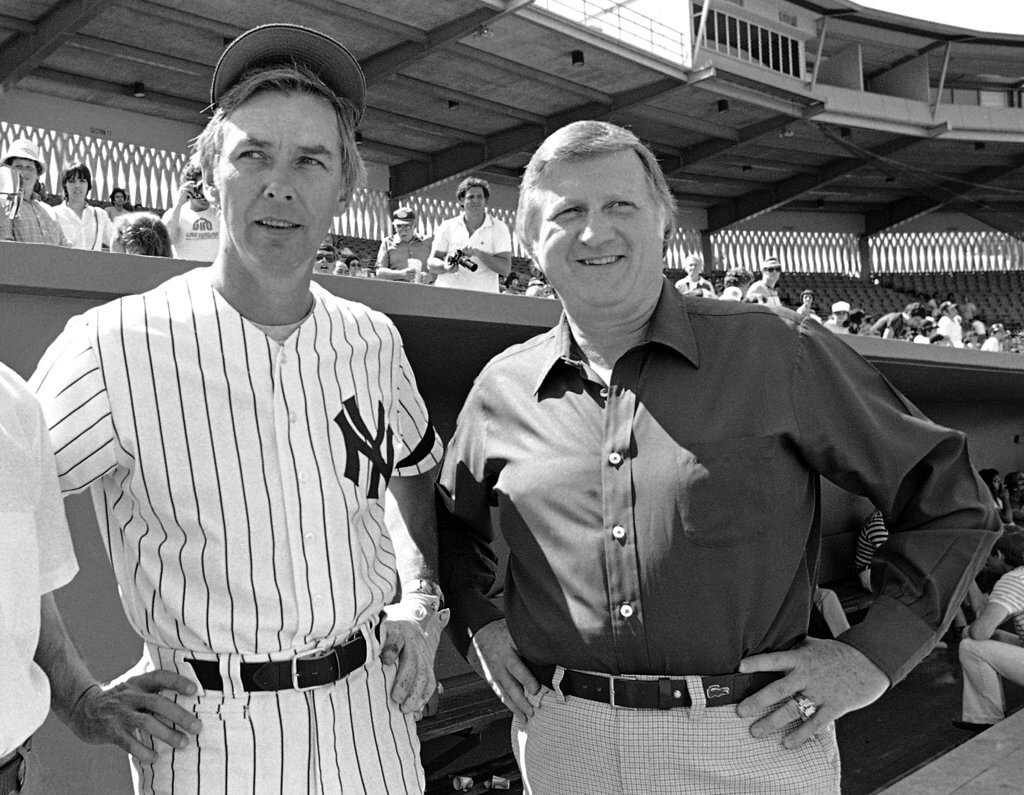
Photo – In this March 1, 1981, file photo, New York Yankees manager Gene Michael, left, and team owner George Steinbrenner are shown during a team workout in Fort Lauderdale, Fla. Gene Michael, the slick-fielding shortstop nicknamed Stick who went on to manage the Yankees and then as a front-office executive built a power than won four World Series titles in a five-year span, died Thursday, Sept. 7, 2017. He was 79. Michael had a heart attack, the Yankees said. (AP Photo/Kathy Willens, File)
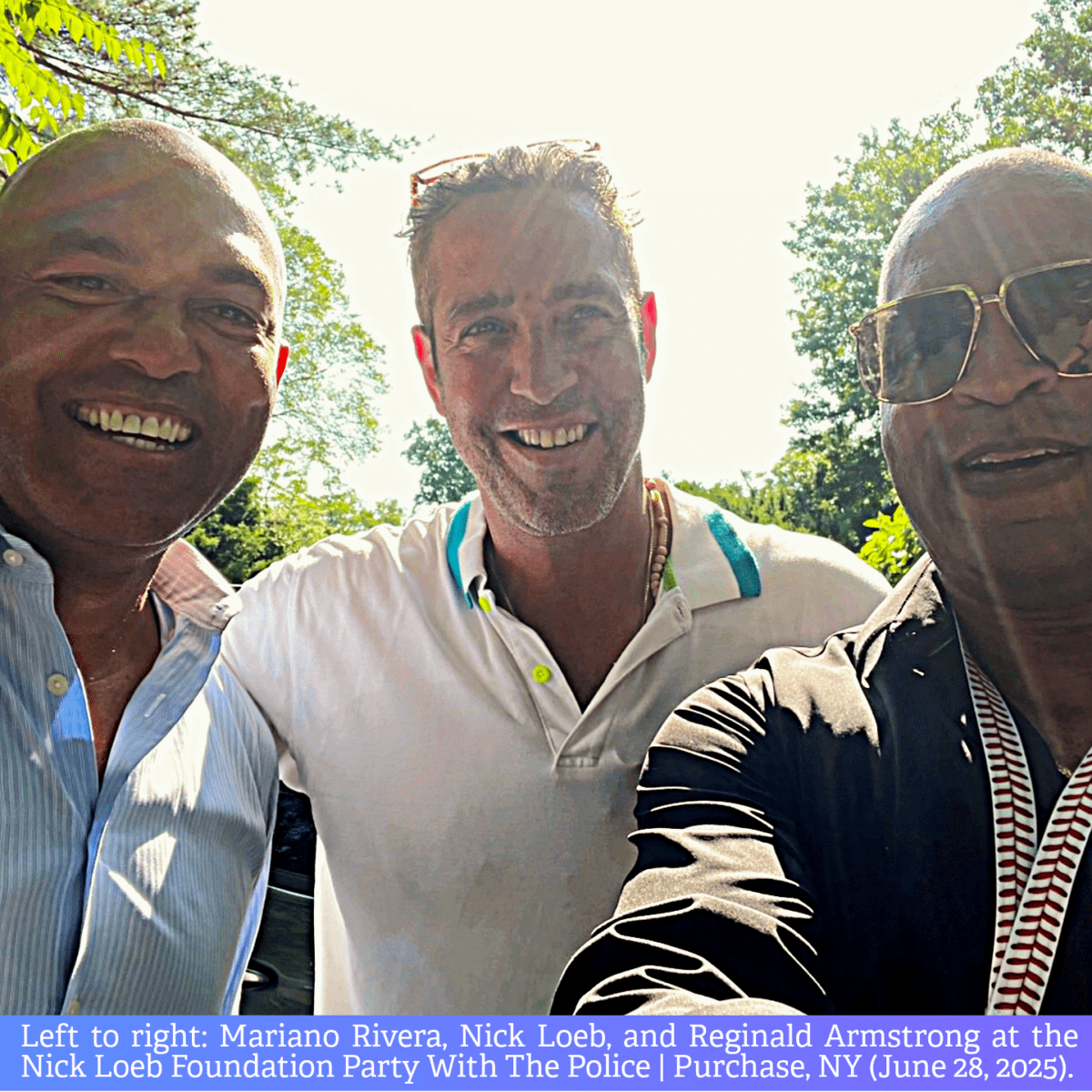
And it must be remembered that the last great Yankee dynasty was built not by impulse, but by restraint. Gene “Stick” Michael — running baseball operations during George Steinbrenner’s suspension under Commissioner Fay Vincent — protected the core that would become the Jeter era. He kept the organization from making rash decisions and allowed a young nucleus to develop. In my on-camera interview with Jim Leyritz this summer at the Nick Loeb Foundation 4th Annual Party With The Police in Purchase, NY, he recalled that after the Yankees lost in ’97 on Sandy Alomar Jr.’s home run, George wanted to fire Joe Torre and trade Mariano Rivera. Torre is now a revered figure in the sport. Mariano became the only unanimous Hall of Famer in baseball history. Stick Michael prevented catastrophe — and in doing so, laid the foundation for their last dynasty, now long in the past.
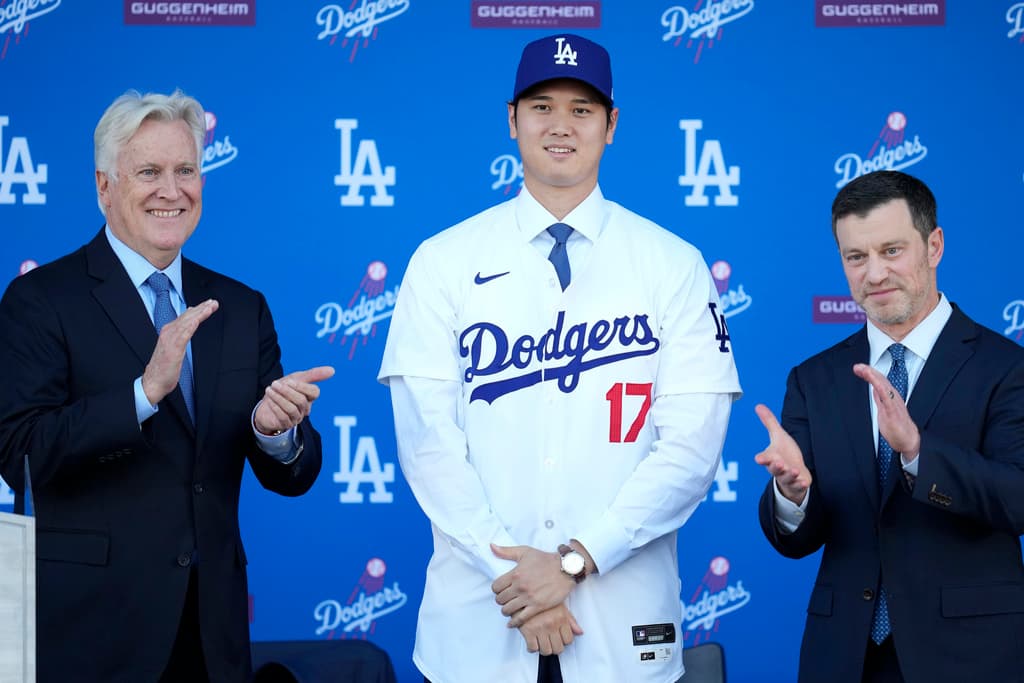
Photo: Los Angeles Dodgers’ Shohei Ohtani, middle, stands as owner & chairman Mark Walter, left, and president of baseball operations Andrew Friedman applaud during a news conference at Dodger Stadium Thursday, Dec. 14, 2023, in Los Angeles. (AP Photo/Ashley Landis)
And in a league now dominated by institutions like Guggenheim — where capital scale meets operational excellence — the cost of drift is no longer measured in seasons. It is measured in eras.
ADDENDUM — THE STANDARD: CHAMPIONSHIPS
Because the Yankees’ standard has never been “competitiveness.”
It has never been “just making the playoffs.”
It has never been “being in the mix.”
The Yankees’ standard — the only standard that ever mattered — is championships.
For nearly a century, the Bronx Bombers won at least one title in every decade except the 1980s, when the Mets briefly owned the city. That was the aberration. That was the outlier. That was the decade that stung because it violated the natural order.
But this century?
One title.
One.
In twenty five years.
The New York Yankees — the franchise that once treated October as its birthright — have become something unthinkable: a legacy brand with a legacy drought. A team that still sells the mythology of dominance while living on the fumes of a dynasty built by men who are no longer in the building.
And this is where the uncomfortable comparison emerges:
Have the Yankees become the Montreal Canadiens of Major League Baseball?
A once unassailable dynasty.
A cathedral franchise.
A global brand.
A team whose history is richer than its present.
A team that still commands reverence but no longer commands fear.
The Canadiens still matter.
They still draw.
They still carry the weight of their crest.
But the era of automatic dominance is gone.
And the Yankees — painfully, unmistakably — are drifting toward that same fate.
Not because they lack money.
Not because they lack fans.
Not because they lack history.
But because the sport has entered an era where wealth alone is no longer enough. Several clubs today are owned by billionaires with private-capital pedigrees — Baltimore, San Francisco, Texas — but that is fundamentally different from what exists in Los Angeles. The Dodgers are not simply the project of a wealthy individual; they are supported by the full scale and liquidity of Guggenheim. Mark Walter is a steward of that institution, not a solo operator. And Guggenheim’s financial architecture — in depth, in durability, in risk-tolerance — exceeds even the considerable resources of Steve Cohen’s Point72. That is the leverage the Dodgers carry, and soon the Lakers.
And this is the contrast that makes the Yankees’ drift so stark.
Because they lack the architecture, the leadership, and the worldview that once made championships inevitable— a deficit that now extends beyond the Bronx and shadows much of Major League Baseball itself.
The Boss demanded rings or death trying.
His heirs maintain the business.
That is the difference.
That is the drift.
That is the truth the December editorial must speak.
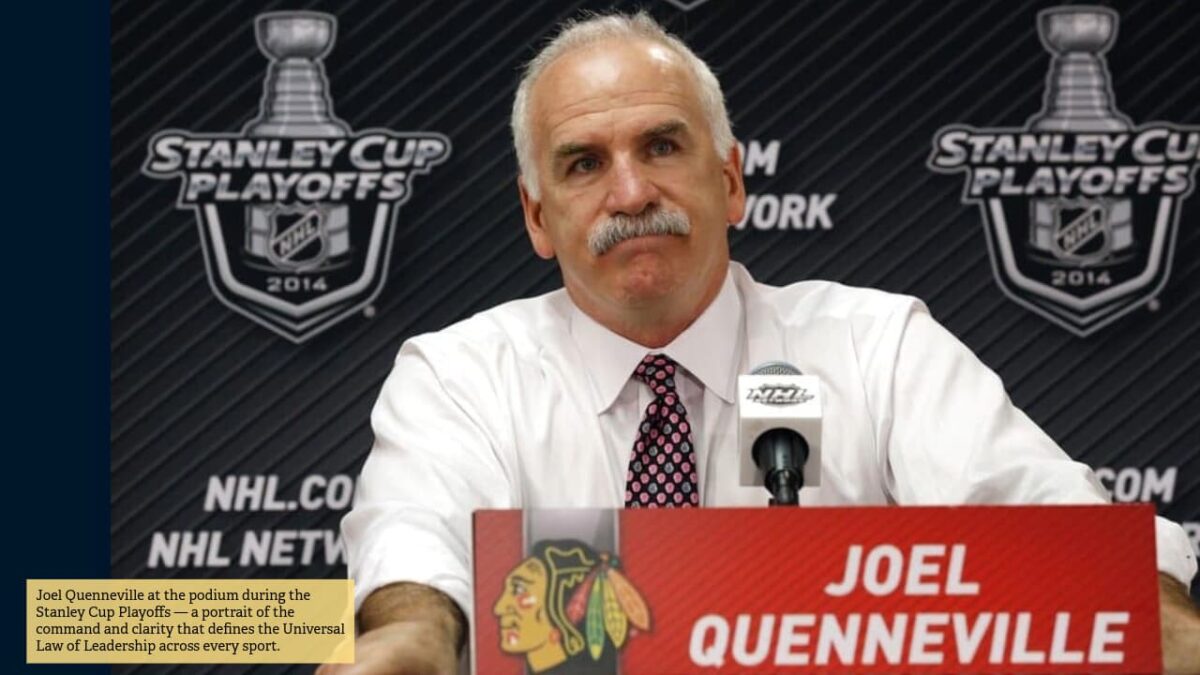
Joel Quenneville at the podium during the Stanley Cup Playoffs — a portrait of the command and clarity that defines the Universal Law of Leadership across every sport.
PART 3 OF 4
THE UNIVERSAL LAW OF LEADERSHIP
ADDENDUM (THE LAW OF EXECUTION)
THE SYNTHESIS
Part 3 Preamble
If Part 2 exposed the architecture — the capital structures, ownership psychologies, and institutional forces shaping the sport — Part 3 turns to the forces that animate that architecture. Leadership. Execution. Clarity. These are the elements that separate drift from dominance, noise from inevitability. This installment examines the universal laws that govern eras, not games, and why certain franchises rise while others circle themselves into stasis. The sport’s future will be shaped by these truths.
THE UNIVERSAL LAW OF LEADERSHIP
(The Quenneville Parallel)
If you want to understand why certain franchises rise and others drift, you must look beyond payrolls, beyond analytics, beyond the rumor mill, and into the one force that has shaped every dynasty in every sport: leadership.
Leadership is not a slogan.
Leadership is not a press conference.
Leadership is not a spreadsheet.
Leadership is the architecture of winning.
And nowhere is this more evident than in the career of Joel Quenneville — a man whose name, for reasons both fair and unfair, has been whispered more than spoken in recent years. But the truth remains: he is one of the greatest leaders in modern sports. Three Stanley Cups in Chicago. A culture of accountability. A system of clarity. A room that responded to him because he understood the pulse of competition.
When Anaheim hired him, the Ducks didn’t just gain a coach. They gained structure. Swagger. Legacy. A young core — Gauthier, Carlsson, McTavish — suddenly had a compass. Veterans like Trouba, Gudas, Killorn, Kreider, Strome brought the GPS. And almost overnight, a franchise that had been drifting began to look like a contender.
This is not coincidence.
This is not magic.
This is leadership.
I said it long before the Panthers hired him. I said it again when the culture war forced Florida to let him go despite a blistering start. And I say it now: the formula for winning has not changed. Not in hockey. Not in baseball. Not in war. Not in the C-suite. Not in households. Not in clubhouses or locker rooms.
Winning requires:
- clarity
- courage
- accountability
- emotional intelligence
- strategic foresight
- the ability to read a room
- the willingness to make hard decisions
- the instinct to know when the moment demands boldness
This is why the Dodgers thrive.
This is why the Yankees drift.
This is why Anaheim is rising.
This is why certain clubs in MLB operate like incubators while others operate like empires.
Leadership is destiny.
And leadership is architecture.
The Dodgers have it.
The Yankees do not.
The Mets are searching for it.
The Phillies and Blue Jays flirt with that level — ambitious, aggressive, willing to spend — but they are not institutions. They are wealthy clubs, not capital organisms.
The smaller clubs often never get the chance to build it before their talent is harvested.
This is the universal truth the December editorial must articulate:
Talent wins games. Leadership wins eras.
ADDENDUM (THE LAW OF EXECUTION)
Talent wins games.
Leadership wins eras.
But even that is not enough.
Because baseball, in its cruelest and most beautiful form, is a sport decided by moments — by the five-out window, the two-out window, the pitch that cannot miss, the swing that cannot fail, the heartbeat that cannot tremble.
The Dodgers nearly proved this truth in the World Series.
Five outs from elimination.
Then two.
A dynasty built on institutional clarity, private capital scale, and the deepest roster in the sport — nearly undone by the oldest law in baseball:
If you do not execute in the moment, the moment will execute you.
This is the paradox of the modern game:
• You can have the greatest payroll.
• You can have the greatest infrastructure.
• You can have the greatest leadership.
• You can have the greatest talent.
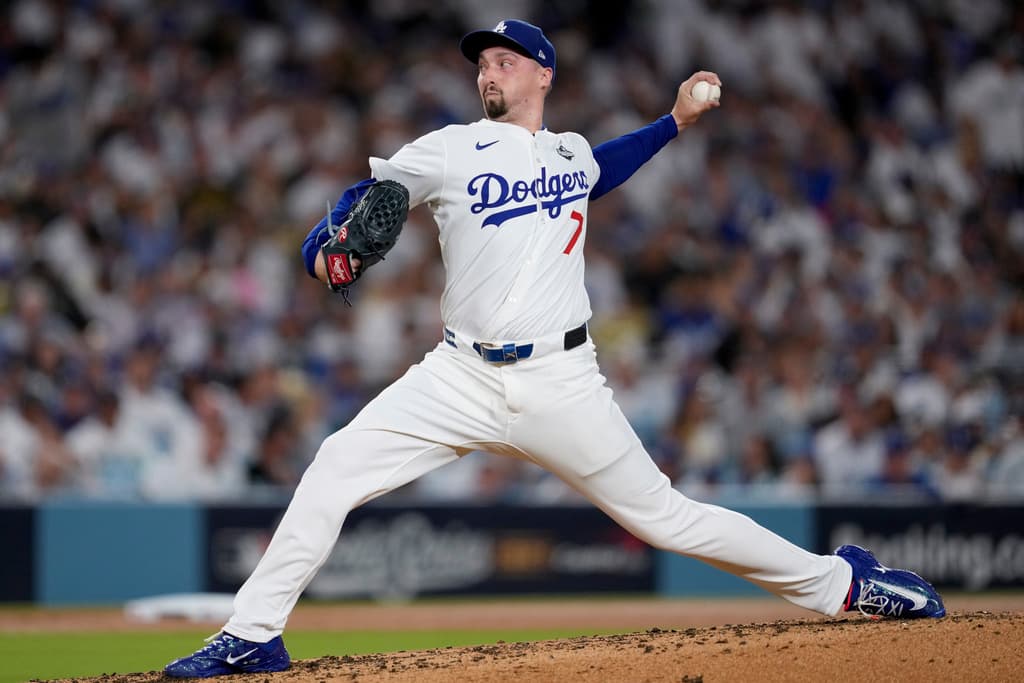
Blake Snell in the postseason — the razor-thin margin where execution decides everything. Photo: AP / Matt Rourke
And still —
one pitch, one swing, one misread, one heartbeat — and it all collapses.
This is why baseball remains the most democratic of the major sports.
Money can build the stage.
Leadership can set the scene.
Execution writes the ending.
The Dodgers nearly proved the fragility of that formula in Game 7 — five outs from elimination, then two outs, both times trailing, both times one swing from collapse. But they executed. They survived. They endured. And in doing so, they revealed the sport’s deepest law:
Even the strongest architecture must still face the moment.
And this is why the Dodgers’ survival — five outs, then two outs from disaster — was not just a triumph of talent or leadership. It was a triumph of timely execution, the one element no owner, no GM, no analytics department can manufacture.
Execution is the hinge between architecture and outcome.
It is the difference between heartbreak and immortality.
It is the force that keeps baseball honest.
THE SYNTHESIS
(The State of the Sport)
Baseball today is a paradox: the most global, athletic, dramatic version of itself on the field — and the most stratified, capital-driven version of itself off the field. The sport has never been healthier in spectacle, never more thrilling in talent, never more international in reach. And yet, beneath the surface, the architecture that governs competitive balance has never been more uneven.
The Dodgers are the model of the new era — not because they spend, but because they are structured. They are a storied baseball franchise with the scale, liquidity, and durability of an institution. Guggenheim’s liquidity, compensation engineering, and operational clarity have created a franchise that can absorb mistakes, outbid rivals, and sustain excellence across cycles. They are the modern Yankees — not in brand mythology, but in functional reality.
The Yankees, meanwhile, are the inverse: a brand masquerading as a dynasty. A franchise that still commands global attention but no longer commands championship inevitability. A team that once defined the sport’s standard but now lives on the fumes of a dynasty built by men who are no longer in the building. A team that has forgotten that championships are not a marketing slogan — they are a burden.
The Mets are the paradox of capital without architecture. The Phillies and Blue Jays are corporate landlords capable of brilliance but not built for inevitability. The smaller clubs are incubators — developing talent for others to harvest. And the rumor mill, the Hot Stove, the endless speculation, all of it is noise layered atop a simple truth:
Baseball’s competitive destiny is now determined by the intersection of capital, leadership, and execution.
Capital builds the stage.
Leadership sets the scene.
Execution writes the ending.
The Dodgers nearly proved the fragility of that formula in Game 7 — five outs from elimination, then two outs, both times trailing, both times one swing from collapse. But they executed. They survived. They endured. And in doing so, they revealed the sport’s deepest law:
Even the strongest architecture must still face the moment.
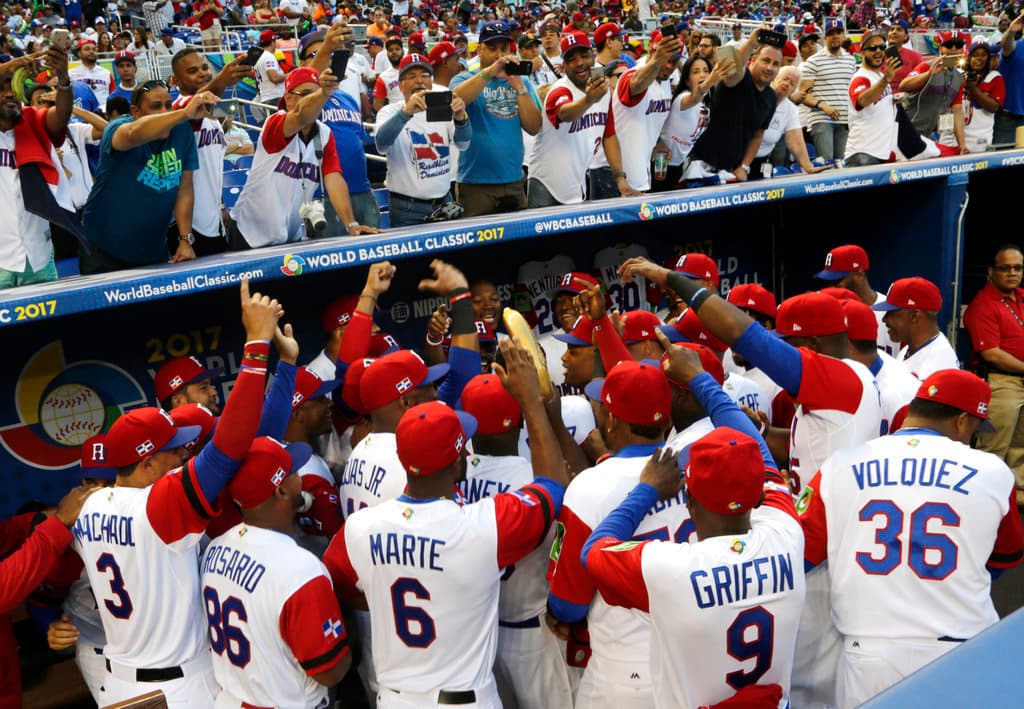
The World Baseball Classic in Miami — the global stage where the sport’s future is already unfolding. Photo: AP / Lynne Sladky
This is the state of baseball as we enter 2026 — a sport of breathtaking talent, global expansion, institutional dominance, and razor-thin margins. A sport where dynasties are engineered, not stumbled into. A sport where the Yankees’ drift is not an accident but a structural consequence. A sport where the Dodgers’ reign is not luck but design. A sport where the Jays can break a nation’s heart twice in one night and still walk away empty-handed.
This is the landscape the December editorial must confront — honestly, clearly, without sentimentality, and without apology.
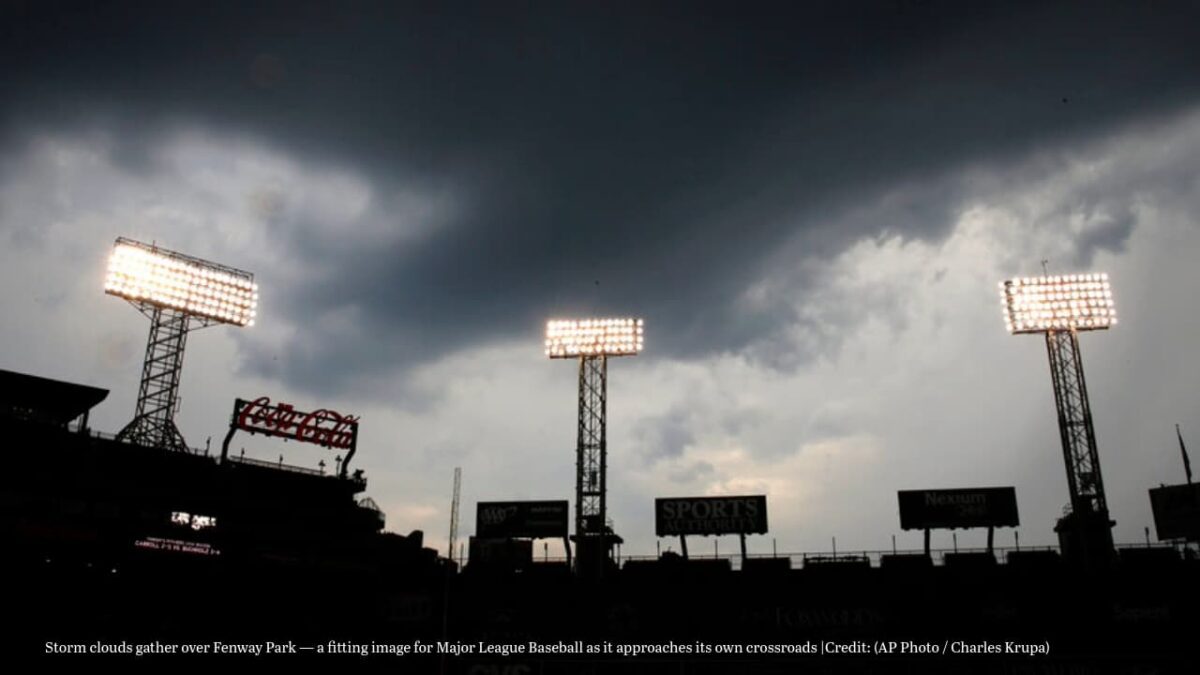
PART 4 OF 4
THE CROSSROADS
THE CLOSING CADENCE
Part 4 Preamble
The final installment brings the argument to its hinge point. After tracing the sport’s global ascent, structural imbalance, leadership vacuum, and executional demands, Part 4 confronts the crossroads ahead — the looming CBA, the cost of inaction, and the generational consequences of drift. It closes where all great baseball stories do: with clarity, consequence, and the hope that intention can still shape destiny.
THE CROSSROADS
(The Looming CBA and the Cost of Inaction)
All of this — the imbalance, the institutional dominance, the incubator economy, the drift of legacy franchises, the widening gulf between capital and capability — is heading toward a collision point. And that collision is scheduled for next December, when Major League Baseball enters its next collective bargaining agreement cycle.

This image serves as the hinge between the emotional stakes and the institutional stakes. (AP Photo/Fritz Reiss)
A lockout is not a threat.
It is a likelihood.
Because the issues that have been simmering for a decade are now boiling over.
The sport cannot continue with a system where:
-
a handful of clubs operate with institutional liquidity
-
a middle class of teams oscillates between ambition and austerity
-
and a third tier functions as a developmental pipeline for the wealthy
This is not competitive balance.
This is not sustainability.
This is not a league.
This is a hierarchy.

A modern structure built in ascending tiers — a reminder that hierarchy is not abstract, but engineered.
Credit: (AP Photo / Andy Wong)
And unless the next CBA addresses the core mechanisms — salary cap structure, revenue sharing, and competitive balance tools — the underlying issues will metastasize like an untreated cancer.
If the system remains unchanged, baseball risks becoming something unthinkable:
a six-month exhibition season.
The players will come armed with data.
The owners will come armed with capital.
The league office will come armed with narratives about pace of play, global growth, and competitive integrity.
But beneath the talking points lies the real battle:
the architecture of the sport itself.
Will MLB continue down a path where five or six institutions shape the competitive destiny of thirty clubs?
Will the incubator economy deepen, turning half the league into developmental pipelines for the aristocracy?
Will the luxury tax remain a soft ceiling that only institutions can ignore?
Will revenue sharing continue to subsidize drift rather than incentivize ambition?
Will the sport acknowledge that its greatest threat is not labor strife, but structural stratification?
The CBA will not fix everything.
It cannot.
But it can slow the drift.
It can restore some balance.
It can create guardrails that prevent the sport from becoming a financial caste system.
It can give smaller clubs a fighting chance.
It can force legacy franchises to confront their own stewardship.
Or it can do nothing — and allow the current trajectory to harden into permanence.
Baseball has reached a moment where inaction is itself a decision.
A decision with consequences measured not in seasons, but in generations.
This is the crossroads.
This is the inflection point.
This is the moment the December editorial must illuminate.
THE CLOSING CADENCE
Baseball has always been more than contracts and capital.
It is fathers and sons, mothers and daughters, families passing the game forward in the stands and in the living room.
It is nations rising behind their heroes.
It is the geometry of the diamond, the silence before the pitch, the roar after the swing.
The system may drift.
The economics may warp.
The institutions may overreach.
But the game itself remains democratic — one pitch, one swing, one heartbeat.
That is why this moment matters.
Not because of clauses in a contract, but because baseball deserves a structure worthy of its beauty.
A league worthy of its history.
A future worthy of its fans.
The sport is not dying.
The sport is not broken.
The sport is not lost.
But it is drifting.
And drift, left unchecked, becomes destiny.
Baseball is too beautiful to be left to chance.
Its future must be built with intention.
To you and yours, a peaceful holiday season — and a hopeful New Year.