Rintaro Sasaki has officially announced his intention to sign with the Miami Marlins, choosing to pursue his Major League Baseball aspirations rather than join Nippon Professional Baseball’s Fukuoka SoftBank Hawks.
The 21-year-old revealed his decision at a press conference in his native Iwate Prefecture on July 19.
“I understand better than anyone that I may not have the ability to succeed,” he stated. “Even if this path ultimately ends in failure, I simply do not want to live with regrets.”
The first baseman was selected by Miami with the 235th overall pick in the eighth round of the 2026 MLB Draft after SoftBank had already secured his negotiating rights by winning the lottery in the first round of the 2025 NPB Draft.
By signing with the Marlins, Sasaki will begin his professional career in the United States and continue along the unconventional path he established nearly three years ago.
Forging His Own Path
Sasaki first attracted national attention at Hanamaki Higashi High School, where he played under his father, Hiroshi. The elder Sasaki also coached Shohei Ohtani and Yusei Kikuchi during their high school careers.
The 6-foot, 270-pound left-handed slugger hit an unofficial Japanese high school record of 140 home runs from 2021 to 2023. He emerged as one of the top prospects in the country and was widely expected to become one of the most sought-after players in the 2023 NPB Draft as one of Japan’s best hitting talents since Kotaro Kiyomiya.
Instead, Sasaki bypassed the draft and enrolled at Stanford University, becoming the most high-profile Japanese prospect ever to skip NPB, though other players (Rikuu Nishida, Itsuki Takemoto, Kenny Ishikawa) have also taken a similar route. Moreover, his decision has inspired amateurs like Shotaro Morii and Genei Sato to pursue a quicker path to MLB.
These moves have been made possible in part by the abolition of the Tazawa Rule in 2020. The rule had strongly discouraged Japanese amateurs from skipping the NPB Draft by making them ineligible to sign with an NPB club for several years if they began their professional careers overseas.
Sasaki hit seven home runs with a .790 OPS across 52 games during his first season at Stanford while also gaining experience in the MLB Draft League and Cape Cod League. He entered his second collegiate season under considerable pressure after a mediocre debut campaign that fell short of the expectations surrounding him as Baseball America’s Preseason National Freshman of the Year.
He took a big step forward in 2026, posting a .952 OPS with 16 home runs in 54 games. As a draft-eligible sophomore, he participated in the MLB Draft Combine at Chase Field in June and reinforced his reputation as possessing one of the best power tools in the class.
SoftBank’s Gambit
Though Sasaki had always been open about his desire to pursue a career stateside, his future became more complicated when NPB amended its rules to allow Japanese players enrolled at overseas colleges to be selected in the league’s draft.
Neither Sasaki nor his representatives formally declared for the NPB Draft in 2025, but the Yokohama DeNA BayStars and Fukuoka SoftBank Hawks both nominated him as their first round selection in October 2025, much to the surprise of those in attendance.
SoftBank Chief Baseball Officer Kenji Johjima drew the winning card in the ensuing lottery, giving the Hawks exclusive NPB negotiating rights to Sasaki. The club began intense discussions with him in May and hoped to convince him to start his career in Japan following the conclusion of Stanford’s season, much as the Hokkaido Nipponham Fighters had done with Ohtani out of high school in 2012.
As NPB’s biggest team and one of the richest franchises in the world, the Hawks could offer Sasaki more immediate financial security and the chance to establish himself on the top team relatively quickly. However, signing with the Hawks would also have created uncertainty surrounding Sasaki’s long-term path to MLB.
SoftBank is the only organization that has never made a player available to an MLB club through the posting system. Though the team has subtly hinted at potential exceptions to its anti-posting policy, Sasaki could have needed nine years of NPB service time to qualify for international free agency.
Sticking To His Guns
Entering the MLB Draft, Sasaki needed to be selected within the first four rounds for his slot value to match or exceed what the Hawks could provide. He went to the Marlins in the eighth round, making SoftBank the more lucrative choice from a financial perspective.
That said, joining the Marlins organization offers him the most direct route toward his true goal. Sasaki will begin in the Marlins’ minor league system and attempt to become the latest Hanamaki Higashi product to reach the majors, following in the footsteps of Ohtani and Kikuchi.
Sasaki also had the option to return to Stanford and attempt to improve his standing in a future draft, but his decision ensures his professional career will begin in 2026.
For SoftBank, the disappointing outcome also comes at a cost. NPB does not award compensation picks when a drafted player declines to sign, meaning the Hawks will effectively forfeit their first round pick from the 2025 draft with Sasaki going unsigned.
The organization was aware of that possibility when it nominated him and was one of the few that could afford to take such a risk.
“While we had hoped he would join our organization, we understand that he is a player who has long held the dream of playing in Major League Baseball,” Johjima said after Sasaki’s press conference. “We respect his decision and have great admiration for it. If he goes on to become a world-class player, it will also prove that our evaluation of him was correct.”
Sasaki has now made that choice as he will continue pursuing a professional career in the United States as a member of the Marlins organization.
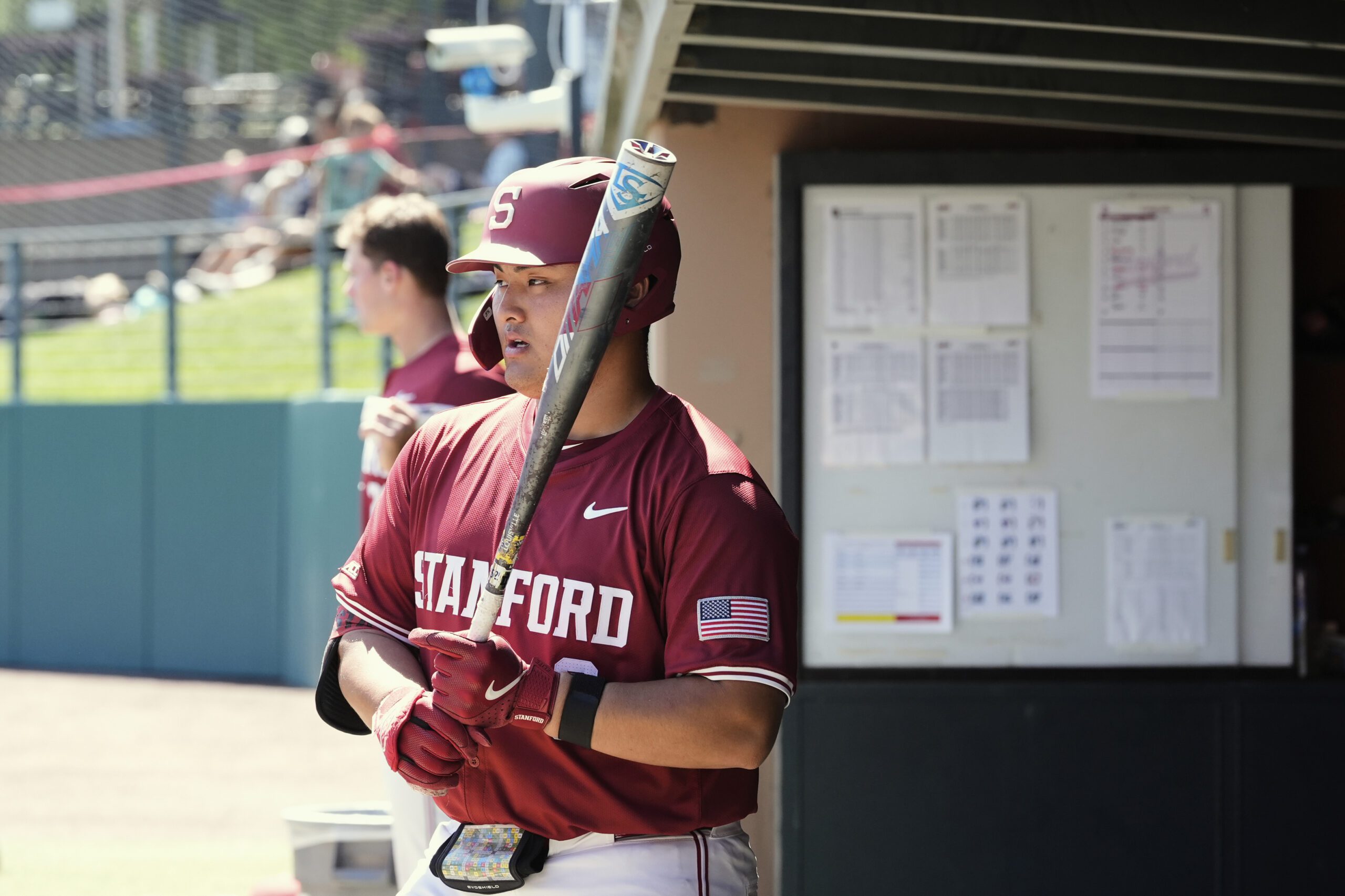
Photo: Stanford’s Rintaro Sasaki walks in the dugout with his bat during the fourth inning of an NCAA college baseball game against the Notre Dame, Sunday, April 20, 2025, in Stanford, Calif. (AP Photo/Godofredo A. Vásquez)