The Day, the Estate, the Purpose
For the second consecutive year, I had the privilege of hosting a live baseball conversation on behalf of The World Baseball Network at The Nick Loeb Foundation’s Party with the Police: BBQ & Pool Party — a staged summer gathering held in Purchase, New York, approximately 29 miles north of Madison Square Garden. The event has become one of the most meaningful fixtures in this part of Westchester County. Returning to the sprawling grounds felt like stepping back into a familiar chapter: families moving easily across the lawn, children darting toward the waterslide and the zip line, and the unmistakable hum of community that gives this day its soul.
Across the estate, local-area businesses had set up exhibits offering culinary delights, wines, beverages, and summer fare. Music drifted through the grounds, blending with laughter, conversation, and the energy of a community gathered with purpose. And on the property sits a full baseball field, where our distinguished guests, adults, and children alike took batting practice and fielded fly balls and grounders throughout the afternoon.
Even elected officials were present — including Bruce Blakeman, the two-term Nassau County Executive, on hand as he campaigns for the New York gubernatorial seat, and with whom I had the pleasure to speak.
It was a scene of joy — but joy with intention.
Because the purpose of this event is not ceremonial. It is essential.
The Foundation’s work centers on supporting the families of local-area police officers — especially those who do not possess the means to send their children to top-drawer or out-of-state schools, and who often fall into the gap where financial aid does not reach. This fundraiser exists to close that gap. To ensure that the children of those communities have access to the educational futures they deserve.
It is a mission rooted in gratitude, service, and opportunity — values that run deep in the Loeb family’s history.
The Loeb Lineage — Enterprise, Diplomacy, and Philanthropy
The story begins with Carl M. Loeb, born in Frankfurt in 1875, who immigrated to the United States and rose to prominence as president of the American Metal Company. In 1931, Carl and his son John Langeloth Loeb Sr. founded Carl M. Loeb & Co., a firm that would soon become a pillar of American finance. In 1937, the firm merged with Rhoades & Company to form Loeb, Rhoades & Co., one of Wall Street’s most influential investment houses of the mid-20th century.
John L. Loeb Sr. would go on to serve as senior partner and later president of the firm, steering it through major expansions and mergers — including the formation of Loeb, Rhoades, Hornblower & Co., and ultimately Shearson Loeb Rhoades in 1979.
His son, John Langeloth Loeb Jr., continued the family’s legacy of service — appointed by President Ronald Reagan as United States Ambassador to Denmark from 1981 to 1983, and later serving as U.S. Representative to the United Nations Human Rights Commission.
Today, that tradition continues through his son, Nick Loeb, whose stewardship of the Foundation and this annual fundraiser reflects the same commitment to service and community that has defined the Loeb family for generations.
And on this particular afternoon, woven into the fabric of the day was something else entirely: a moment of baseball history, carried by three men whose names still echo across the decades:
Wally Backman.
Lenny Dykstra.
Dwight “Doc” Gooden.
Three pillars of the 1986 World Champion New York Mets — a team that didn’t just win a championship but captured the soul of New York City. A team whose legacy, forty years later, remains one of the most powerful in sports. A team whose story is as much cultural as it is athletic.
This written legacy edition presents the full version of the event as originally designed — the complete historical arc, the full standup, the full narrative, and the full story of the ’86 Mets. The video companion captures portions of the live panel; this written edition preserves the entire planned journey.
The Architect — Frank Cashen
Before the Mets’ rise could begin, the franchise needed an identity — a philosophy strong enough to rebuild a culture and disciplined enough to sustain it. That identity arrived in 1980 with the hiring of Frank Cashen, the executive who had helped build the Baltimore Orioles into one of baseball’s model organizations.
Cashen brought with him the principles that defined what became known as The Oriole Way: player development rooted in discipline; organizational alignment from scouting to the major league roster; accountability inside the clubhouse; and a belief that culture is not ornamental — it is structural. He did not import slogans. He imported architecture. And that architecture became the foundation of the Mets’ ascent.
The Davey Johnson Connection
Cashen’s decision to hire Davey Johnson as manager for the 1984 season was not incidental. Johnson had been an excellent second baseman for those very Orioles — a product of the same system Cashen helped shape. Their shared history mattered. Their shared philosophy mattered. Their shared understanding of how to build a winning culture mattered.
Davey was not hired to manage a roster. He was hired to complete a construction project.
Wally Backman’s Reflections
Wally Backman speaks glowingly of Cashen — not just as an executive, but as a presence. Even after Wally’s playing days, when he transitioned into coaching, Cashen remained a steadying force. That relationship is part of the cultural fabric of the era: Cashen respected competitors, and competitors respected Cashen.
He wasn’t simply the general manager.
He was the architect of the Mets’ identity.
The Climb — 1985
The year that stung — and the fuel that ignited 1986.
By 1985, Frank Cashen’s architecture was fully in place. The culture was aligned, the roster was mature, and the Mets were no longer a rising team — they were a force. The season produced 98 wins, a total that would have secured a division title in almost any other era. But in a pre-wild-card world, 98 wasn’t enough. The Mets finished three games behind St. Louis, a margin so narrow it became part of the mythology of what came next.
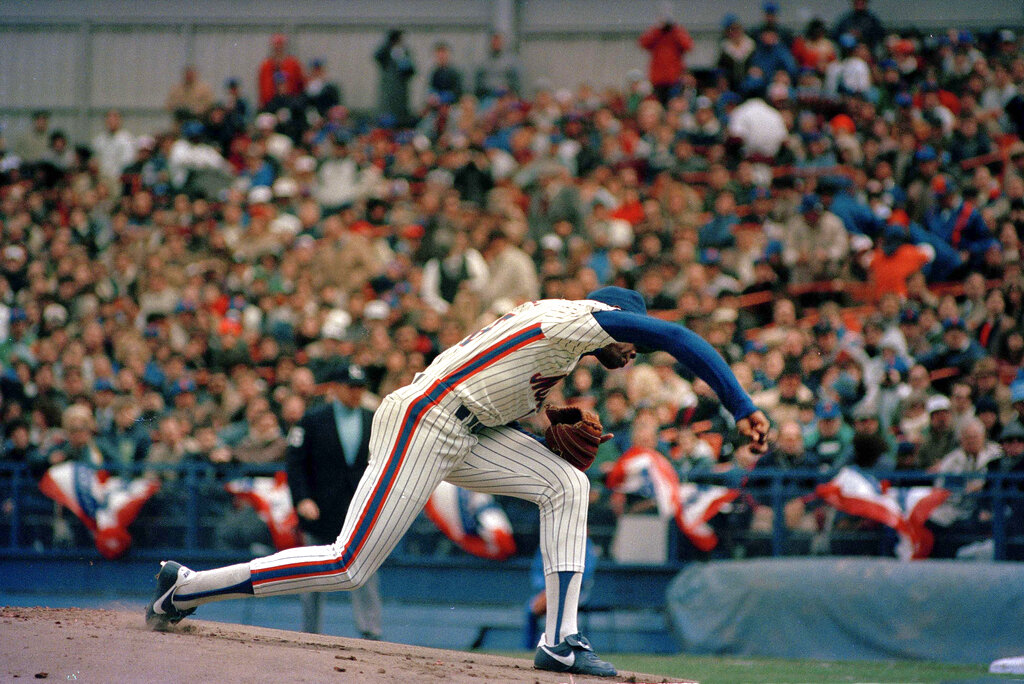
Dwight Gooden of the New York Mets pitches in the opening day game against the St. Louis Cardinals at New York’s Shea Stadium, April 9, 1985. (AP Photo/Ray Stubblebine)
Doc Gooden’s Historic Season
Dwight Gooden’s 1985 campaign remains one of the most dominant pitching seasons in modern baseball history — a statistical monolith that defined the team’s identity:
- 24–4 record
- 1.53 ERA
- 268 strikeouts
- 0.97 WHIP
- 16 complete games
- 8 shutouts
- Cy Young Award
- Triple Crown in ERA, wins, and strikeouts
It was dominance so complete that it became part of the clubhouse’s internal language. During the panel, Doc himself recalled one of Wally Backman’s classic lines from that season. The Mets won 98 games but finished three behind St. Louis. Doc noted that Wally, with perfect timing, once joked that if Doc hadn’t lost his mere four decisions, the Mets “would have been in it.” The four of us on the outdoor stage chuckled — because he was very nearly right, and the humor captured just how close the Mets were to breaking through.
The Sting That Became Fuel
1985 ended with a bruise — the kind that lingers, sharpens focus, and hardens resolve. Inside the clubhouse, the feeling was simple:
We’re ready.
Now we finish.
1985 wasn’t a prelude. It was the spark.
The Summit — 1986
The year the architecture, the culture, and the men reached their apex.
The 1986 Mets did not open the season as a juggernaut. They opened it 2–3, a start that lasted only long enough to remind the clubhouse of unfinished business. What followed was the first unmistakable sign of the team’s competitive force. From April 18 through April 30, the Mets won 11 straight, their longest winning streak of the season. By April 22, already sitting atop the NL East, the team’s posture had sharpened. The clubhouse carried itself with a confidence that matched the city’s expectations. The Mets were no longer gathering momentum — they were asserting control.
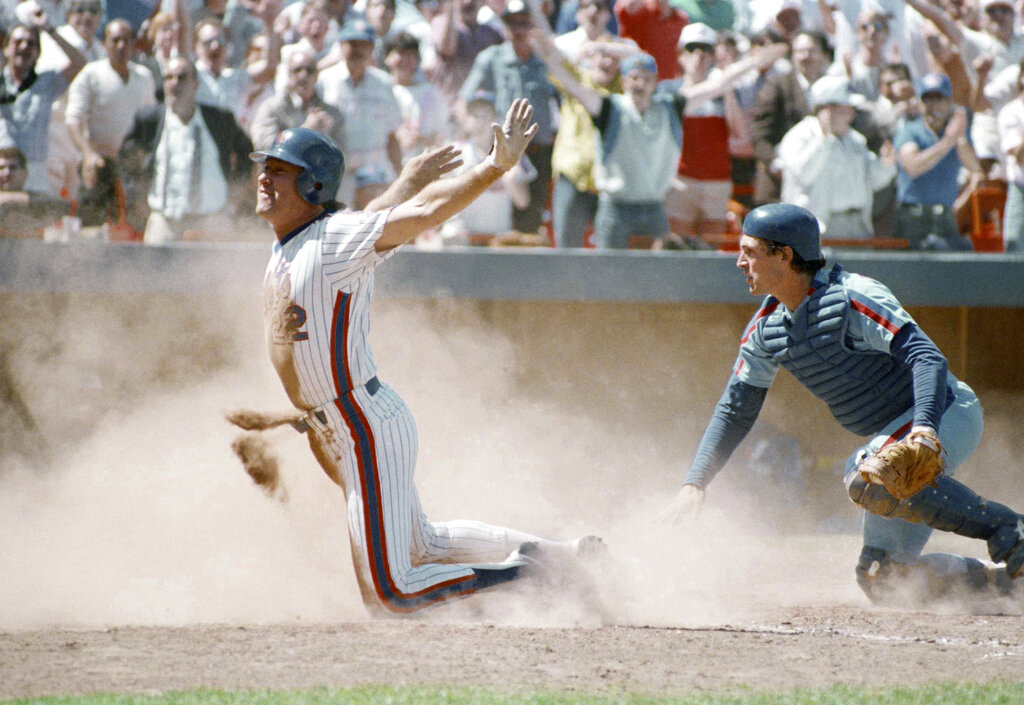
Ray Knight, left, of the New York Mets emerges jubilant from a cloud of dust at home plate after the umpire ruled him safe on a close play in the fourth inning of a game against the Expos at Shea Stadium, Wednesday, June 25, 1986, New York. Knight scored the go-ahead run in the Mets 5-2 win on a hit by Sid Fernandez. The catcher is unidentified. (AP Photo/Ray Stubblebine)
What made that posture possible was the architecture Frank Cashen had spent six years constructing. The roster was no longer young talent searching for identity — it was a balanced, seasoned, and fully realized machine. Keith Hernandez and Gary Carter formed the leadership spine, the competitive conscience of the clubhouse, and the stabilizing force behind a rotation loaded with youth and electricity. Doc, Ron Darling, and Sid Fernandez all benefited from their presence — from tempo, from game management, from the daily standards Keith and Gary imposed. And when Bob Ojeda arrived from Boston, he brought the final ingredient the staff needed: veteran calm, innings, and edge.
The lineup reflected the same balance. Pressure at the top. Power in the middle. Depth everywhere. Darryl Strawberry supplied the game-breaking force — the swing that bent ballparks, the presence that altered pitching plans, the threat that changed the temperature of every inning he occupied. Behind him sat a bench that mattered — Dave Magadan, Kevin Mitchell, Lee Mazzilli, Danny Heep — the kind of roster density that allowed Davey Johnson, the ultimate players’ manager, to deploy every man with purpose. In the bullpen, Jesse Orosco and Roger McDowell formed a two-headed anchor, closing games with contrasting styles and shared conviction. Every lane had definition. Every role had clarity. Every night had a plan.
By mid-June, the standings began to reflect what the clubhouse already knew. After June 14, the Mets held a double-digit lead in the NL East for all but one week for the rest of the regular season. They never lost more than four games in a row all year — and only twice. Every series carried the weight of inevitability. The identity built over six years — architecture, culture, competitive fire — was now fully visible.
By the time the Mets reached September 17, the regular season had already taken on the shape of a coronation. They were 95–50 and 19 games ahead of the Phillies. Shea Stadium didn’t arrive at that night with nerves — it arrived with certainty. The crowd understood what was coming. The clubhouse understood what was coming. The city understood what was coming.
Gooden took the ball against the Chicago Cubs and delivered the kind of performance that defined his presence in that era — a complete game, beating Dennis Eckersley 4–2, commanding and controlling tempo throughout. It was calm, forceful, and inevitable — the perfect reflection of the season he anchored.
At the top of the lineup, Dykstra did what he had done all year: apply pressure from the first pitch, turning the top of the order into a weapon and forcing opponents into defensive urgency from the opening inning. Backman matched that energy — the same chaos, tempo, and competitive fire that defined the Mets’ identity all season.
And down the stretch came Magadan — booed only because he was announced as Hernandez’s stand-in at first base on the clinching night — answering the moment with three hits and two RBI. On a night built on inevitability, Magadan delivered the unexpected: a reminder of the depth Cashen constructed and the culture that allowed every man to matter.
When the final out settled into a glove, Shea Stadium erupted into mayhem. The Mets had won their first division title since 1973, and they had done it in a fashion that matched the architecture of their rise. This wasn’t a chase. This wasn’t a surprise. This wasn’t a miracle. It was the night inevitability became official.
They finished the regular season 108–54, one of the most dominant records in modern National League history, and ended the year 21.5 games ahead of the second-place Phillies — a margin that did not simply reflect superiority. It reflected inevitability.
The 1986 Mets were the culmination of Cashen’s architecture, Davey’s leadership, the competitive heartbeat of Backman, the ignition of Dykstra, the phenomenon of Gooden, the force of Strawberry, the seasoning of Ojeda, the depth of the roster, the scars of 1985, and the force of New York.
They were not a team that happened to win.
They were a team constructed to win.
The NLCS — Houston, the October Gauntlet
The National League Championship Series was not a matchup. It was a collision. Houston arrived engineered for October — a rotation built on power and deception, a bullpen that closed games with ice, and a ballpark whose heavy air turned every run into a fistfight. The Mets had dominated the regular season, but the NLCS demanded something different: endurance, pressure, and the ability to survive games that felt like they might never end.
The Astros’ identity began with Mike Scott, whose splitter was at the peak of its powers. His presence alone altered the psychology of the series. Opponents didn’t just prepare for him — they braced for him. Alongside Scott stood Nolan Ryan, still throwing lightning, and Dave Smith, whose ninth-inning composure made every lead feel larger than it was. And then there was the Astrodome — a building that swallowed fly balls and punished mistakes. The Mets knew they were entering a fight.
For Dykstra, the turning point came in Game 3 at Shea. Bottom of the ninth, Dave Smith on the mound, the series even at a game apiece. Dykstra stepped in and delivered one of the defining swings of the postseason — a walk-off home run that flipped the entire temperature of the series. It was the kind of moment that changes a clubhouse. The Mets didn’t just win a game; they seized momentum. Dykstra’s swing became the ignition point for everything that followed.
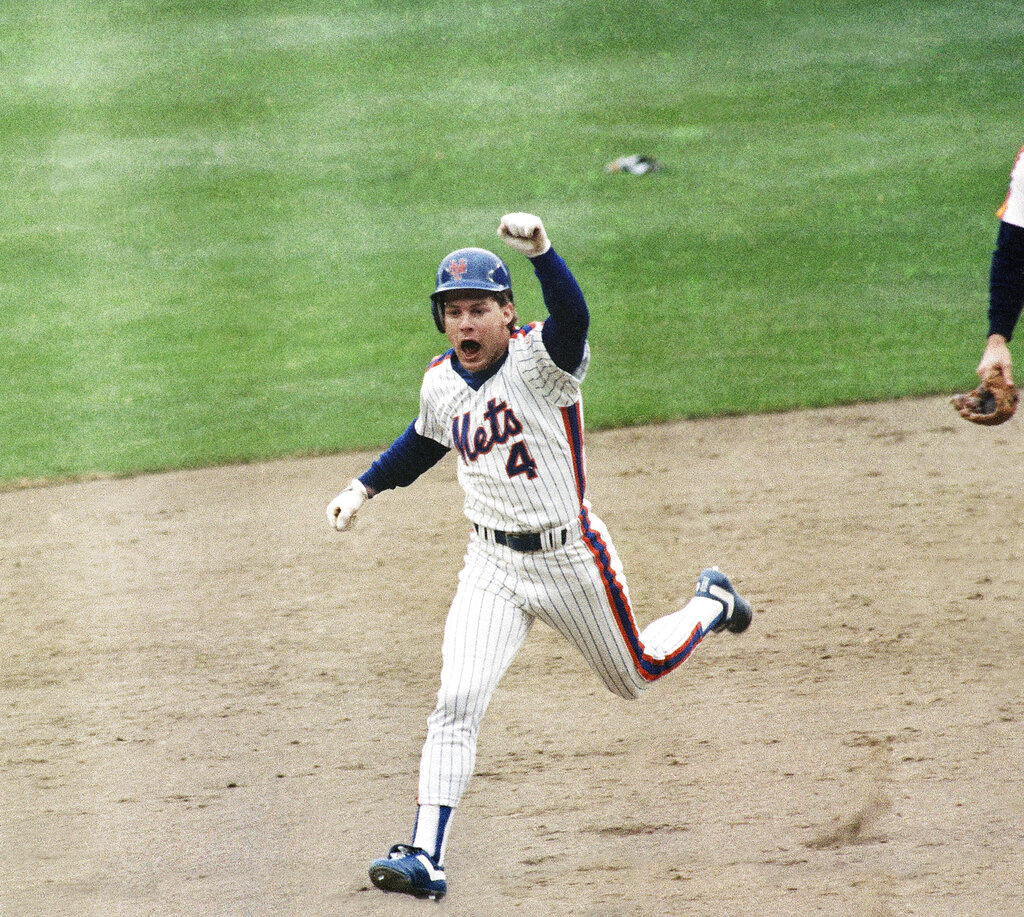
Lenny Dykstra of the New York Mets thrusts a fist in the air as he rounds the bases after his game-winning two-run homerun in the bottom of the ninth inning of Game 3 of the National League Championship Series against the Houston Astros, Saturday, Oct. 11, 1986, New York. The homer scored Wally Backman and beat Houston 6-5. (AP Photo/G. Paul Burnett)
Wally’s NLCS was a study in pressure. He kept innings alive, moved runners, and played flawless defense. In a series where every run felt like a negotiation, Backman’s ability to manufacture chaos mattered. He and Dykstra applied pressure throughout the series, forcing Houston’s staff into situations they didn’t want to defend. Backman’s contributions weren’t loud — they were structural.
Doc’s role was different. He became the counterweight to Scott. Across seventeen magnificent innings, Gooden allowed only two earned runs — seven innings of brilliance in Game 1, where Scott’s 14-strikeout, complete-game masterpiece stole the result, and a Game 5 start against Ryan that stretched into a 12-inning classic and became one of the great pressure performances of his career. Gooden didn’t overpower the Astros — he outlasted them.
The series reached its apex in Game 6, a sixteen-inning epic that stretched four hours and forty-two minutes and felt, at times, like it might never end. The Mets scored three in the top of the sixteenth — Strawberry doubling, Ray Knight singling him home for the lead, and Dykstra adding another run as the “Clutch Brothers” struck again — and suddenly New York was three outs from the pennant.
But Houston refused to die, answering with two in the bottom of the inning. Jesse Orosco, already in his third inning of relief, struck out Craig Reynolds to open the frame, but veteran Davey Lopes drew a walk and Bill Doran singled to center. Billy Hatcher followed with another single, scoring Lopes and tightening the game to 7–5. Denny Walling grounded into a force at second for the second out, moving Doran to third, and Glenn Davis singled to center to make it 7–6, with Walling now representing the tying run at second.
Then came the indelible at-bat. Exhausted and pitching on fumes, Orosco threw the slider that ended the series — a pitch Bass swung over, sealing one of the most iconic moments in Mets’ history. Shea Stadium wasn’t there to witness it, but the roar from the visiting dugout carried the weight of a franchise arriving at its moment.
The NLCS took something out of the Mets. It demanded endurance, resilience, and emotional stamina. And when it was over, the team exhaled — not in relief, but in recognition.
They had survived Houston.
They had survived the Astrodome.
They had survived Mike Scott.
And they had earned their place in the Fall Classic.
The ALCS — The Other Storm
While the Mets were locked in their sixteen-inning war with Houston, the American League was experiencing its own upheaval. The California Angels were one strike away from the World Series, Red Sox Nation was bracing for elimination, and the baseball world was preparing for an Angels–Mets Fall Classic. Then, in an instant, everything flipped.
Dave Henderson stepped in against Donnie Moore and hit a forkball that became one of the most consequential swings in postseason history. The ball carried over the left-field wall at Anaheim Stadium, stunning the Angels, silencing the crowd, and turning the entire series on its head. Boston stormed back, won the final two games at Fenway, and claimed the American League pennant. It was a comeback that reshaped October.
The Mets, still in the middle of their own storm, watched the ALCS unfold in real time. For the Mets, the ALCS was not background noise. It was context. It was the reminder that October can turn on a single pitch, a single swing, a single moment.
When Boston emerged as the opponent, the Mets understood immediately what awaited them. The Red Sox were not simply a team — they were a problem. Their lineup could score in bursts:
- Wade Boggs — in the opinion of Reginald Armstrong, arguably the purest hitter of his generation not named Tony Gwynn
- Jim Rice — capable of flipping a game with one swing
- Don Baylor — a veteran presence who never shied from contact
- Marty Barrett — who would go on to hit .433 in the World Series
Their rotation was no less formidable. Roger Clemens was in the middle of one of the greatest seasons ever pitched — Cy Young, All-Star Game MVP, and AL MVP in the same year. Bruce Hurst was brilliant all season. Oil Can Boyd was unpredictable, emotional, and capable of dominance.
This was not a mismatch. This was a collision.
And the Mets had one advantage Boston did not: Ojeda. As a recently departed member of the Red Sox clubhouse, Ojeda understood their tendencies, their rhythms, their personalities, and their pressure points. His insight became part of the Mets’ preparation — a quiet edge that mattered.
The ALCS had delivered Boston.
The NLCS had delivered New York.
And now the Fall Classic was set.
The World Series — The Collision with Boston
The Mets arrived in the World Series carrying the weight of Houston — sixteen innings of tension, a ballpark that swallowed fly balls, and a pennant that had to be won on the road in a game that stretched nearly five hours. It was the longest, most emotionally draining NLCS in franchise history. It took something out of them. It had to.
Boston arrived through a different storm. They had been one strike from elimination in Anaheim, then surged back with two wins at Fenway, riding the adrenaline of a comeback that electrified their clubhouse and their city. Their path to New York was shorter, emotional, and charged. They entered Shea Stadium with momentum, clarity, and the confidence of a team that had just escaped disaster.
When the World Series opened, the contrast was visible. The Mets, still carrying the residue of the Houston marathon, dropped the first two games at home. Boston, riding the surge of its ALCS resurrection, played with urgency and precision. October had its own physics, and the opening of the Fall Classic reflected them.
But the series shifted the moment it moved to Fenway Park.
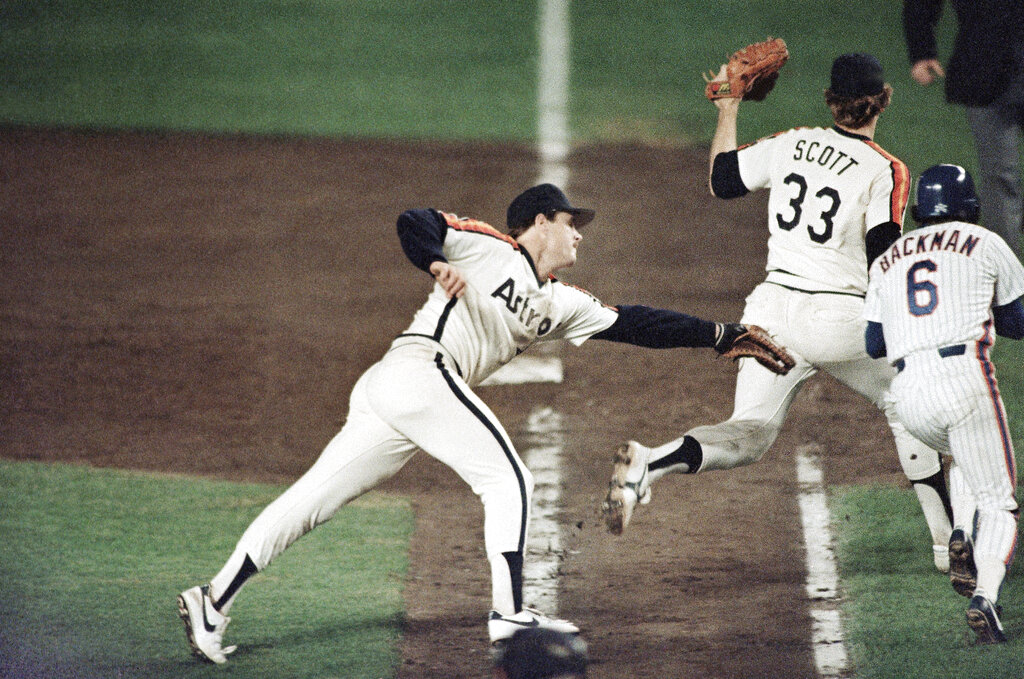
Houston Astros first baseman Glenn Davis, left, reaches to tag New York Mets batter Wally Backman (6) as Backman Collides with Astros pitcher Mike Scott (33) in the fourth inning game, Sunday, Oct. 12, 1986, New York. Backman was called safe at first on the bunt play after umpire Joe West ruled interference on Scott. (AP Photo/G. Paul Burnett)
Game 3 began with Lenny stepping into the box against Oil Can Boyd and detonating a leadoff home run into the right-field seats. It was a swing that changed the temperature of the series. Dykstra finished with four hits, and the Mets were on the board. Dykstra homered again in Game 4, but the night belonged to Gary Carter’s two home runs and Ron Darling’s seven shutout innings. Across those two games at Fenway, the Mets seized back the series.
Backman’s World Series was everything the Mets needed — pressure, contact, and flawless defense. He hit .333 with a .429 on-base percentage, keeping innings alive and applying the same chaos that defined the Mets all season. Against Clemens, Hurst, and Oil Can, Backman approached every at-bat with the same situational intelligence that had carried the team through the summer. From second base, he saw the series unfold in real time — the pressure points, the momentum swings, the moments where the Mets’ identity asserted itself.
Doc entered the World Series carrying the workload of the NLCS. Boston jumped early in his starts, but the staff and lineup picked him up. For Gooden, the shift from NLCS dominance to World Series struggle was not a failure — it was the reality of October after surviving Houston. The support he received mattered. It reflected the culture of the team and the architecture of the roster.
And then came Game 6 — the cold, iconic Saturday night that became part of American sports memory. One strike away from elimination, the Mets sat in the dugout as the crowd held its breath. Mookie Wilson stepped in, and the at-bat that followed has been replayed for forty years. When the “little roller up along first” went through Bill Buckner’s legs, Shea Stadium erupted into something beyond noise — a Roman Coliseum of disbelief, release, and eruption. It was the moment that defined the era.
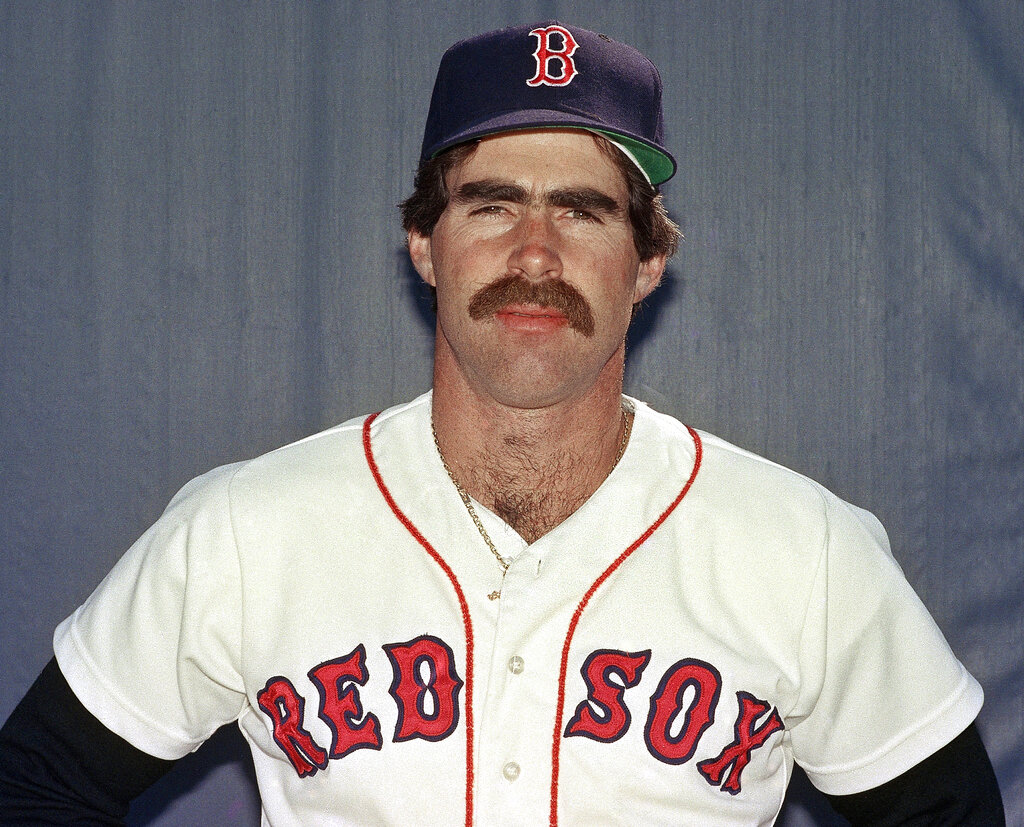
FILE – In this March 1986, file photo, Boston Red Sox first baseman Bill Buckner poses for a photo. Buckner, a star hitter who became known for making one of the most infamous plays in major league history, has died. He was 69. Buckner’s family said in a statement that he died Monday, May 27, 2019, after a long battle with dementia. (AP Photo, File)
Game 7 was supposed to be played the next day, but rain intervened, giving both teams an unexpected pause. The Mets spent Sunday sitting with the weight of Game 6 — the momentum, the adrenaline, the opportunity. When Monday night arrived, Shea Stadium was electric. Ron Darling took the mound opposite Hurst, and Boston struck first, jumping to a 3–0 lead on home runs by Dwight Evans and Rich Gedman. But the Mets answered. Sid Fernandez came out of the bullpen and slammed the door, retiring seven straight and steadying the game when it could have slipped away. Keith Hernandez tied it with a bases-loaded single, and Ray Knight put the Mets ahead for good with a home run off Calvin Schiraldi leading off the seventh. Roger McDowell earned the win; Jesse Orosco recorded the final out and the save. They crowned the Cashen rebuild. They shaped the legacies of a franchise and of the men who defined it.
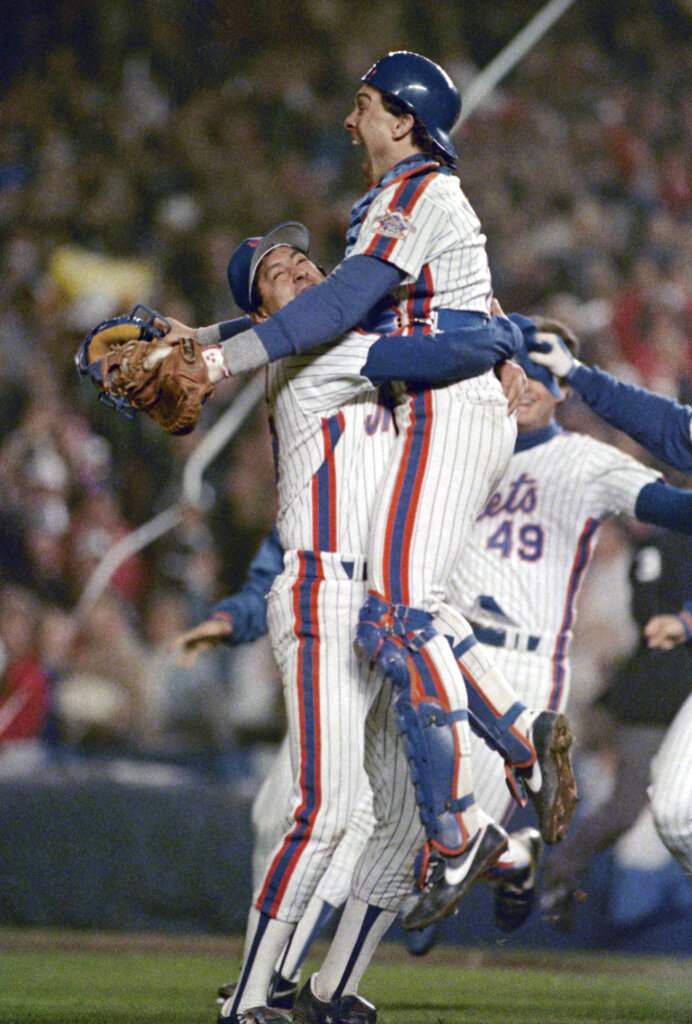
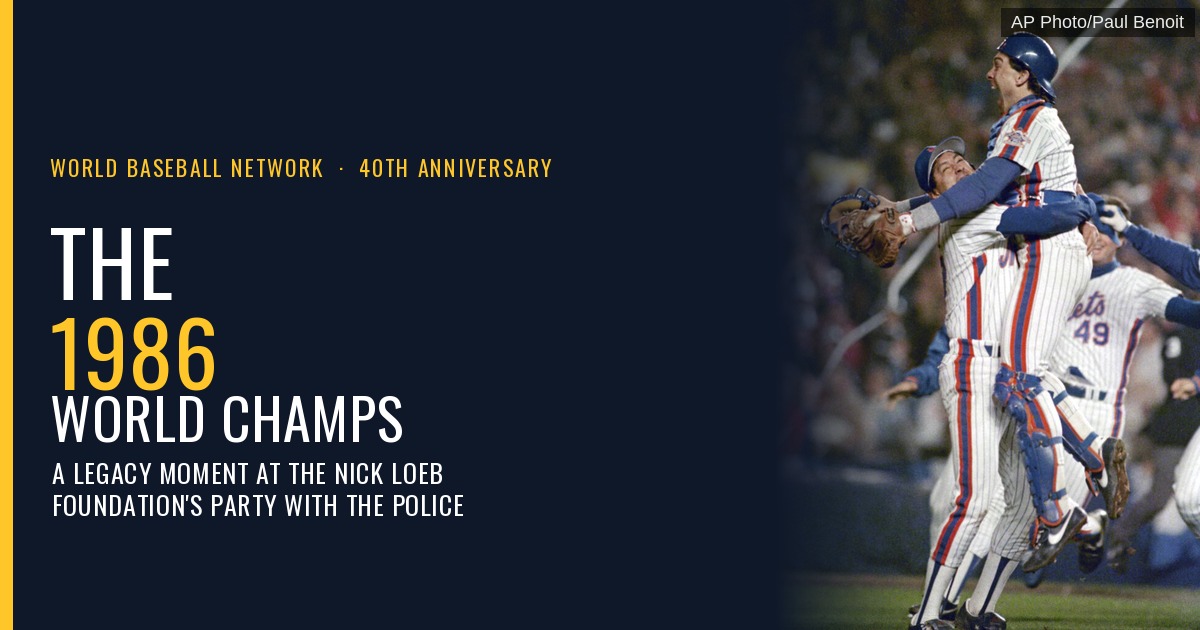
New York Mets catcher Gary Carter, is lifted into the air by relief pitcher Jesse Orosco following the Mets 8-5 victory over the Boston Red Sox in the seventh game of the World Series. Game was played at New York’s Shea Stadium, October 27, 1986. (AP Photo/Paul Benoit)
The Mets were champions, and New York — and the baseball world — was theirs.
The Knicks & Mets Blue & Orange Bridge
Champions in New York occupy a different altitude. The city lifts them, mythologizes them, and folds them into its identity. It did so in 1986, and it is doing so again today with the Knicks — a franchise that has just ended a fifty-three-year drought and reclaimed the city’s imagination. The parallels are unmistakable. Both teams wore blue and orange. Both teams carried the weight of decades. Both teams broke through in eras when New York was hungry for a champion.
And in the way New York always does, the city immediately began drawing comparisons — not statistical, but cultural. Archetypes. Roles. Energy. The connective tissue between eras. So, I drew mine.
If you look at the Knicks today, you see personalities that echo the 1986 Mets in spirit, if not in sport.
Jalen Brunson — the calm engine, the late-game force, the player whose leadership and clutch reliability place him alongside Hernandez and Carter, the veteran leadership core whose presence and competitive intelligence steered the Mets’ championship run. Brunson reflects both: the emotional center and the field general.
Josh Hart — the emotional accelerant, the player whose versatility, toughness, and willingness to do whatever a possession requires — mirrors Ray Knight, who brought the same competitive adaptability at third base and in the batter’s box. Hart’s ability to play across positions and impose his presence in moments echoes Knight’s role on the ’86 Mets: a reliable, fearless connector whose impact exceeded any single lane.
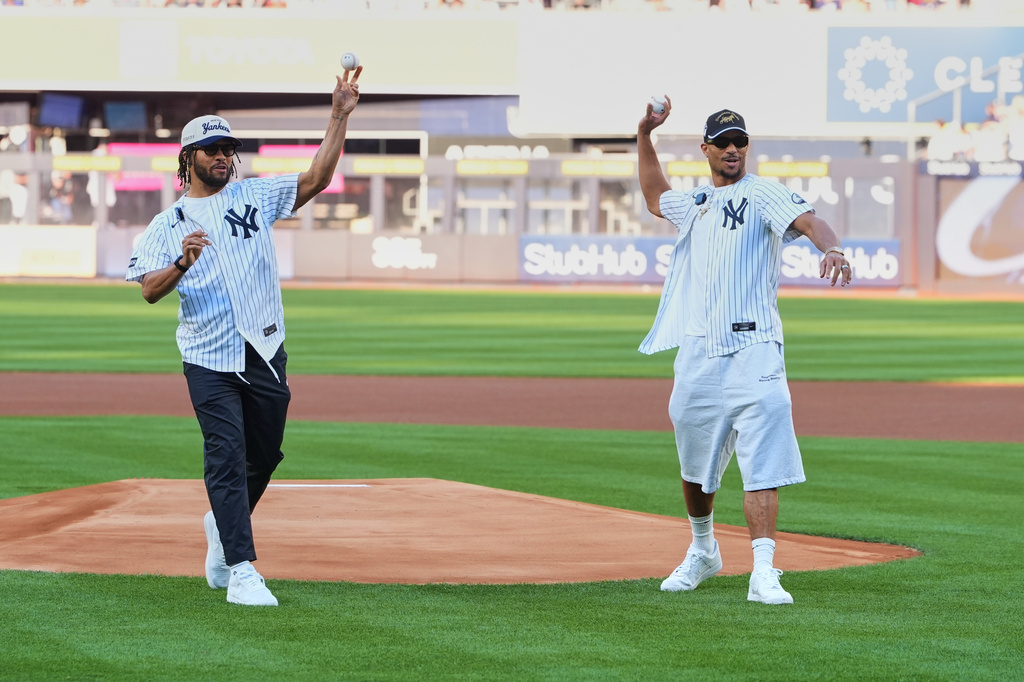
New York Knicks’ Josh Hart, right, and Jalen Brunson throw out a ceremonial first pitch before a baseball game between the Chicago White Sox and the New York Yankees Wednesday, June 17, 2026, in New York. (AP Photo/Frank Franklin II)
Karl-Anthony Towns — the gifted, explosive force who can change a game with a single sequence — mirrors the raw, game-breaking talent of Strawberry, a player whose ceiling stretched as far as the sport could imagine.
Mikal Bridges — the flexible, reliable, two-way presence who fits any lineup and raises the floor of every unit — mirrors Roger McDowell, whose adaptability, steadiness, and character made him indispensable in the Mets’ bullpen. Bridges, like McDowell, is the third-lane force: not the closer, not the star, but the player whose versatility and dependability become a team’s hidden advantage.
Mitchell Robinson — the interior force, the rebounder, the shot-alterer, the player who does the work that allows stars to breathe — aligns with Kevin Mitchell, whose toughness, instincts, and dirty-work presence were essential to the Mets’ rise.
Landry Shamet — the timely shooter, the clutch spark off the bench — reflects Mookie Wilson, whose speed and energy, and whose involvement in the most iconic play of the era, made him unforgettable.
And then there are the men seated here today — Dwight Gooden, Lenny Dykstra, and Wally Backman — whose impact defined the Mets’ identity in ways that do not require analogues. Gooden’s brilliance, Dykstra’s ignition, Backman’s chaos with purpose: these were foundational elements of the 1986 team, and their influence stands on its own. As Doc and Wally themselves noted, the team was primed to win — but the leadership spine of Keith and Gary shaped the path, and the rest of the roster delivered with force.
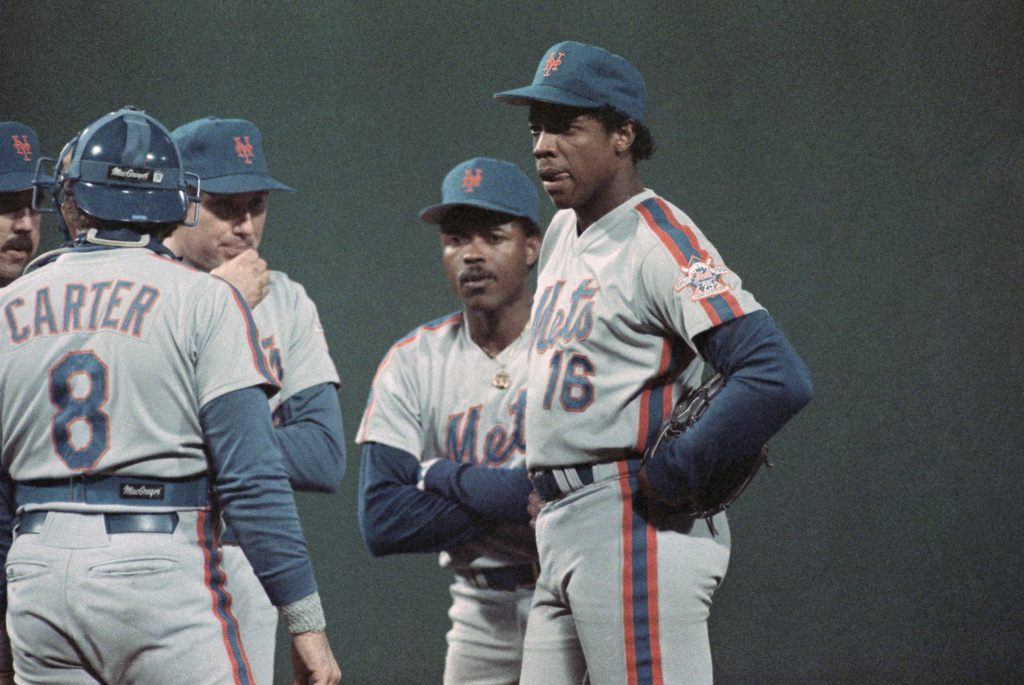
New York Mets pitcher Dwight Gooden reflects on the mound prior to being removed in the fifth inning of the fifth game of the World Series against the Boston Red Sox at Boston’s Fenway Park, Oct. 24, 1986. In background is Mets shortstop Rafael Santana. The Red Sox defeated the Mets 4-2. (AP Photo)
These comparisons are not literal. They are architectural. They are the way New York interprets its champions — through personality, through role, through the emotional structure of a team. They are the connective tissue between eras, the blue and orange thread that runs from 1986 to today.
The Mets felt that in 1986.
The Knicks feel it now.
And the city, once again, belongs to its champions.
The Legacy — The Day, the City, the Men
What gives this day its meaning is the convergence of memory and purpose. Forty years after their summit, three men who helped define a championship return not to celebrate themselves, but to support families who carry the weight of service. A fundraiser for police families. A gathering of community. A moment where gratitude, history, and civic responsibility share the same room.
The 1986 Mets left an imprint on New York and on Major League Baseball mythology that has endured across generations. Their season became part of the city’s story, their personalities became part of its language, and their triumph became part of its identity. And today, that legacy stands not as nostalgia, but as continuity — a reminder that certain champions remain woven into the civic fabric long after the final out.
The men at the center of this story — Dwight Gooden, Lenny Dykstra, and Wally Backman — were not supporting pieces. They were central to the architecture of 1986.
Gooden’s brilliance set the tone.
Dykstra’s ignition changed the temperature of games.
Backman’s pressure and competitive intelligence helped shape the team’s competitive identity.
And in a moment that carried its own quiet weight, Dykstra — navigating life after his 2024 stroke — was engaged, joyful, and fully present with his teammates on that outdoor stage, a presence everyone at this event was grateful for.
This day is a testament to the bond between a team and a city — a bond strong enough to carry across decades, strong enough to matter in scenes like this, and strong enough to remind everyone present why certain seasons are never forgotten.
1986 New York Mets — World Champions
Regular Season: 108–54 | Postseason: 8–5 | Total: 116–59
Pitchers: Rick Aguilera, Ron Darling, Sid Fernandez, Dwight Gooden, Roger McDowell, Bob Ojeda, Jesse Orosco, Doug Sisk
Catchers: Gary Carter, Ed Hearn, Barry Lyons, John Gibbons
Infielders: Wally Backman, Keith Hernandez, Howard Johnson, Ray Knight, Rafael Santana, Tim Teufel, Dave Magadan, Kevin Elster
Outfielders: Lenny Dykstra, Darryl Strawberry, Mookie Wilson, Danny Heep, Lee Mazzilli, Kevin Mitchell
Manager: Davey Johnson
General Manager: Frank Cashen
A roster of identity.
A roster of impact.
A roster of champions.