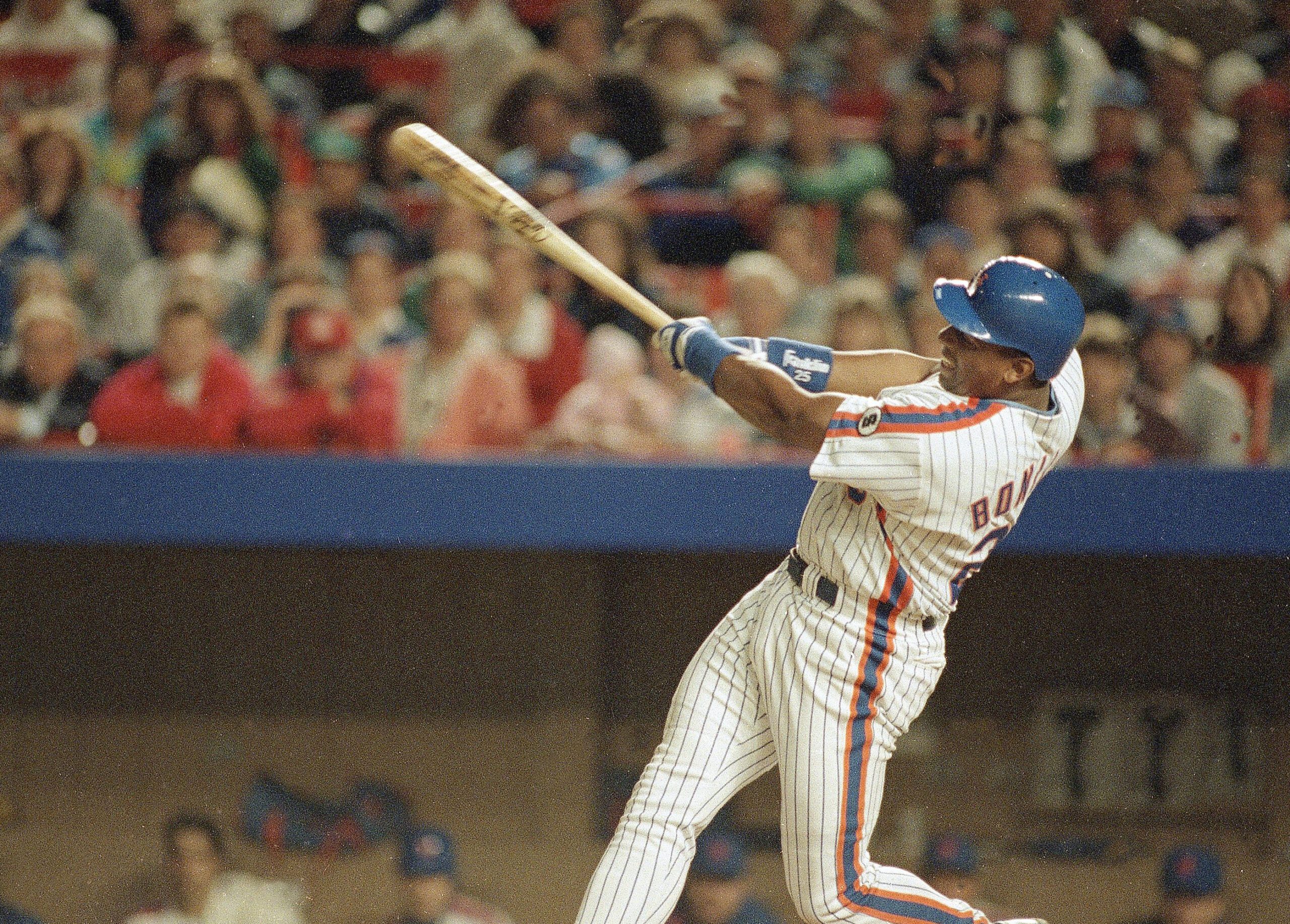
Few contracts in professional sports have lived on as long and become as widely referenced as Bobby Bonilla’s deferred deal with the Mets.
Every July 1, baseball fans are reminded of one of the most infamous contracts in professional sports.
Since 2011, “Bobby Bonilla Day” has become an annual tradition, with the former outfielder receiving another deferred salary payment from the New York Mets long after his playing career ended. The contract has become synonymous with financial mismanagement, serving as the standard against which every costly MLB deal is measured.
The Bonilla contract originated following the 1999 season, when the veteran slugger was nearing the end of his career. After batting just .160 in 60 games, the Mets decided to move on despite having $5.9 million remaining on his contract.
Rather than paying the remaining salary immediately, Bonilla’s agent, Dennis Gilbert, negotiated a deferred-payment agreement that dramatically reshaped the contract. The Mets agreed to postpone payment for 10 years while applying an 8% annual interest rate.
Beginning in 2011, Bonilla started receiving annual payments of approximately $1.19 million, with the installments continuing through 2035. By the time the agreement concludes, the Mets will have paid nearly $29.8 million on what was originally a $5.9 million obligation.
The arrangement became particularly infamous after the collapse of Bernie Madoff’s Ponzi scheme. At the time the deal was negotiated, Mets ownership believed investments tied to Madoff would generate returns high enough to outweigh the cost of the deferred payments. Instead, the investment strategy unraveled, leaving the Bonilla contract as one of the most enduring examples of deferred money gone wrong in professional baseball.
While Bonilla’s agreement remains one of baseball’s most recognizable cautionary tales, it is far from the only contract that left a franchise paying millions for diminishing on-field value. Multiple other deals have saddled clubs with years of financial obligations, costly deferred payments, or massive returns that failed to justify the investment.
While the Bonilla contract has become the sport’s most recognizable example of deferred payments gone wrong, it is far from the only deal that left a franchise paying heavily for years after expectations fell apart.
Here are five contracts that rival the Mets’ infamous Bobby Bonilla agreement.
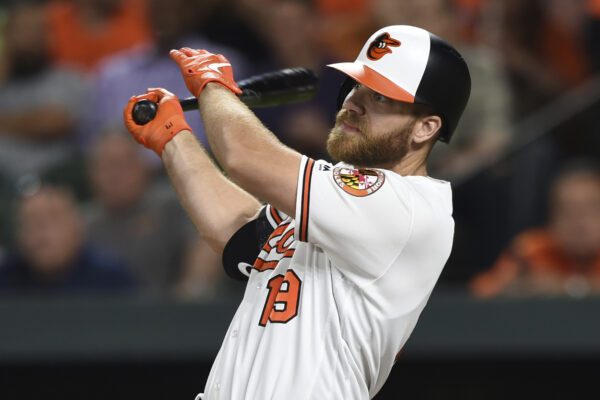
Baltimore Orioles’ Chris Davis follows through on a two-run home run against the Chicago White Sox in the third inning of a baseball game in Baltimore, in this Tuesday, April 23, 2019, file photo. Slugger Chris Davis announced his retirement Thursday, Aug. 12, 2021, ending a career in which he became one of baseball’s most prodigious home run hitters before his production declined amid injury problems during his final seasons with the Baltimore Orioles. (AP Photo/Gail Burton, File)
1. Chris Davis (Baltimore Orioles) – When the Orioles signed Chris Davis to a seven-year, $161 million extension before the 2016 season, they expected one of baseball’s premier power hitters to anchor the middle of their lineup for years.
Instead, the contract quickly became one of the largest performance declines in recent MLB history.
Following the extension, Davis struggled through multiple seasons batting below .200 as his performance at the plate declined dramatically. Baltimore remained committed to significant long-term financial obligations.
Like Bonilla, Davis’ contract includes extensive deferred compensation. The Orioles are paying approximately $59 million in deferred salary through 2037, with annual payments structured without interest.
The payment schedule includes roughly $9.1 million annually from 2023-25, $3.5 million annually from 2026-32 and $1.4 million annually from 2033-37.
Beyond the financial commitment, the contract became a symbol of the Orioles’ rebuilding years, limiting payroll flexibility while serving as a lasting reminder of one of the franchise’s most expensive free-agent investments.
Unlike Davis, whose contract unraveled because of a dramatic decline in performance, the next deal was largely undone by injuries that prevented one of baseball’s greatest players from staying on the field.
When Chris Davis finally snapped his streak of 62 consecutive plate appearances without a hit pic.twitter.com/IwIY6sZ3ME
— Baseball Quotes (@BaseballQuotes1) December 18, 2025
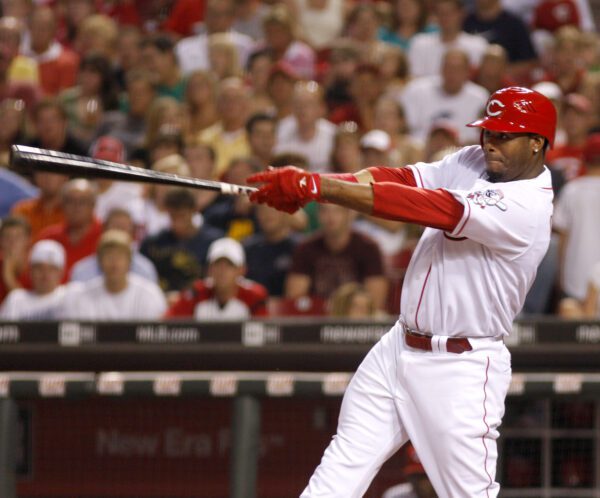
Cincinnati Reds Ken Griffey Jr. hits a solo home run he off Colorado Rockies pitcher Jorge De La Rosa in the fourth inning of a baseball game, Saturday, July 26, 2008, in Cincinnati. The Rockies won 5-1. (AP Photo/David Kohl)
2. Ken Griffey Jr. (Cincinnati Reds) – Few contracts carried as much excitement as the Reds’ trade for Ken Griffey Jr. before the 2000 season.
Fresh off one of the most dominant stretches of his career in Seattle, Griffey signed a nine-year, $116.5 million contract that also included significant deferred compensation.
Although Griffey remained one of baseball’s biggest stars, injuries prevented Cincinnati from getting the return it envisioned on its investment. Hamstring, knee and wrist injuries limited him throughout much of his tenure, and he played fewer than 100 games in five of his nine seasons with the club.
Despite reaching several historic milestones, including his 400th, 500th and 600th career home runs while wearing a Reds uniform, the consistent injuries dramatically reduced the contract’s overall value.
The deferred payments, estimated at roughly $57.5 million with interest, continued well beyond Griffey’s playing career, making the deal one of baseball’s most notable long-term financial commitments.
Some contracts become cautionary tales because players fail to produce. Others, like the next record-setting agreement, demonstrate that even elite individual performances cannot always justify an enormous financial commitment.
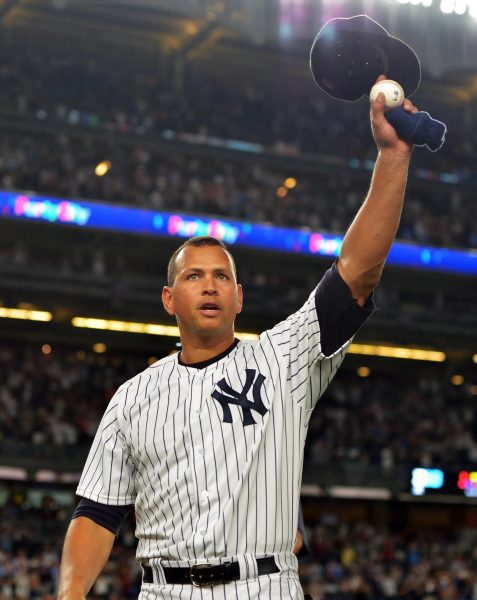
Alex Rodriguez (AP Photo)
3. Alex Rodriguez (Texas Rangers, New York Yankees) – Alex Rodriguez delivered exactly what the Rangers expected on the field. The problem was everything surrounding the contract.
Signed before the 2001 season, Rodriguez’s 10-year, $252 million contract was the richest in professional sports history at the time, completely redefining both baseball’s financial landscape and the market for superstar players.
Rodriguez more than justified his salary individually, hitting 156 home runs, driving in 395 runs, winning three consecutive American League home run titles and capturing a Gold Glove during his three seasons in Texas.
The Rangers, however, finished last in the American League West each year despite his individual success.
The contract also featured complex deferred payments and long-term financial obligations that placed strain on the organization. Specifically, $33 million in deferred salary, including annual allotments of $3 to $5 million, earning 3% interest per year, delaying payouts until 2020.
After the 2003 season, Texas traded Rodriguez to the New York Yankees, with New York assuming the majority of the remaining financial obligations. Although Rodriguez performed at an elite level, the contract became an example of how even historic individual production cannot overcome an unbalanced roster and overwhelming payroll commitment.
While Rodriguez’s contract became difficult to sustain despite his on field execution, Boston’s deal with Manny Ramirez illustrates how even championship-winning contracts can continue affecting a franchise long after a player departs.
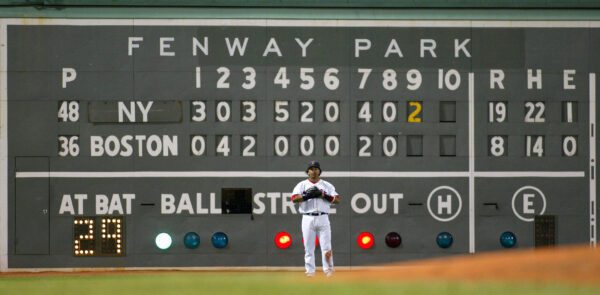
Red Sox outfielder Manny Ramirez stands in front of the scoreboard on the Green Monster in the ninth inning of game three in the American League Championship Series against the New York Yankees at Fenway Park in Boston Massachusetts, October 16, 2004. The Red Sox lost the game 19-8 to go down in the series 3 games to none. (Photo by Rick Friedman/Corbis via Getty Images)
4. Manny Ramirez (Boston Red Sox) – Unlike many contracts on this list, Manny Ramirez helped deliver exactly what Boston hoped he would on the field.
During his eight seasons with the Red Sox, Ramirez batted .312 with 274 home runs and 868 RBIs while playing a pivotal role in ending the franchise’s 86-year World Series drought in 2004 and helping secure another championship in 2007.
The financial impact, however, extended well beyond his departure.
After Ramirez was traded during the 2008 season, Boston remained responsible for substantial deferred compensation. The Red Sox continued paying him $2 million annually from 2011 through 2026, keeping the contract on the club’s payroll nearly two decades after it was signed.
While the championships softened the financial burden, the lengthy deferred-payment structure made Ramirez’s contract one of baseball’s most recognizable long-term obligations.
The final contract on the list serves as another reminder of the risks associated with long-term megadeals, particularly when a team is paying for a player’s past accomplishments rather than future performance.
Title: Angels Astros Baseball
Image ID: 21115775745877
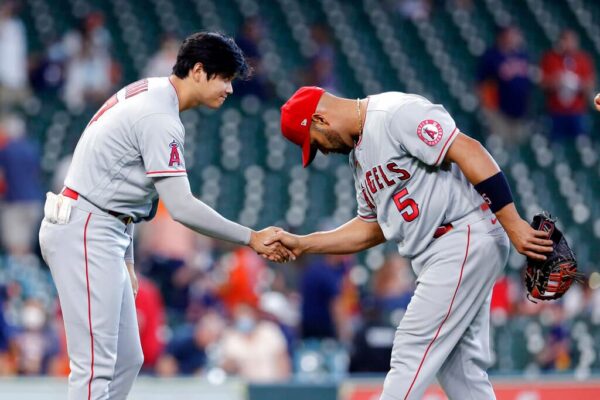
Article: Los Angeles Angels’ Shohei Ohtani, left, and Albert Pujols (5) shake hands and bow after their 4-2 win over the Houston Astros after a baseball game Sunday, April 25, 2021, in Houston. (AP Photo/Michael Wyke)
5. Albert Pujols (Los Angeles Angels) – When Albert Pujols signed a 10-year, $240 million contract with the Angels before the 2012 season, the franchise believed it had landed one of the greatest hitters of his generation.
Instead, the agreement quickly became one of the most expensive examples of paying for past production.
After dominating with the St. Louis Cardinals, Pujols experienced a noticeable decline in Anaheim as injuries and age took their toll. His offensive numbers steadily fell below the elite standards he established earlier in his career, while declining mobility eventually limited him primarily to designated hitter duties.
The Angels designated Pujols for assignment in May 2021 before officially releasing him days later, absorbing a significant amount of remaining guaranteed money despite the contract still having time left.
Although Pujols reached several major career milestones during his tenure with the Angels, the organization never received the superstar production it expected from one of the largest contracts in franchise history, making it one of baseball’s most costly long-term investments.
Bobby Bonilla’s contract remains the most famous example of baseball’s deferred-payment era, but it is hardly unique. These five agreements illustrate that across Major League Baseball, even the biggest investments can produce financial obligations that outlast the careers they were designed to reward.
WBN MLB: https://worldbaseball.com/league/mlb/
Photo: New York Mets Bobby Bonilla busts out of his hitting slump with this swing, to gave him a grand slam against the San Francisco Giants in the second inning, June 1, 1992 at New York’s Shea Stadium. Bonilla, who wore earplugs during game on Saturday with Atlanta to block out the boos of unhappy fans, was given a long and loud standing ovation after his grand slam and ended the game with a career-high six RBIs as the Mets won 14-1. (AP Photo/Osamu Honda)