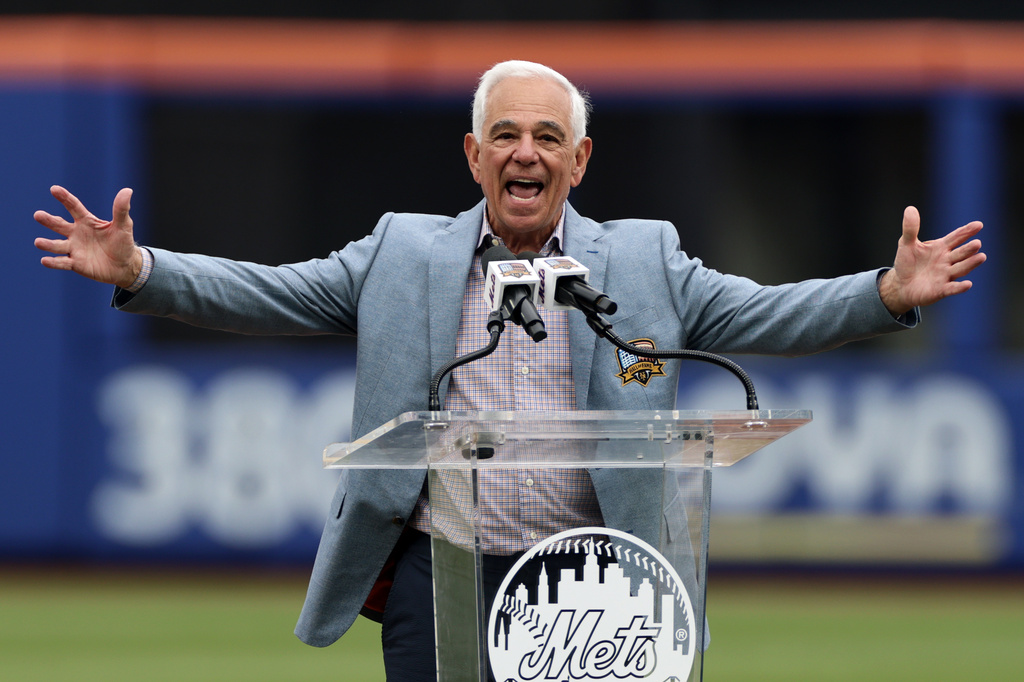
NEW YORK, N.Y. — The New York Mets played their second game of their three-game series against the Miami Marlins on Saturday afternoon at Citi Field, with former manager Bobby Valentine and former outfielder Lee Mazzilli being inducted into the Mets Hall of Fame in a pregame ceremony that pushed first pitch back to 4:31 p.m. ET. The franchise also honored the late team photographer Marc Levine with an achievement award before the inductees took the podium. Attendance was 38,552. The Mets won 6-1 behind Christian Scott’s first big-league victory.
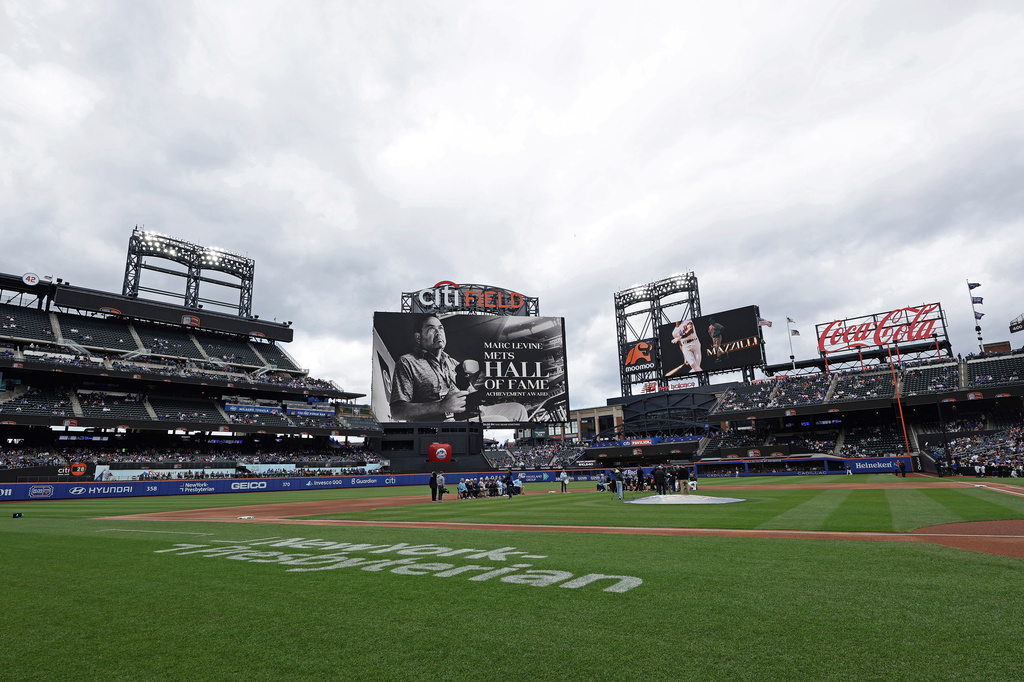
Late team photographer Marc Levine is honored by the team with an achievement award in the New York Mets hall of fame before a baseball game against the Miami Marlins, Saturday, May 30, 2026, in New York. (AP Photo/Adam Hunger)
Carlos Beltrán, the third member of this year’s Mets Hall of Fame class, will have his number 15 retired and his formal induction ceremony in September. Saturday belonged to Valentine and Mazzilli.
Bobby Valentine: From Stamford To Queens To Chiba And Back
Valentine was born in Stamford, Conn. on May 13, 1950 and attended Rippowam High School in Stamford, where he was an All-State player in football, baseball, and track. He remains the only three-time All-State football player in Connecticut history and set state records for career touchdowns with 53, alongside career interceptions for touchdowns with five. The career interception-for-TD record remains, having later been tied by two other players. As a sophomore in 1965, he averaged 5.6 yards a carry, scored 21 touchdowns, and led Rippowam to a 9-0 record and a state championship.
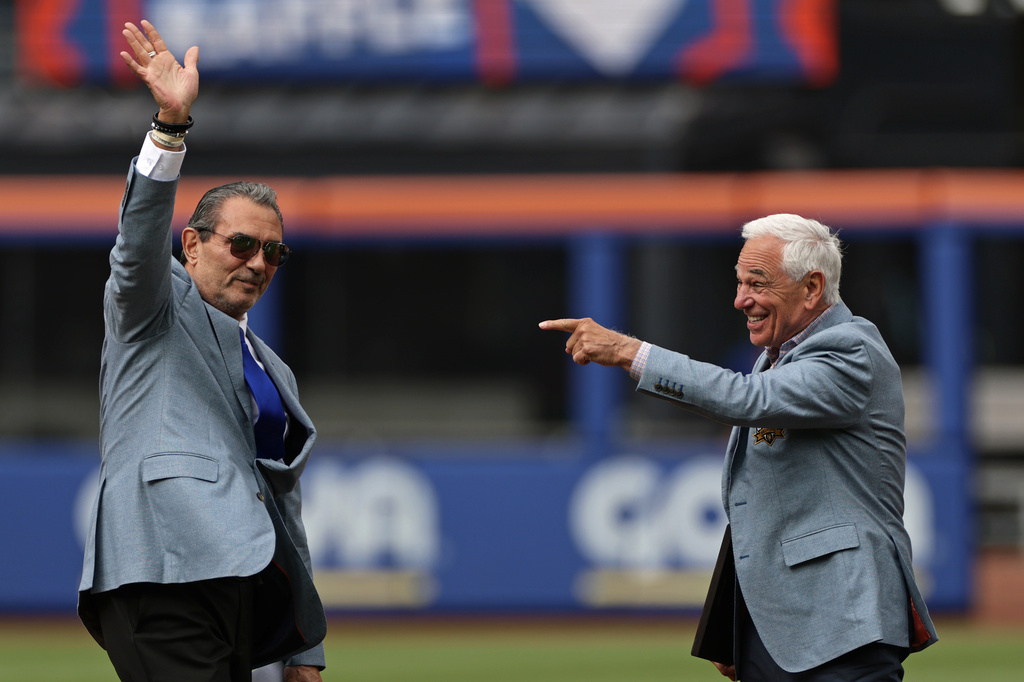
Lee Mazzilli, left, and Bobby Valentine wave and gesture during an induction ceremony into the New York Mets hall of fame before a baseball game against the Miami Marlins, Saturday, May 30, 2026, in New York. (AP Photo/Adam Hunger)
Valentine’s regular-season managerial record of 1,186-1,165 came across 16 seasons in the majors. He also played 10 years in the majors with the Los Angeles Dodgers in 1969 and from 1971-1972, the California Angels from 1973-1975, the San Diego Padres from 1975-1977, the New York Mets from 1977-1978, and the Seattle Mariners in 1979.
Valentine managed the orange and blue from 1996 until 2002 with his record at 536-467 — the second-most wins of any manager in Mets history, behind only Davey Johnson. He helped the Mets reach the postseason in 1999 with a National League Wild Card berth and the NL Pennant in 2000, when they played the New York Yankees in the World Series and lost in five games.
Mike Piazza, who caught for Valentine on that 2000 World Series team and was the headliner of those clubs, presented Valentine’s plaque on Saturday.
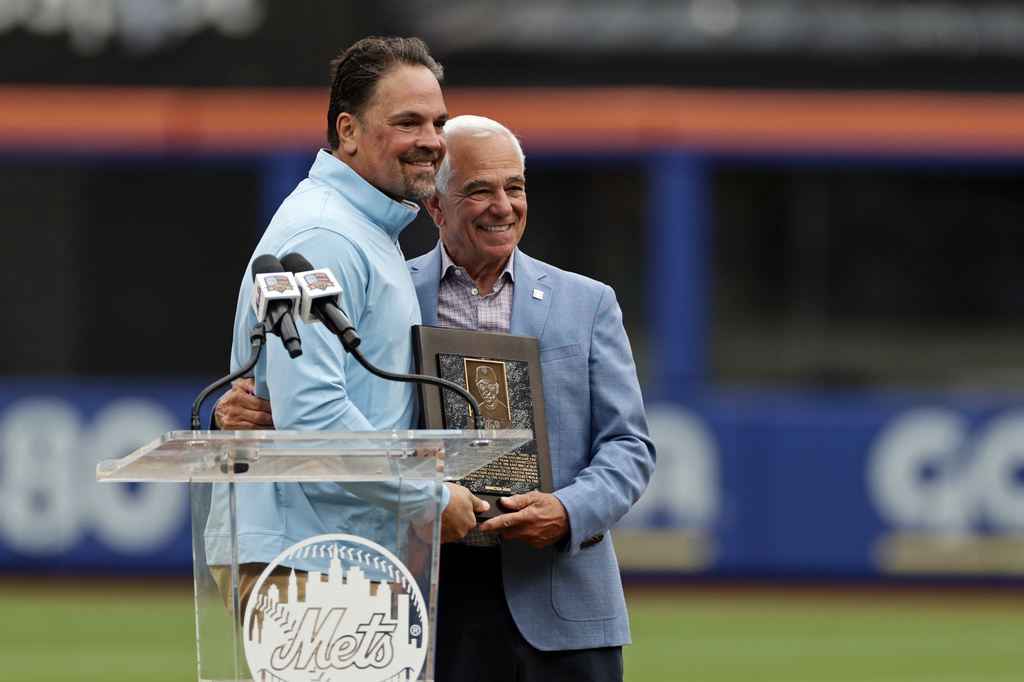
Mike Piazza, left, presents Bobby Valentine with a plaque during an induction ceremony into the New York Mets hall of fame before a baseball game against the Miami Marlins, Saturday, May 30, 2026, in New York. (AP Photo/Adam Hunger)
Valentine also managed the Texas Rangers from his first managerial opportunity at the MLB level in 1985 until after the 1992 season, and later managed in the Mets minor league system in 1994 at Triple-A Norfolk, finishing in fourth place with a record of 67-75 in the five-team West Division of the International League. After leaving the Mets in 2002, he returned to Japan in Nippon Professional Baseball to manage the Chiba Lotte Marines in his second stint, beginning in 2004 — a run that produced a Japan Series championship in 2005.
Valentine has been one of the foreign-born managers who shaped the modern NPB landscape, joining a lineage that includes Wally Yonamine, who managed the Chunichi Dragons from 1972-1977; Alex Ramírez, who became the first Latino-born manager in the league with the Yokohama DeNA BayStars from 2016-2020; Don Blasingame, who managed the Hiroshima Toyo Carp from 1978-1980 and again in 1992; Marty Brown, with the Carp from 2006-2009 and the Tohoku Rakuten Golden Eagles in 2010; Terry Collins, who managed the Orix Buffaloes from 2007-2008; and Joe Lutz, who managed the Carp in 1975. The pipeline that Valentine joined and helped expand is a piece of the broader international development story that World Baseball Network exists to track.
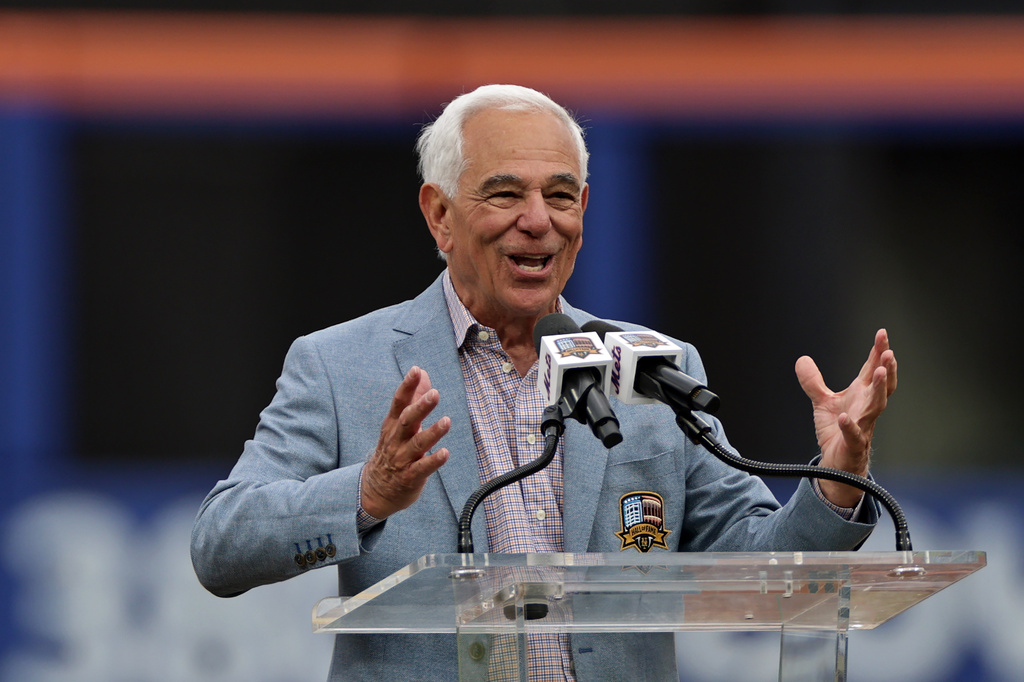
Bobby Valentine speaks during an induction ceremony into the New York Mets hall of fame before a baseball game against the Miami Marlins, Saturday, May 30, 2026, in New York. (AP Photo/Adam Hunger)
The Days After September 11
Valentine’s seven years managing the Mets included the most-remembered ten-day stretch any Mets manager has ever navigated. Between September 11, 2001 and the resumption of baseball in New York City on September 21, Shea Stadium became a staging ground for first responders headed to Ground Zero. Valentine personally fed workers at his nearby restaurant. He organized players and staffers for relief efforts. He visited Ground Zero on multiple occasions.
At Saturday’s press conference, Valentine credited the orchestration to Jay Horwitz, the Mets’ longtime vice president of alumni public relations and team historian.
“After what Jay was able to pull off after 9/11,” Valentine said, “him orchestrating that movement of caring — that I was really proud and liked to be remembered as one of Jay’s followers. He said, get to St. Pat’s. And I got to St. Pat’s. He said, get to Brooklyn. And I got to Brooklyn. Without his coordination, I think 75 percent of the effort that people in the New York Met uniform made after 9/11 would’ve gone awry if Jay Horwitz wasn’t orchestrating that.”
Valentine helped establish Tuesday’s Children, a nonprofit created to support the more than 3,000 children who lost a parent in the September 11 attacks. The organization still operates today.
Lee Mazzilli: The Brooklyn Kid
Mazzilli was born on March 25, 1955 in Brooklyn, N.Y. The Mets drafted him in the first round of the 1973 amateur draft — 14th overall — out of Abraham Lincoln High School. He told the assembled press on Saturday that he found out he was the Mets’ top pick the same way most kids in 1973 found out anything: by running home from school.
“I just felt — I guess Bobby did the same — was just get drafted and play professional baseball,” Mazzilli said. “And then when I found out that I was the number one pick of the Mets, I was really overwhelmed. I ran home from school to see my dad. I didn’t even expect that. I was the 14th pick in the country and I was offered $30,000 to sign at the time, which was like a million dollars. I wound up signing for 50,000 after two months of negotiating.”
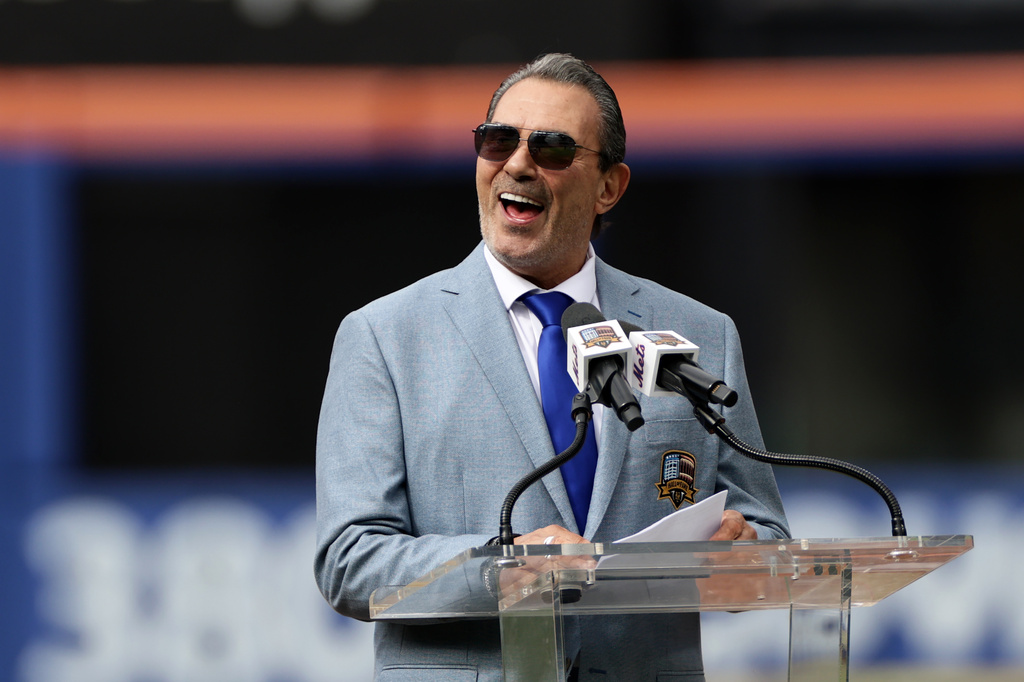
Lee Mazzilli speaks during an induction ceremony into the New York Mets hall of fame before a baseball game against the Miami Marlins, Saturday, May 30, 2026, in New York. (AP Photo/Adam Hunger)
Mazzilli debuted with the Mets in September 1976 and quickly became the face of late-1970s Mets baseball, the years between Tom Seaver’s trade and the 1986 World Series run. He was a 1979 All-Star and hit the first home run by a Met in an All-Star Game that summer in Seattle. He went on to draw a bases-loaded walk in the ninth inning that lifted the National League to a 7-6 victory.
Across two stints in Queens spanning 1976-1981 and 1986-1989, Mazzilli combined to slash .264/.357/.396. He ranks sixth in franchise history with 152 stolen bases and is tied for fifth in team history with 38 pinch-hits.
Al Leiter, the 2000 World Series-era left-hander who pitched in Valentine’s clubhouse, presented Mazzilli’s plaque on Saturday.
]
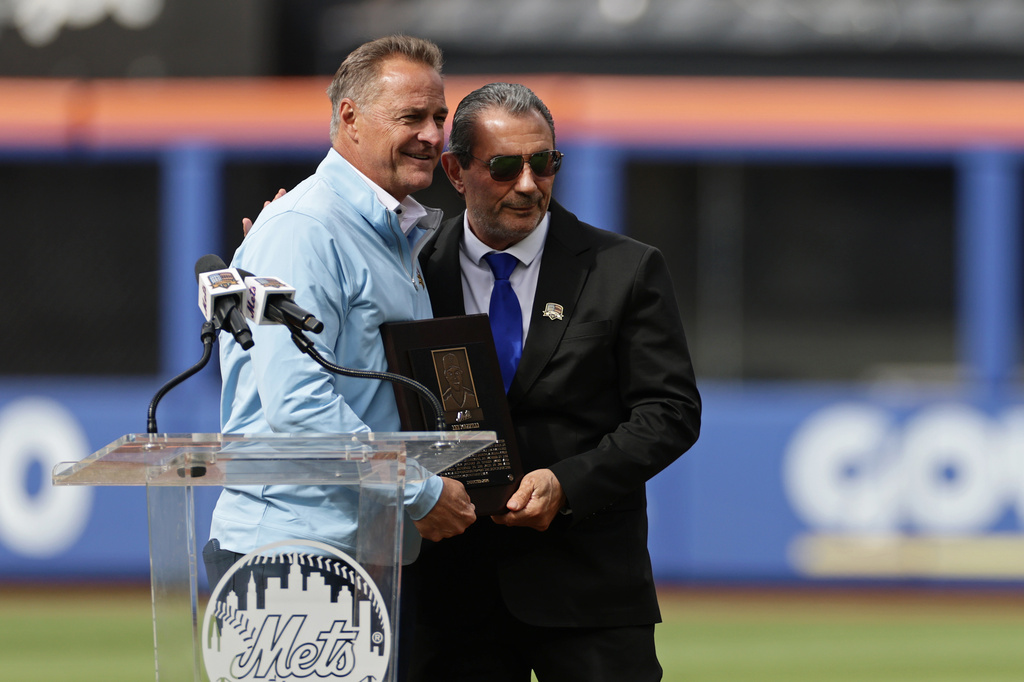
Lee Mazzilli, right, with Al Leiter during an induction ceremony into the New York Mets hall of fame before a baseball game against the Miami Marlins, Saturday, May 30, 2026, in New York. (AP Photo/Adam Hunger)
Mazzilli returned for the 1986 World Series team. In Game 6 against the Boston Red Sox, with the Mets one strike from elimination, he came off the bench in the eighth inning, walked, and scored the tying run on a sacrifice fly by Gary Carter. He went 2-for-3 with two runs scored across Games 6 and 7. The man on third base when Bill Buckner’s error happened was a different teammate, but the one who scored the run that brought the Mets within one in that inning was Lee Mazzilli of Brooklyn.
“For me, in the seventies here,” Mazzilli said, “and a lot of you know that — New York was tough. It was a bad time in New York, not just baseball. City was broke, strikes, blackouts. I think the saving grace for me was playing baseball here and being fortunate enough to come from Brooklyn and playing in your hometown. I didn’t get the lean years of the seventies, I looked back at it. But for me, there was special. This is where I was born and raised. So played in your backyard. The Mets and Life, OK.”
The 1979 Spotlight, And The Roommates
Valentine offered the line of the afternoon when he was asked about that late-1970s Mets era.
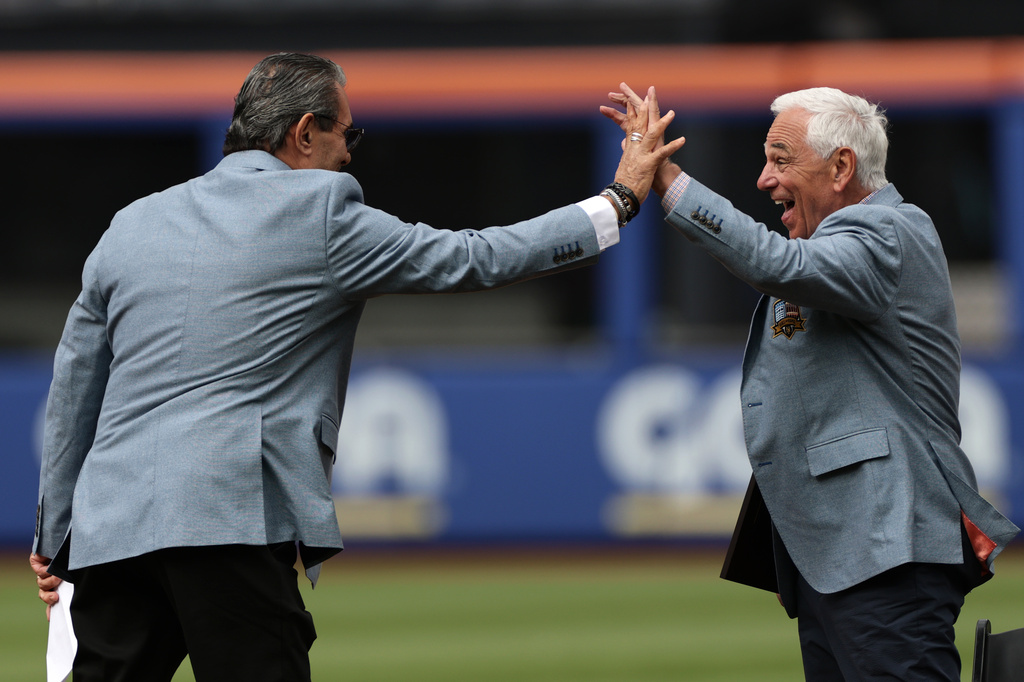 Lee Mazzilli, left, and Bobby Valentine high-five during an induction ceremony into the New York Mets hall of fame before a baseball game against the Miami Marlins, Saturday, May 30, 2026, in New York. (AP Photo/Adam Hunger)