
Editorial by Reginald V. Armstrong
Stan Kroenke, a son of the Show Me State, has never needed to be told how to win —
he simply shows it.
On September 1, 2026, when the announcement was made that he would acquire the Los Angeles Angels — a deal expected to close in the first quarter of 2027, pending Major League Baseball approval — the region’s civic and competitive map shifted instantly.
Kroenke has built championship organizations in every sport he has touched.
He has built stadium districts that redefine cities.
He has built cultural anchors that outlast cycles.
His arrival in Orange County is not just a baseball story; it is a California story.
And the timing matters.
It September 21 and the Angels are in last place in the AL West.
October — baseball’s second season — will belong to someone else.
The Angels will watch it from a distance, as they have for most of the past decade.
That absence is not a surprise; it is structural.
The franchise has lived without organizational architecture for years, drifting between identities, laying claim to Los Angeles because the name defines the market, even though Anaheim and Orange County are no more Los Angeles than Syosset is Manhattan.
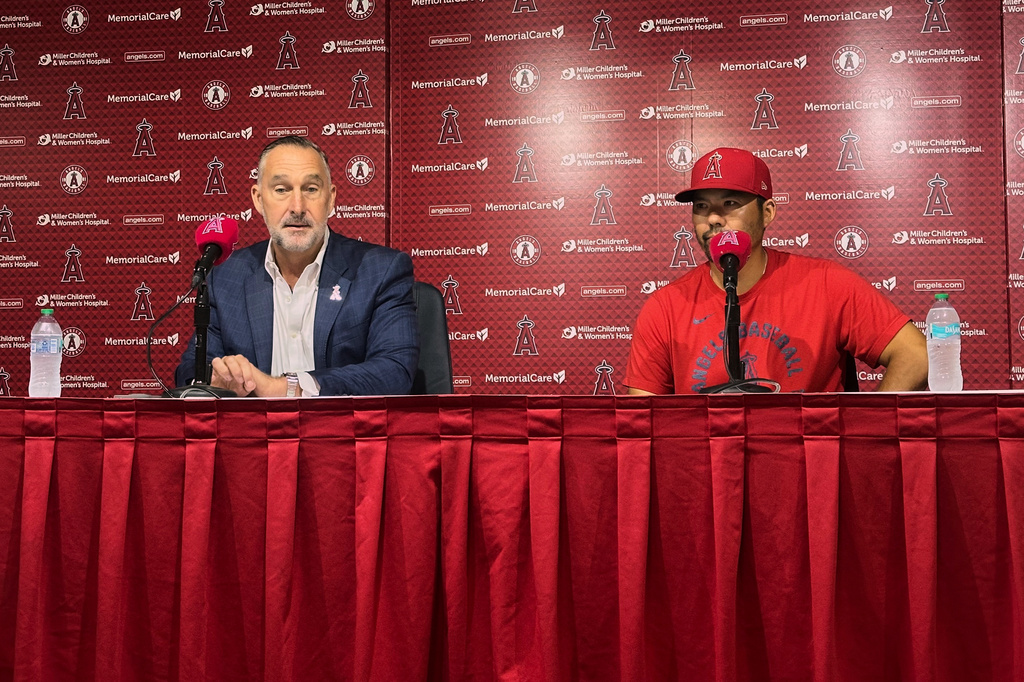
Kroenke does not inherit a contender.
He inherits a void — competitive, cultural, and civic.
And he steps into that void at the precise moment when baseball’s economic machinery is about to be rewritten by the next collective bargaining agreement.
The Angels, under their previous ownership, would have entered that CBA disadvantaged, misaligned, and structurally incapable of keeping pace with the sport’s emerging engines.
Kroenke enters it positioned.
This is the hinge of the story:
Kroenke’s acquisition is not about what the Angels have been. It is about what Southern California can become.
The transformation begins with acknowledging the truth of the baseball operation he is inheriting — a franchise that spent heavily, marketed loudly, and still collapsed structurally because its leadership never built the machinery required to sustain competitiveness.
The Angels were not a small market club.
They were not financially constrained.
For long stretches, they operated with a top 10 payroll, and at times inside the top 5.
They signed Albert Pujols to a historic contract.
They signed Josh Hamilton to another.
They extended Mike Trout on a record deal.
They spent aggressively on free agents, arbitration cycles, and short‑term fixes.
They were not cheap.
They were not limited.
They were not held back by market size.
They were held back by leadership, or lack thereof.
The Angels had the machinery of a modern operation — the departments, the personnel, the technology — but not the leadership to make it function. The decision makers did not build a coherent developmental system or a competitive identity, and the talent the system produced reflected those gaps. At the end of the day, the players play — and the Angels did not develop impact players. The structure existed; the leadership failures made it unproductive.
Their drafts did not supply the system with enough high‑end talent. Their pitching development lagged behind the rest of the sport. Their internal processes were inconsistent and reactive, evidently.
They were a high‑spend franchise with a low‑yield operation — a club that bought talent but never built it.
The roster they carried into 2026 reflected that reality.
The Angels finally had coherence — Zach Neto, Logan O’Hoppe, Nolan Schanuel, Grayson Rodriguez, Alek Manoah — but none of them were star‑level talents.
They were foundational pieces, not franchise‑defining players.
The Angels have not produced a true star since Mike Trout, and their system has not yielded impact talent in over a decade.
The franchise’s competitive ceiling was capped before the season even began.
And then came the Ohtani decision — the moment that exposed the leadership vacuum.
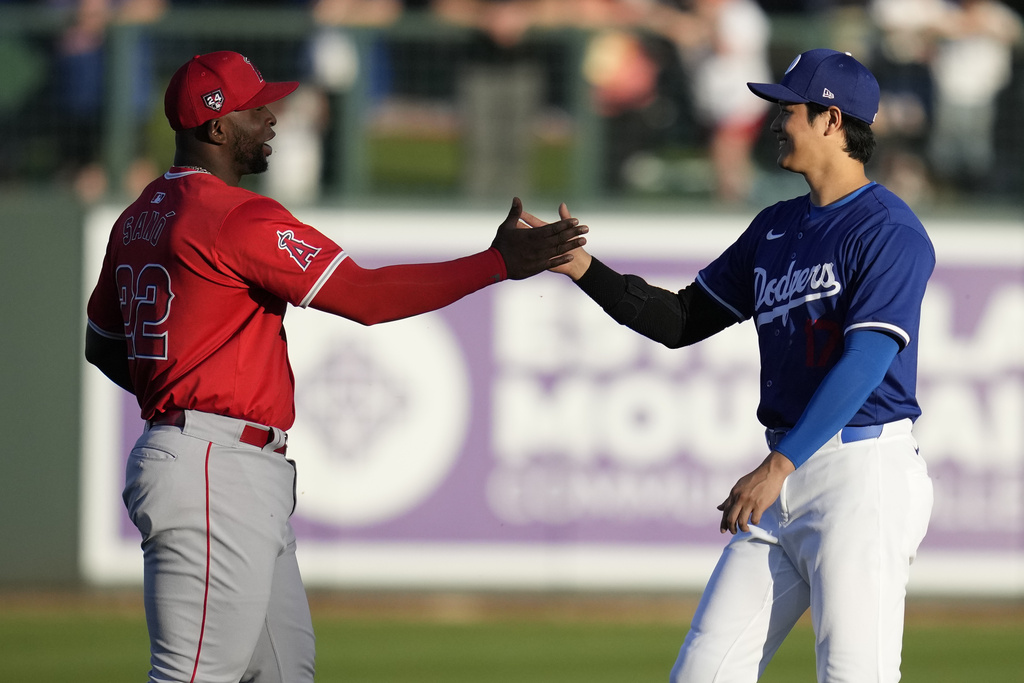
In 2023, the Angels had the most valuable trade asset in modern MLB history.
The front office had frameworks with multiple clubs.
They had the offers.
They had the chance to rebuild the farm system in one move.
Baseball operations was prepared to act.
Arte Moreno shut it down.
It was not a baseball decision.
It was not a structural decision.
It was not a competitive decision.
It was emotional.
He wanted the optics.
He wanted the attendance.
He wanted the hope.
He wanted the sentiment.
He wanted to avoid being the owner who traded a unicorn.
The result was catastrophic.
The Angels emptied their farm system for rentals.
They missed the postseason anyway.
Ohtani departed in free agency — to the Dodgers — on December 9, 2023, the day the Angels’ junior status in Southern California became undeniable, signing a 10‑year, $700 million contract, the largest in Major League history at the time, leaving the Angels with only a second‑round compensation pick.
By 2026, the Angels were entering the most consequential MLB collective bargaining agreement in a decade — the December 2026 CBA — with a farm system that had been ranked in the bottom third of baseball for multiple consecutive years, leaving the franchise without impact prospects, without organizational depth, and without the structural posture required for the sport’s next economic era.
Moreno could not rebuild the franchise in time.
Kroenke arrives with the capacity to do so.
The Kings of Southern California
Southern California has one baseball monarch, and it has been true for decades: the LOS ANGELES Dodgers.
The Dodgers have been the Kings of Southern California across eras, across ownership, across broadcast generations, across stadium generations.
They are the region’s baseball identity.
Last winter, I predicted — and placed it on the record — that the Dodgers would win a third straight World Series.
I made that prediction before they signed Edwin Díaz.
Once they added him, it only strengthened what I already believed: the architecture was visible, repeatable, and unmistakable.
They had already won back‑to‑back championships in 2024 and 2025, and were entering 2026 bidding for a three‑peat — something not seen since the Jeter‑era Yankees.
I said their greatest challenge would be key injuries and the ennui of the regular season — what I call the content calendar — the boredom that comes for a franchise that has played more high‑leverage baseball than anyone else in the sport.
I said the fulcrum would be Edwin Díaz.
He struggled early — command, slider shape, confidence — exactly what a pitcher looks like coming back from a catastrophic injury.
He is on the mend — velocity back, I suppose, whiff rate climbing, they say. recovery clean — but he is not yet the dominant closer the Dodgers need with October weeks away. The bullpen cannot assume he will be.
And the Dodgers’ postseason architecture extends far beyond Díaz. With Glasnow and Snell healthy, Skubal added, Yamamoto stabilized, and Ohtani available in a hybrid posture, the Dodgers possess a rotation so deep it can be weaponized. Two of these arms — depending on matchups and recovery windows — can be deployed as long men, bridge pieces, or even emergency leverage options. Yamamoto or Ohtani could close a postseason game or multiple, if needs must.
This is the structural advantage that keeps the three‑peat within reach, even as the bullpen remains volatile.
And I said Mookie Betts — off his usual superstar stature — was so far from his standard he might as well be placed on a Missing In Action Milk Carton. Betts is present, but his game has not reached his level, and the Dodgers need his October version.
These were not predictions for effect.
They were timestamps.
They were structural observations about a franchise operating at the edge of a dynasty.
The Brewers remain the small‑market counterweight — a club whose winning culture is driven as much by their exceptional manager, Pat Murphy, a true leader of men, as by their development pipeline.
Alongside the Dodgers, the Brewers, Phillies, and Braves comprise the four National League powers that will define the 2026 postseason — and any one of the four can beat whoever emerges from the American League.
And if the Yankees do emerge — and I say this as a longtime Yankee devotee — even if Captain Judge returns to form, the same structural issues remain:
the absence of clutch hitting against elite pitching,
the fragility of their offensive sequencing,
and Aaron Boone’s analytics‑first managing style — including premature starter removal and a lack of true leadership presence.
Boone is not a leader of men like Murphy in Milwaukee, nor aspirational and inspirational like Roberts in Los Angeles.
But the Dodgers are the Kings — the Kings of Southern California, and the Kings of Major League Baseball.
And they likely will be again.
And this matters because Kroenke is not entering a region searching for identity.
He is entering Southern California — a geography where excellence has been visible, operational, and repeatable for decades, and where the Angels have spent two generations adjacent to that standard without ever matching it.
Los Angeles may be the Dodgers’ civic throne, but the Angels have never belonged to that geography — their identity has always lived in Orange County.
And that distinction is the key to understanding what comes next.
Why the Angels Are Not a Los Angeles Franchise
Rumors that Kroenke might relocate the Angels to Los Angeles — perhaps to Inglewood near SoFi — fundamentally misread the cultural structure of Southern California.
The Dodgers are Los Angeles: four generations deep, the civic identity of the region, the baseball equivalent of the Lakers, anchored for generations by the late Vin Scully’s voice and the jewel in Chavez Ravine.
LA’s NFL vacuum allowed the Rams to reclaim a fractured fan base, and the Chargers remain San Diego tenants in Inglewood — but baseball never had such a rupture.
The Dodgers never left, never fractured, never ceded their civic throne.
The Angels, by contrast, are Orange County — Southern California’s analogue to Long Island in Greater New York City.
A suburban power base with its own identity, its own pride, its own cultural coherence.
Close enough to feel the city’s pull, far enough to be its own world.
The Islanders proved the point: when they were moved briefly into Brooklyn, the identity broke; when they returned to Long Island — to UBS Arena in Elmont — the culture and fan base snapped back instantly.
The Jets’ historical alignment with Long Island — and current exploration of a stadium near Citi Field or the Islanders’ arena — reflects the same civic instinct:
suburban franchises belong in the geography that defines them.
The Angels occupy that same lane — but on a far larger stage.
Their strength is not in becoming “Los Angeles,” but in becoming California again.
A shared market does not make you a Los Angeles franchise.
And repositioning the club into Los Angeles County would erase the very geography Kroenke can transform — the civic identity rooted in Orange County, the 714, the cultural bandwidth that defines the franchise.
By restoring the CALIFORNIA Angels identity, building a superior stadium in Orange County, and reconstructing baseball operations, Kroenke can challenge the Dodgers not by chasing their city, but by building a rival civic anchor of his own.
In a few years, when the new ballpark opens and the roster is ready to christen it, the California Angels will no longer be the Dodgers’ little brother — they will be the counterbalance.
And if Kroenke foresees a Golden State recovery, Orange County becomes the perfect launchpad for California’s next chapter.
The Skubal / Kroenke Effect
Tarik Skubal’s trajectory is the perfect illustration of how modern MLB economics intersect with ownership gravity.
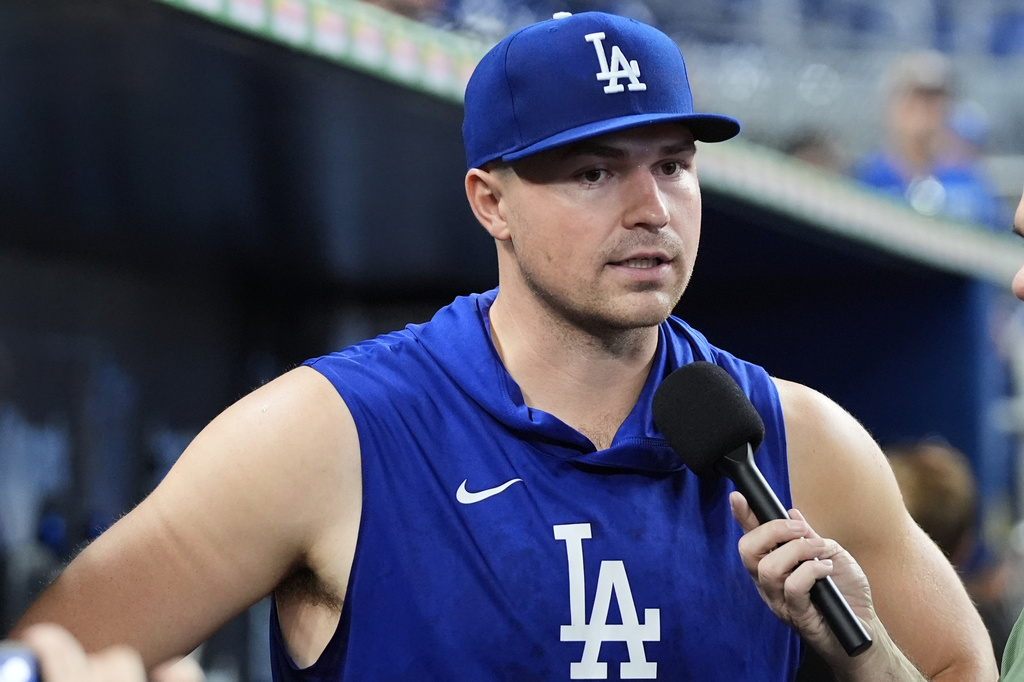
Last year, I wrote that Detroit would not be able to retain him — not because of performance, but because the league’s economic structure makes it nearly impossible for mid‑market franchises to keep superstar talent once the Guggenheim Dodgers or Steve Cohen’s Mets decide to pay a king’s ransom.
That prediction has already materialized: Skubal is in Dodger Blue, albeit as perhaps a premium rental, but there exactly as forecasted.
Be that as it may, his arrival in Los Angeles is only half the story.
Skubal is a Northern California native, and his recent comment that the Angels could become a legitimate free agent destination for players in MLB is not idle talk — it is a window into how players think when ownership seriousness enters the equation.
If Kroenke restores the California Angels identity, builds the new ballpark, and reconstructs baseball operations, Anaheim becomes more than a geographic option.
It becomes a cultural one.
And if Kroenke decides Skubal should be the face of the franchise, he will have the leverage, the infrastructure, and the identity to make it happen.
This is the Kroenke effect:
elite players — California natives or not — gravitate toward stability, leadership, infrastructure, and civic ambition.
Winning is not just the outcome.
Winning is the architecture.
And for the first time in their history, the Angels will have an owner capable of building a franchise that can stand beside the legacy behemoth in Chavez Ravine — something they never had even when they won the World Series in 2002.
Under the right conditions, the Angels will not merely attract talent; they will become a destination.
Skubal is simply the first example of how that gravitational pull could manifest.
Kroenke’s Civic Sports Thesis
Stan Kroenke’s acquisition of the Angels is not just a baseball transaction — it is a civic thesis.
People focus on the portfolio: the Rams, Nuggets, Avalanche, Arsenal, Ball Arena, SoFi, the mixed‑use districts, the championships.
But the portfolio is only the surface.
The deeper truth is that Kroenke makes regional bets, civic bets, cultural bets.
He invests in places where he sees long‑arc potential before the market does.
He did it in Denver.
He did it in North London.
He did it in Los Angeles.
He will do it in Orange County.
This move is not about adding another franchise to a trophy shelf.
It is about positioning himself at the center of California’s next chapter.
The state is wounded — economically distorted, politically chaotic, culturally fatigued — but still the largest reservoir of talent, capital, imagination, and aspiration in America.
When California rebounds, it rebounds violently.
Kroenke is stepping in before the rebound.
He is not just buying the Angels; he is buying the civic identity of Orange County, the cultural reset of a region that has long lived in Los Angeles’ shadow, and the opportunity to build a new anchor for Southern California.
He is buying the media footprint, the stadium district, the mixed‑use potential, the cultural geography, and the long‑term repatriation of talent that will follow once California’s next arc begins.
This is not just about sports.
This is macro civic architecture.
And it is the kind of move only Kroenke makes — because he sees something in the Golden State that most won’t until after the fact.
Orange County Sociology
Orange County has always been the quiet equipoise to Los Angeles — affluent, aspirational, orderly, and culturally distinct.
For decades, it represented a different version of Southern California: less chaotic, more stable, more suburban, more family centric, and more aesthetically coherent.
It was the place where people who wanted proximity to Los Angeles — but not the intensity of Los Angeles — chose to live.
The beaches, the master‑planned communities, the schools, the civic order, the aspirational neighborhoods: all of it formed a cultural identity that was separate from LA but still part of its gravitational field.
That identity has frayed in recent years.
Mismanagement, crime spillover, demographic shifts, political dysfunction, and cultural erosion have weakened the region’s confidence.
But the underlying assets remain: wealth, beauty, stability, geography, and aspiration.
From Newport Beach’s coastal affluence to Laguna Beach’s artistic elite, from Coto de Caza’s gated exclusivity to Laguna Niguel’s master‑planned stability, from Dana Point’s harbor‑driven prestige to San Clemente’s surf‑wealth southern anchor, Orange County has always carried an aspirational identity distinct from Los Angeles.
Even San Juan Capistrano — with its historic mission district, equestrian neighborhoods, and heritage architecture — reflects a civic coherence that LA’s sprawl cannot replicate. These wonderful people and towns are not sentimental memories; they are the structural markers of a region whose cultural bandwidth has always been suburban, affluent, orderly, and aspirational.
Orange County is still one of the most desirable suburban regions in America — and it is still the natural home of the Angels.
The franchise has always been tied to this geography, even when its branding drifted into confusion.
Anaheim was too small.
“Los Angeles Angels” was absurd.
The identity that fits the region — and fits Kroenke’s thesis — is California Angels.
This is where Kroenke’s move becomes civic.
He is not simply acquiring a baseball team; he is stepping into a region that is ready for a cultural reset.
Orange County is the perfect canvas for a new civic anchor — a place where a superior stadium, a restored identity, and a rebuilt baseball operation can create a new center of gravity for Southern California.
The Angels have never had an owner capable of elevating the region.
Kroenke is the first.
Kroenke’s franchises become civic assets only because they win.
The Rams were not a civic anchor when they returned to Los Angeles; they became one because Kroenke built a championship operation.
The Nuggets and Avalanche were not the level of civic pillars until Kroenke’s infrastructure and leadership produced titles.
Arsenal’s resurgence is the same story.
Winning is the accelerant that turns ownership seriousness into civic gravity.
Orange County will not rally around a stadium, a district, or a restored identity unless the team wins.
Kroenke understands this better than anyone in American sports.
His civic thesis is always paired with competitive excellence.
That is why he is revered — not because he owns teams, but because he builds champions.
And that is why his acquisition of the Angels matters: he is the first owner in the franchise’s history with both the civic ambition and the operational seriousness to make winning inevitable.
The Media Battleground
Los Angeles’ media landscape is unlike any other in American sports, rivaled only by New York.
It is not merely a broadcast market; it is the cultural production engine of the country.
The Dodgers have dominated that space for generations, and not simply because they won.
They dominated because they had the greatest media voice in the history of American sports.
Vin Scully was not just a preeminent broadcaster; he was a civic institution.
For 65 years, his voice defined Los Angeles — elegant, warm, authoritative, poetic.
He narrated the region’s baseball life across eras, ownerships, ballparks, and generations.
His presence made the Dodgers a cultural force even in seasons when the team was mediocre.
And the Dodgers had a second pillar:
Jaime Jarrín, Vin’s great Spanish‑language counterpart, whose eloquence and brilliance carried the Dodgers’ identity across the Mexican American community and into Mexico itself.
His tenure — more than six decades — created a bilingual media empire that no other franchise in baseball could match.
The Dodgers were not just LA’s team; they were LA’s voice.
Two legendary voices, in fact — one English, one Spanish — each iconic, each generational, each unmatched.
The Angels never had that.
Dick Enberg was superb — a national treasure — but he did not have the longevity, the cultural reach, or the civic dominance of Scully or Jarrín.
The Angels’ media footprint has always been fragmented, inconsistent, and overshadowed.
They have never had a voice who could carry the region’s imagination.
They have never had a bilingual media presence that could rival the Dodgers.
They have never had the cultural bandwidth to compete in the largest entertainment market in the world.
This matters even more now because media is the central battleground of the next CBA.
Local rights, streaming architecture, regional sports networks, bilingual distribution, and cultural bandwidth will determine the next decade of MLB revenue.
The Dodgers are already positioned.
The Angels are not — but Kroenke is.
Kroenke understands media better than any owner in American sports.
He built the Rams’ media ecosystem, the Nuggets’ and Avalanche’s regional dominance, Arsenal’s global content footprint, and the infrastructure around SoFi that merges sports, entertainment, and brand architecture.
He knows how to turn a franchise into a cultural product — not a regional broadcast.
If Kroenke restores the California Angels identity into a winning culture, builds the new stadium district, and pairs it with a modern media operation — including the search for new top-drawer voices who can carry the franchise’s identity across English and Spanish audiences — the Angels will have a window that has never existed before.
Winning will be the catalyst.
Media will be the amplifier.
And for the first time in their history, the Angels could challenge the Dodgers not by geography, but by cultural bandwidth.
This is the battleground:
voice,
presence,
identity,
and narrative.
The Dodgers owned it for 65 years.
The Angels have never entered it.
Kroenke gives them the chance.
Imagine Kroenke’s Orange County SoFi
Dodger Stadium is one of the oldest ballparks in Major League Baseball, yet it remains one of the finest.
That is not nostalgia — it is stewardship.
The Dodgers have invested in CAPEX, modernization, and architectural coherence for decades.
They preserved the sightlines, the vistas, the concourses, the color palette, the landscaping, the fan experience.
They kept the soul of the ballpark intact while upgrading everything around it.
Dodger Stadium is not simply a venue; it is a civic landmark set inside Chavez Ravine — one of the most iconic settings in American sports.
Angel Stadium is the opposite.
It is a relic — a building without a district, a venue without a thesis, a structure without a civic identity.
It has no gravitational pull, no mixed‑use spine, no architectural reverence.
It reflects the Angels’ historical condition: disconnected, under‑leveraged, and civically small.
Kroenke will not tolerate that.
He has already built the defining stadium of the NFL era.
SoFi Stadium is not merely a football venue; it is the centerpiece of Hollywood Park — the 425‑acre district Kroenke owns and is developing. The NFL Network relocated its headquarters into that district, making Kroenke the only owner in American sports whose stadium ecosystem houses a league’s broadcast center.
AT&T Stadium — Jerry’s World, the home of the Dallas Cowboys in Arlington, Texas — has long been regarded as the most spectacular stadium in the NFL. A monumental retractable‑roof venue with operable walls, theatrical scale, and a hospitality spine that redefined what a modern sports building could be, it stood for more than a decade as the benchmark for American stadium architecture. But SoFi Stadium surpasses it — not in spectacle, but in integration.
AT&T Stadium is a venue.
SoFi Stadium is a district.
Kroenke does not build stadiums; he builds destinations.
He will do the same in Orange County.
Whether the new ballpark sits in Anaheim or elsewhere in Orange County, Kroenke is imagining his own Dodger Stadium‑level civic anchor — not a rival, but a successor.
A stadium district that surpasses Chavez Ravine’s benchmark in architecture, in mixed‑use development, in media integration, in fan experience, in civic gravity.
A venue that becomes the anchor of the district’s cultural identity.
A place where winning, media, and civic ambition converge.
California’s next economic arc is forming beneath the surface.
When the rebound comes, real estate, entertainment, and cultural production will surge.
A new stadium district in Orange County positions Kroenke at the center of that surge.
It gives the Angels a civic anchor they have never had, a revenue engine they have never possessed, and a cultural footprint they have never occupied.
This is the Orange County SoFi thesis:
Kroenke is building the next great American stadium district — the successor to Dodger Stadium.
The Golden State Rebound
Southern California never moves in straight lines.
It moves in surges — periods where the state’s underlying engines re‑synchronize and the region snaps back with disproportionate force.
The next surge will not come from politics or sentiment; it will come from the hard infrastructure of the state’s economic spine:
aerospace in El Segundo and Hawthorne,
AI and chip design in Irvine and Costa Mesa,
biotech in San Diego,
entertainment and streaming architecture in Burbank and Culver City,
and the capital formation that still originates up and down the coast despite the noise.
Orange County sits directly in the path of that resurgence.
It is where aerospace engineering, defense contracting, medical‑device manufacturing, and high‑end technology talent already concentrate.
It is where families with means relocate when they want proximity to Los Angeles without inheriting its volatility.
It is where the next wave of California’s middle‑to‑upper‑middle class will stabilize when the state’s macro arc turns upward again.
Kroenke sees that.
He is not betting on California’s politics; he is betting on California’s capacity.
When the state reasserts itself — and it will — the regions with civic anchors, cultural bandwidth, and next‑generation infrastructure will rise first.
California’s rebound will eventually require a reformed tax‑incentive architecture — the targeted credits, business‑formation incentives, and regional development programs that increasingly favor counties with infrastructure capacity and mixed‑use potential.
Orange County, with its aerospace spine, technology corridors, medical‑device manufacturing base, and high‑income residential stability, is positioned to benefit disproportionately from these incentives once the state’s macro arc turns upward again.
Regions with civic anchors attract capital; regions with capital attract incentives; and regions with both accelerate first.
Orange County has never had that anchor.
Kroenke is building it.
A restored California Angels identity, a new stadium district, and a media ecosystem built for the next CBA position the franchise at the center of the state’s next economic chapter.
This is not about nostalgia.
It is about alignment.
For the first time in their history, the Angels will be structurally aligned with the forces that will drive California’s next surge:
aerospace,
entertainment,
technology,
capital,
and civic ambition.
This is the Golden State rebound thesis:
California’s next surge will be industrial, not sentimental — and Kroenke is building the platform that allows the Angels to rise with it.
The Architecture of Victory
Winning is the architecture.
Everything Kroenke builds — stadiums, districts, media ecosystems, civic anchors — only becomes real when the team wins.
And Kroenke wins because he hires the right people, empowers them, and builds organizations that are engineered to win.
The Rams are the clearest example.
Sean McVay, hired at age 30, became the youngest head coach in modern NFL history — but more importantly, he became the franchise’s cultural engine.
McVay is a generational communicator: energetic, articulate, emotionally intelligent, and able to speak the language of the men.
He teaches, inspires, elevates, and leads with clarity.
His presence recalibrated the Rams overnight.
But McVay’s brilliance only works because Kroenke paired him with Les Snead, the Rams’ general manager — a personnel architect whose eye for talent, willingness to take calculated risks, and ability to build a coherent roster made the Rams one of the most modern, aggressive, and aligned organizations in the NFL.
Snead’s front office is layered, deep, and structurally sound.
Scouts, analysts, development staff, pro personnel — all of it coheres.
That is why the Rams win.
That is why Kroenke’s civic thesis works in Los Angeles.
Baseball has its own version of this dynamic — and the Dodgers are the exemplar.
Andrew Friedman, the Dodgers’ President of Baseball Operations, built the most sophisticated baseball organization in the sport.
His front office is deep, aligned, and relentless.
Their scouting is elite.
Their development pipeline is engineered.
Their analytics spine is modern but never replaces baseball judgment.
And their manager, Dave Roberts, is the baseball equivalent of McVay:
energetic, communicative, emotionally intelligent, able to relate across generations, and able to motivate men in a way that sustains excellence.
Roberts is not a tactical footnote; he is a cultural pillar.
He is the connective tissue between the front office and the clubhouse — exactly the kind of leader Kroenke will need in Anaheim.
Kroenke has built this architecture in every sport he touches.
In Denver, Joe Sakic constructed a championship core for the Avalanche — a front office defined by alignment, patience, and competitive seriousness.
In basketball, the Nuggets’ rise came from a similarly coherent organizational spine.
In London, Arsenal’s resurgence followed the same pattern:
aligned leadership,
modern operations,
competitive clarity.
This is Kroenke’s legacy:
He wins because he builds organizations that are engineered to win.
And behind that legacy is the family architecture.
Josh Kroenke, Vice Chairman of Arsenal and a central figure in the Nuggets and Avalanche operations, represents the next generation of the Kroenke thesis: aligned leadership, operational seriousness, competitive ambition. As someone whose Arsenal loyalties were forged in the era of Henry, Bergkamp, and Vieira — my three favorites from that championship side — I recognize the seriousness and coherence that modern Arsenal leadership reflects. And we congratulate and recognize our defending Premier League champions, a resurgence that came under Kroenke leadership after a long dormant period and stands as further evidence of the winning architecture already discussed.
The Angels will require the same architecture.
Kroenke must find his top baseball executive — someone capable of building a modern baseball operation with depth, alignment, and competitive seriousness.
He must hire a manager with McVay‑like and Roberts‑like qualities:
a communicator,
a motivator,
a leader who can inspire players, relate across generations, and elevate the clubhouse.
He must build a front office with scouts, developers, analysts, international operators, and pro evaluators who work as one collective — not as silos.
Winning is not the final step; it is the first.
Without winning, the stadium district is scenery.
Without winning, the media ecosystem is noise.
Without winning, the California Angels identity is nostalgia.
Winning is the catalyst that activates everything else — the civic gravity, the cultural bandwidth, the regional anchor, the economic engine.
Kroenke knows this.
He has built championship organizations in every sport he has touched.
The Angels will be no different.
Winning is not the outcome.
Winning is the architecture.
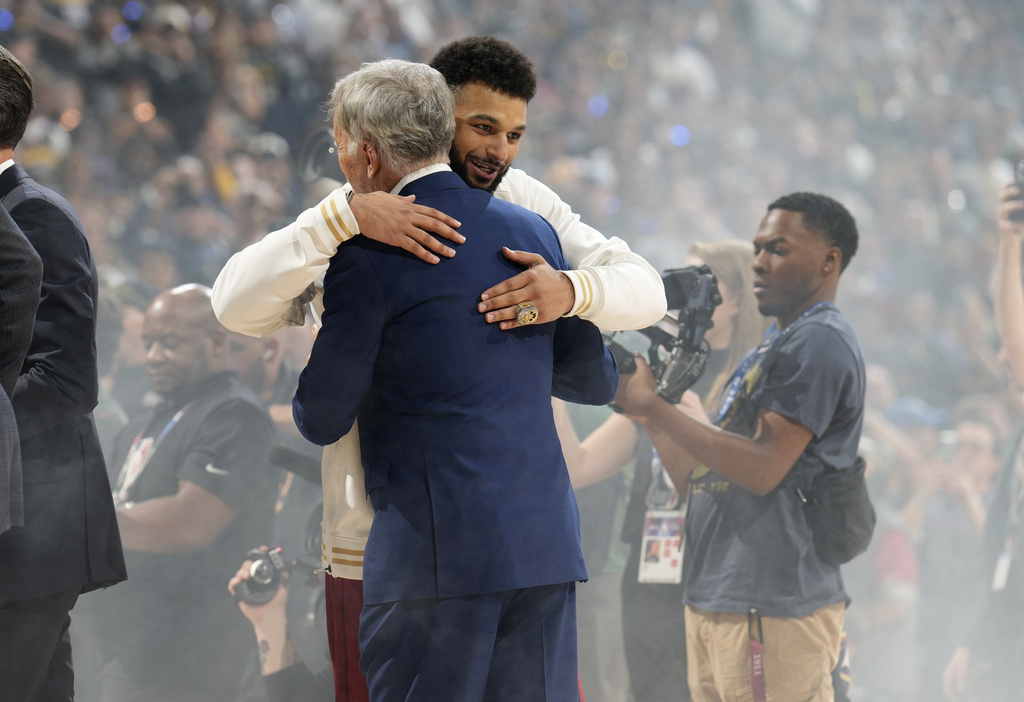
A Civic Thesis for California’s Next Chapter
Kroenke’s arrival in Orange County is not a bet on nostalgia; it is a bet on architecture.
The Angels do not need a savior; they need a system.
They need alignment, seriousness, and the organizational spine that has defined every Kroenke championship across continents and across sports.
The next CBA will reorder baseball’s economic machinery, and the franchises that rise will be the ones built for the new era — the ones with infrastructure, identity, and competitive clarity.
Kroenke is building all three.
He is not simply acquiring a team; he is constructing the platform that will allow the California
Angels to become a civic anchor, a cultural counterweight, and a competitive force in the decade ahead.
Winning is not the outcome.
Winning is the architecture.
And for the first time in their history, the Angels will have one.