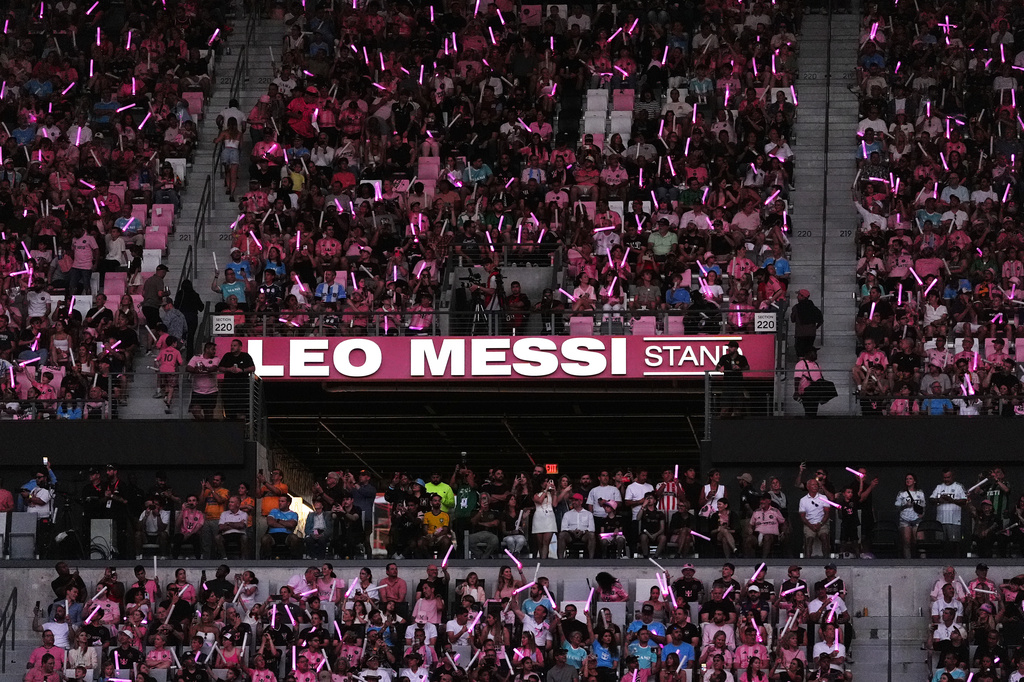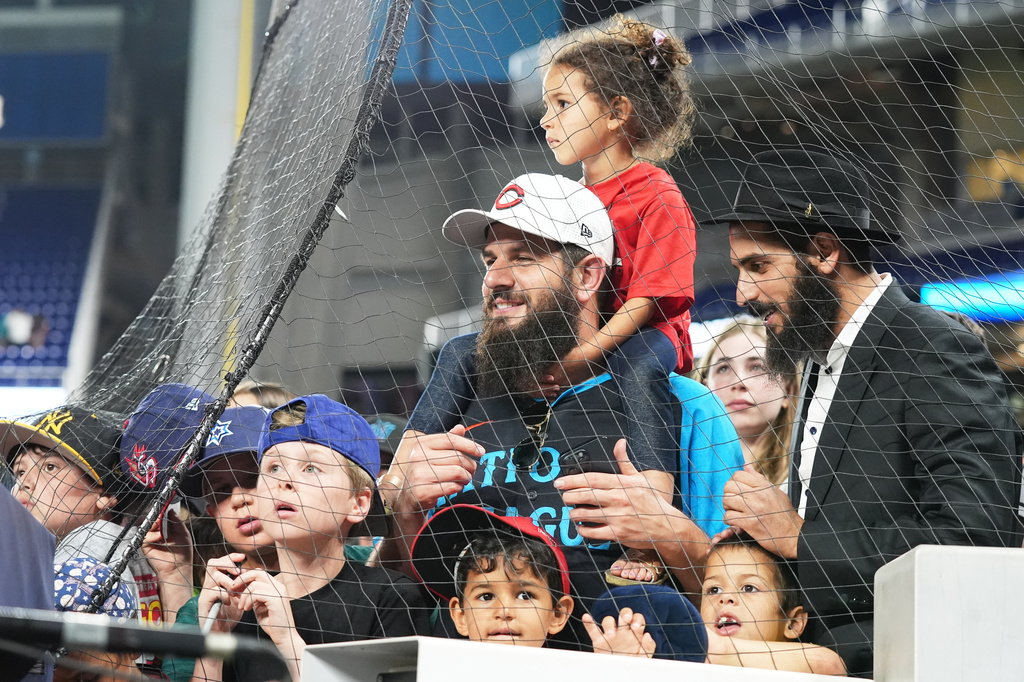
Even when the Miami Marlins are winning, they’re still being talked about like they don’t exist.
After Tuesday’s Rockies win, outfielder Troy Johnston — who came through the Marlins’ system before being waived last November — grabbed a mic and said exactly what national baseball Twitter wanted to hear.
“Coming from the Miami Marlins, when I walk around Miami, I never saw a Miami Marlins jersey. I never saw a Miami Marlins hat. I saw nothing of the sort. When I’m walking around downtown Denver, they are really excited about the Rockies. They want the Rockies to be good. This is a sports town. We are trying to put a good product on the field.”
— Troy Johnston, postgame, April 6, 2026 · 696,800 views and counting
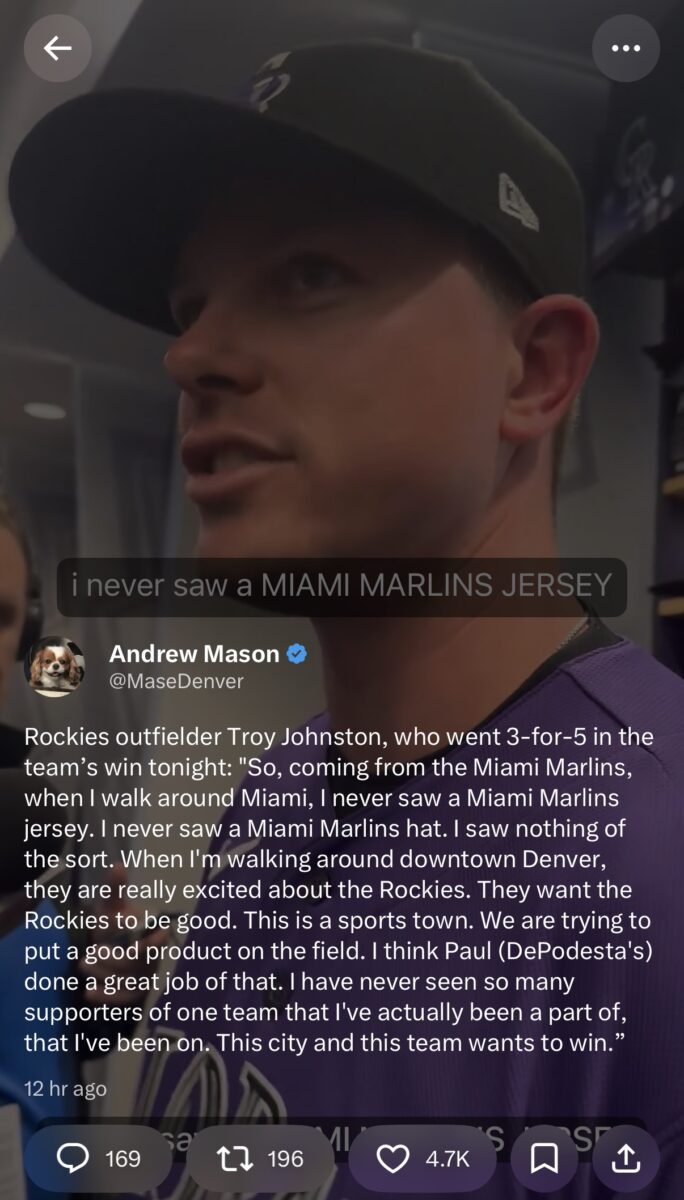
Watch Interview via source: https://x.com/MaseDenver/status/2041365082068906480
The numbers back him up. Through seven home games, the Marlins are averaging 12,942 fans per game — dead last in Major League Baseball. The Dodgers are drawing 51,655. Even the rebuilding Athletics, playing in a minor league stadium in Sacramento, are closer to league average than Miami is to the next-worst team. The Marlins are down 1,954 fans per game from this same point last season, which was already bad.
So yes. Troy Johnston is right about the empty seats.
He’s just not entirely right about why.
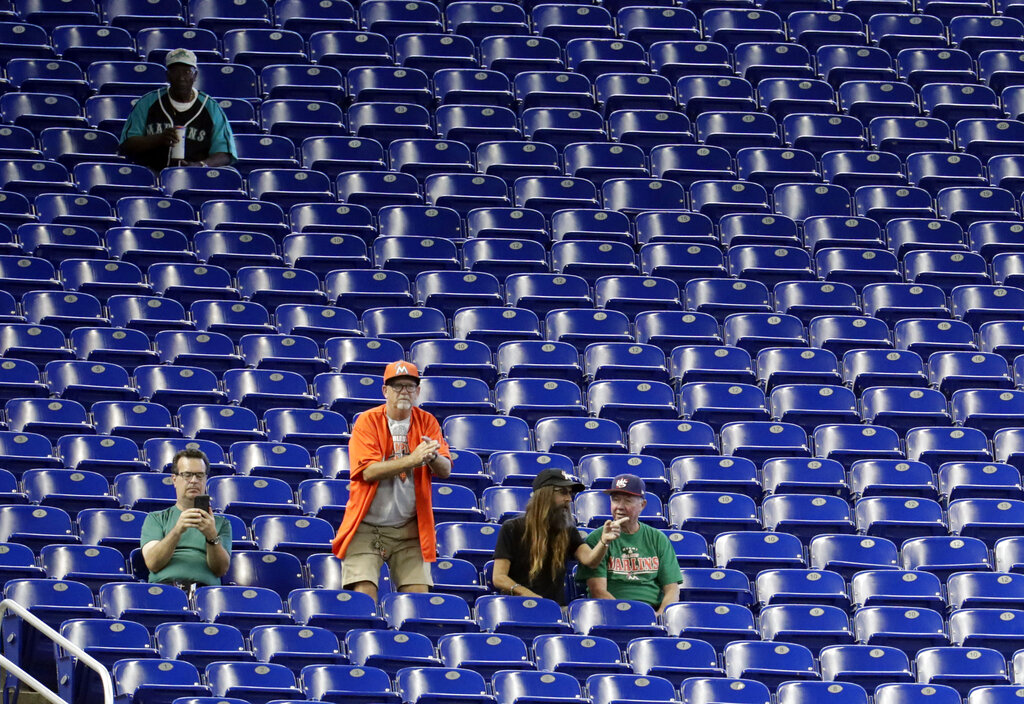
Fans watch a baseball game between the Miami Marlins and San Francisco Giants, Thursday, May 30, 2019, in Miami. Major League Baseball’s average attendance of 26,854 is 1.4% below the 27,242 through the similar point last season, which wound below 30,000 for the first time since 2003. Baltimore, Cincinnati, Minnesota and Tampa Bay set stadium lows this year. Kansas City had its smallest home crowd since 2011, and Toronto and San Francisco since 2010. Miami and the Rays drew 12,653 Wednesday night _ combined. (AP Photo/Lynne Sladky)
Start With the Building
loanDepot park is one of the more underappreciated baseball facilities in the country — a retractable roof stadium sitting in Little Havana, one of the most baseball-literate neighborhoods in the United States. On a clear evening with the roof open, there is genuinely no better setting in the sport.
The problem is Miami. Not the city — the weather. From April through October, temperatures regularly push into the 90s with humidity to match. The roof stays closed most nights not by preference but by necessity. The result is a sealed, climate-controlled environment that looks great on television and feels, in person, like watching baseball inside a very large airport terminal.
For comparison: Houston’s Daikin Park has the same problem. Retractable roof, brutal summers, roof closed as often as not. Houston is drawing 29,920 a game. Miami is at 12,942. Both stadiums hosted World Baseball Classic games. Both cities have deep baseball cultures rooted in Latin America and the Caribbean. The gap between them is not the stadium. It is fifteen years of roster decisions.
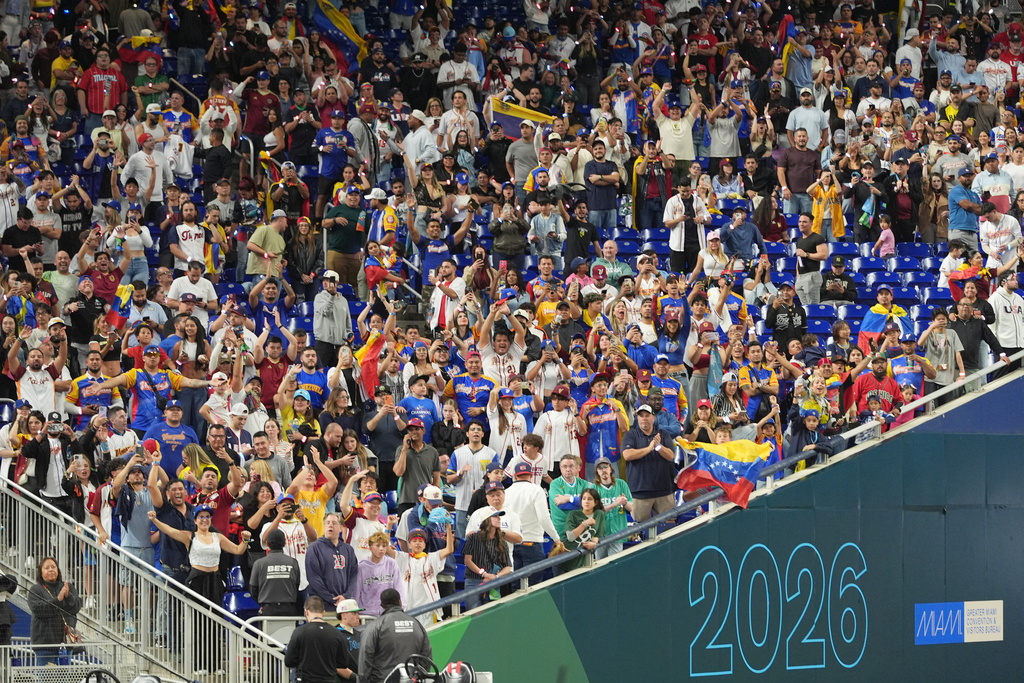
Venezuela fans cheer the team after they defeated the United State in the championship game of the World Baseball Classic, Wednesday, March 18, 2026, in Miami. (AP Photo/Rebecca Blackwell)
What People Are Saying
The Johnston quote moved fast. NBA forward Sam Dekker reposted it. Rockies beat writer Andrew Mason piled on, noting he covers Colorado because he “didn’t want to be that person who just parachutes in when they win.” The replies came in waves.
“The only place you see a Marlins jersey is behind home plate at a Dodgers game.”
But the pushback was sharper than usual — and more specific.
“Funny thing is that even though Marlins fans don’t show up to games, wearing Marlins gear, especially the old school logo hats, is very popular in Miami and a ton of people wear them. It’s funny that a guy that basically played his whole career in Triple-A is going to say bitter…”
— @Cangelosifan
“Miami has low attendance, but the fans who do show up know a LOT about baseball and follow winter ball and Caribbean baseball more than five teams combined. If the team just moved to Fort Lauderdale, things would change.”
— @bigbanonos
And then the context check nobody asked for:
“When he walked around Miami? He spent 99% of his time in Jacksonville lmao.”
— @CaptainBarkov
That one lands. Johnston was a fringe roster player whose Miami experience was largely Triple-A Jacksonville, not Brickell. The take is real. The vantage point is worth noting.
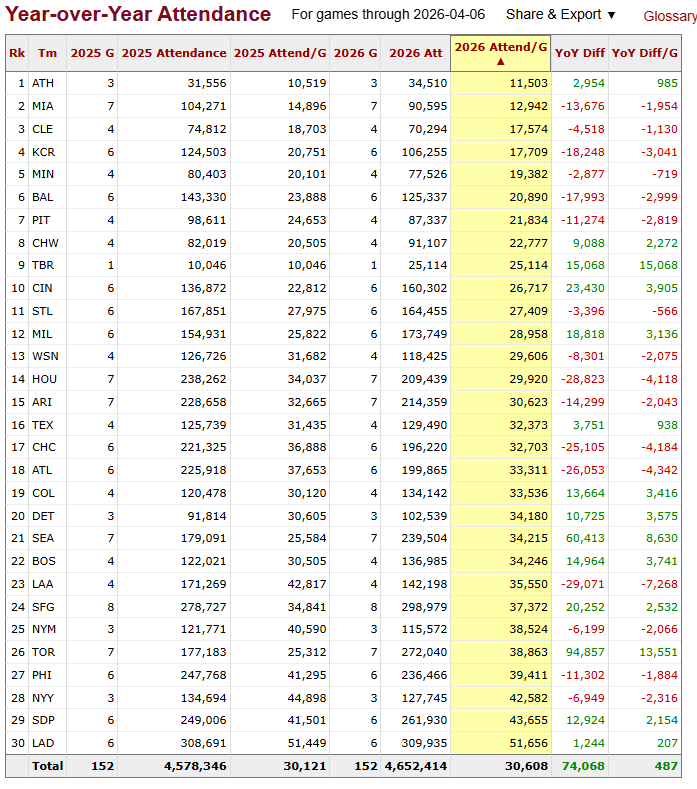
ESPN attendance Source: https://www.espn.com/mlb/attendance
He’s Not Wrong. That’s the Problem.
None of this means Johnston is lying. He is describing something real — the direct result of two fire sales in one generation. The Marlins won in 1997 and gutted the roster. They won again in 2003 and did it again. A fan base can survive one teardown. Two teaches people not to attach.